Sustainability reporting: how to account for biodiversity
    BiodiversityImpactGRI 101Punti

    Sustainability reporting: how to account for biodiversity

    How can companies monitor, improve and report on their impact on biodiversity? What are the international standards of reference? Read more in this article and discover what is new in the GRI 101: Biodiversity standard.

    Read the article
    14/03/2024Of 3Bee, Lisa Santillo
    420 Views
    14/03/2024Of 3Bee, Lisa Santillo
    420 Views

    Loss of biodiversity: causes and consequences

    When we talk about the impact that human activities have on the environment, we cannot fail to mention the loss of biodiversity. Changes in the use of soil, exploitation of natural resources, pollution and introductions of alien species are only some of the causes that are leading to the loss of biodiversity and the destruction of the ecosystems of our planet. Many of these environmental impacts are caused precisely by the activities of companies, which make use of the environmental resources at their disposal without paying the price for the damage caused. In reality, however, the focus of institutions on sustainability is becoming ever greater. We have seen this with the new CSRD (Corporate Sustainability Reporting Directive), the European directive that will oblige more and more companies in Europe (as many as 50,000 throughout Italy) to report their impacts on ESG issues.

    perdita di biodiversità

    Reporting the impact on biodiversity

    But how can companies monitor, improve and communicate their impact on biodiversity? Non-financial' reporting, like financial reporting, is done with the support of a set of standards, i.e. guidelines that direct companies on how to approach various issues in the ESG sphere. Today, there are various standards that support companies in their reporting. One example are the ESRS standards, which are valid on a European level and issued by EFRAG, or the SASB standards. The most widely recognised and used standards at the European level, however, are the GRI standards. Among the various topics covered by the Global Reporting Initiative are energy, waste, emissions and materials. Recently, GRI wanted to update an important category of standards dedicated to biodiversity, replacing the old standard with the new GRI 101: Biodiversity 2024.

    farfalla
    XNatura

    The new GRI 101 Standard: Biodiversity 2024

    A long consultation process led to the birth of this new standard, which responds to global needs highlighted within the Biodiversity Framework, the Nature Restoration Law and the Biodiversity Strategy at the European level. The new GRI 101: Biodiversity 2024, also recently released in response to the ESRS, is proof that the biodiversity-loss is becoming more and more central in the political, institutional and corporate debate and is taking the same space that issues such as climate-change or pollution have had so far. But what are the key points of GRI Standard 101: Biodiversity 2024?

    cambiamento climatico

    The key points of the GRI 101 standard

    One of the new features of GRI 101: Biodiversity 2024 is the site-specific approach, which requires companies to report their impact on biodiversity for each specific site. Among the aspects that companies must report on are various parameters, such as the presence of key biodiversity areas (e.g. national parks), the direct cause of biodiversity loss, changes in biodiversity status, and ecosystem services provided. Secondly, the standard calls for requirements for reporting on impacts on society, including communities and indigenous peoples, and how organisations interact with local groups for the recovery of damaged habitats. Another aspect is supply chain reporting, which must be provided at the national level. Among the important topics contained in the standard, the positive network gain through the possibility of compensating one's own impact is of interest.

    volatile
    XNatura

    Business and impact on biodiversity: the steps to follow

    The GRI Standard 101: Biodiversity 2024 emphasises the hierarchy of action that follows the logic of avoid and reduce, restore and rehabilitate and finally compensate. First, companies must monitor their impact on biodiversity, both at site and supply chain level. As a second step, there is the elimination, where possible, and reduction of the impacts that companies have on biodiversity through their direct production activities or those of the supply chain. Then, compensation, through virtuous projects that regenerate biodiversity where it is most needed. It is important to remember that the loss of biodiversity is a local problem: offsetting must always take place within a certain area of interest, otherwise there is a risk of creating impact elsewhere and not achieving the mitigation effect. monitoring is also crucial in this area.

    step
    3Bee

    The importance of biodiversity monitoring

    The monitoring is therefore crucial both to calculate the baseline, i.e. the initial impact that the farm has with respect to the biodiversity, and to report on compensation projects. Biodiversity can be monitored on different levels, on the one hand we can measure the impacts and drivers of biodiversity loss such as land use and pollution, on the other hand the ecosystem services that biodiversity can provide. At the centre is biodiversity itself and its state of health. According to the new GRI, biodiversity can be measured in two ways: directly, by counting the number and variety of species in a given area; indirectly, for example through Mean Species Abundance, i.e. by estimating the level of biodiversity of a certain site primarily from certain metrics, such as land use.

    monitoraggio

    XNatura Score: the biodiversity monitoring protocol

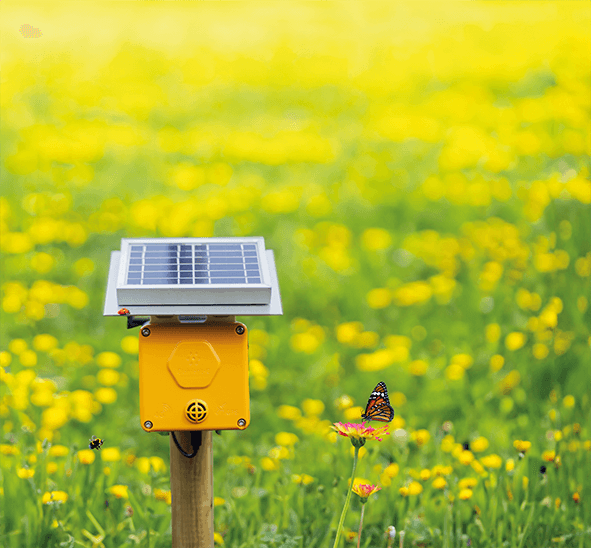
    3Bee, following the evolution of GRI, developed XNatura, the technology-based terrestrial biodiversity monitoring protocol. With this solution, 3Bee combines indirect measurement - carried out via remote sensing and then the analysis of satellite images, thanks to the collaboration with ESA - with field surveys, carried out with IoT sensors based on bioacoustics and laboratory analysis. XNatura fits into a site-specific approach identified by 3Bee, which consists of the following phases: - Assessment: detailed analysis of the habitat and biodiversity of the site.- Regeneration: identification of targeted actions for regeneration.- Communication: sharing of results through the dedicated web page and through the XNatura label certifying the use of the protocol.- Monitoring and reporting: from the data returned by the technology, drafting of the ESG biodiversity report in accordance with international standards.
    Element-E

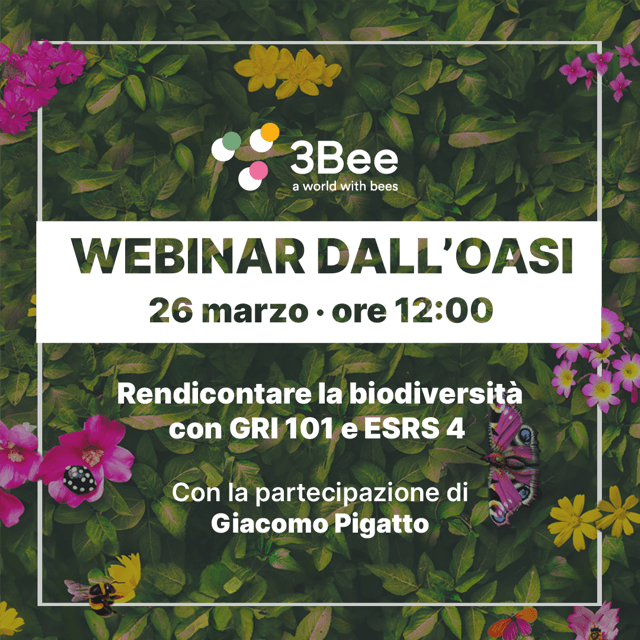
    Webinar: Reporting on biodiversity with GRI101 and ESRS 4

    What impact and dependency relationships exist between businesses and biodiversity? Tuesday, 26 March 2024, at 12:00, we will answer this and many other questions within the new episode of the webinar of the Oasis of CSR, the network of sustainability professionals, entitled "Recounting biodiversity with GRI101 and ESRS4". Together with Giacomo Pigatto, Researcher at the Scuola Superiore Sant'Anna di Pisa, we will analyse the standard GRI101: Biodiversity 2024 and the standard ESRS E4, issued by EFRAG, to understand how to report biodiversity impacts in the corporate sustainability report. Want to participate?
    Webinar 3Bee
    14/03/2024Of 3Bee, Lisa Santillo
    420 Views
    Newsletter
    newsletter
    Subscribe to the Blog about bees and biodiversity

    Frequently Asked Questions

    Do you have any doubts or other curiosities about this article? Here you will find some insights