Butterflies: life cycle and metamorphosis
    Life cycleUovaBrucoCrisalide

    Butterflies: life cycle and metamorphosis

    The life cycle of butterflies, characterised by four distinct phases, narrates a complex transformation that occurs through a phenomenon called metamorphosis. Learn more about the dynamics of this process in this article and discover an interesting fact about the memory of butterflies.

    Read the article
    06/02/2024Of 3Bee, Elena Fraccaro
    3002 Views
    06/02/2024Of 3Bee, Elena Fraccaro
    3002 Views

    The butterfly life cycle: stages

    The life cycle of butterflies and phalenes consists of four main stages: egg; caterpillar (or larva); chrysalis (or pupa); adult. Each of these life stages has a close correlation with the so-called 'nursing plants', i.e. the plants on which the adult lays eggs, on which the larvae feed and where they often settle in the chrysalis stage. The life cycle of butterflies is extremely fascinating and revolves around the complex phenomenon of metamorphosis: in the adult stage, in fact, butterflies are completely different from their juvenile forms from a morpho-physiological point of view. What is thought is that metamorphosis developed in butterflies to enable them to make more rational use of environmental resources and divide tasks between larva and adult, limiting competition between individuals of the same species. But what exactly happens in the different stages of a butterfly's metamorphosis? Let us see it together.
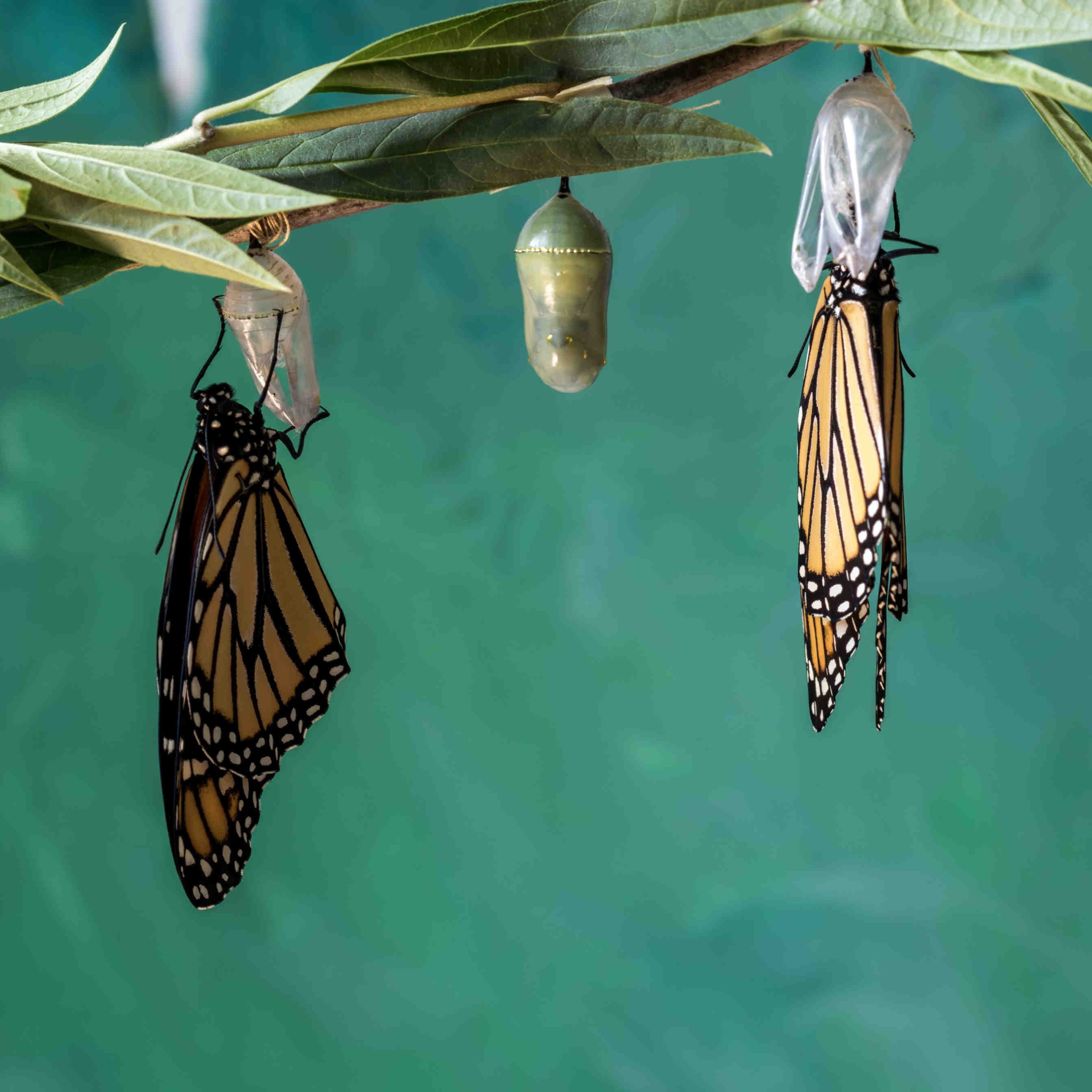
    farfalle crisalide

    Egg laying

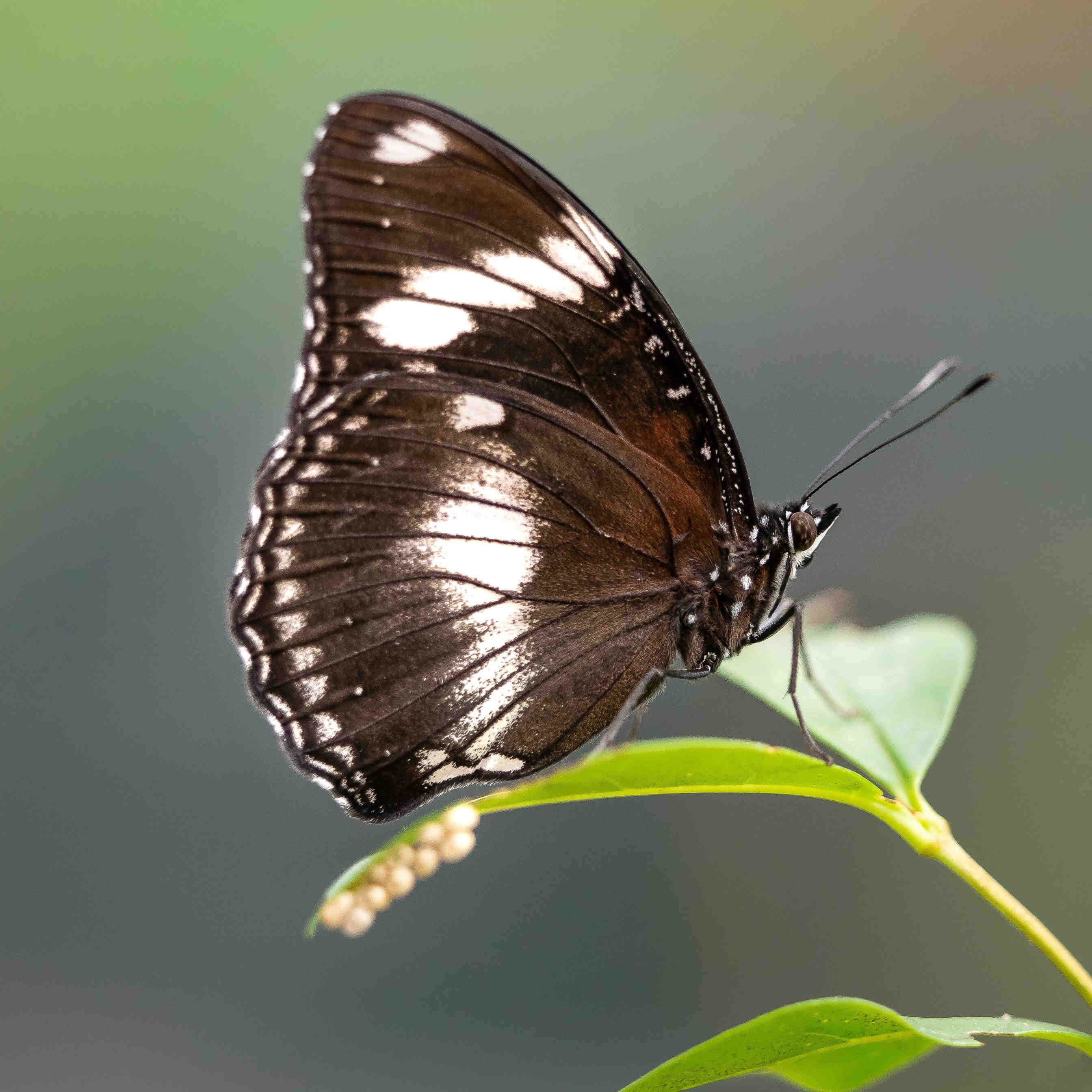
    The females of the lepidoptera (the order to which butterflies and moths belong) often require specific nutrient plants on which to lay eggs. A butterfly typically lays 200-500 eggs and they vary in shape and size depending on the species. Most species hatch in four to five days, while others may take up to three weeks. The eggs are lined with a resistant wrap, containing the nutrients that allow the larvae to develop and hatch. The shape of butterfly eggs is generally spherical or hemispherical, but they can also be cylindrical, fusiform, thin or elongated. Their profile is often irregular or angular and they may be rich in outgrowths or grooves. The shell is often characterised by incisions or raised patterns, which are repeated in a regular pattern. For example, ridged eggs are typical of Nymphalids.

    farfalla uova
    XNatura

    Egg to caterpillar (larval stage)

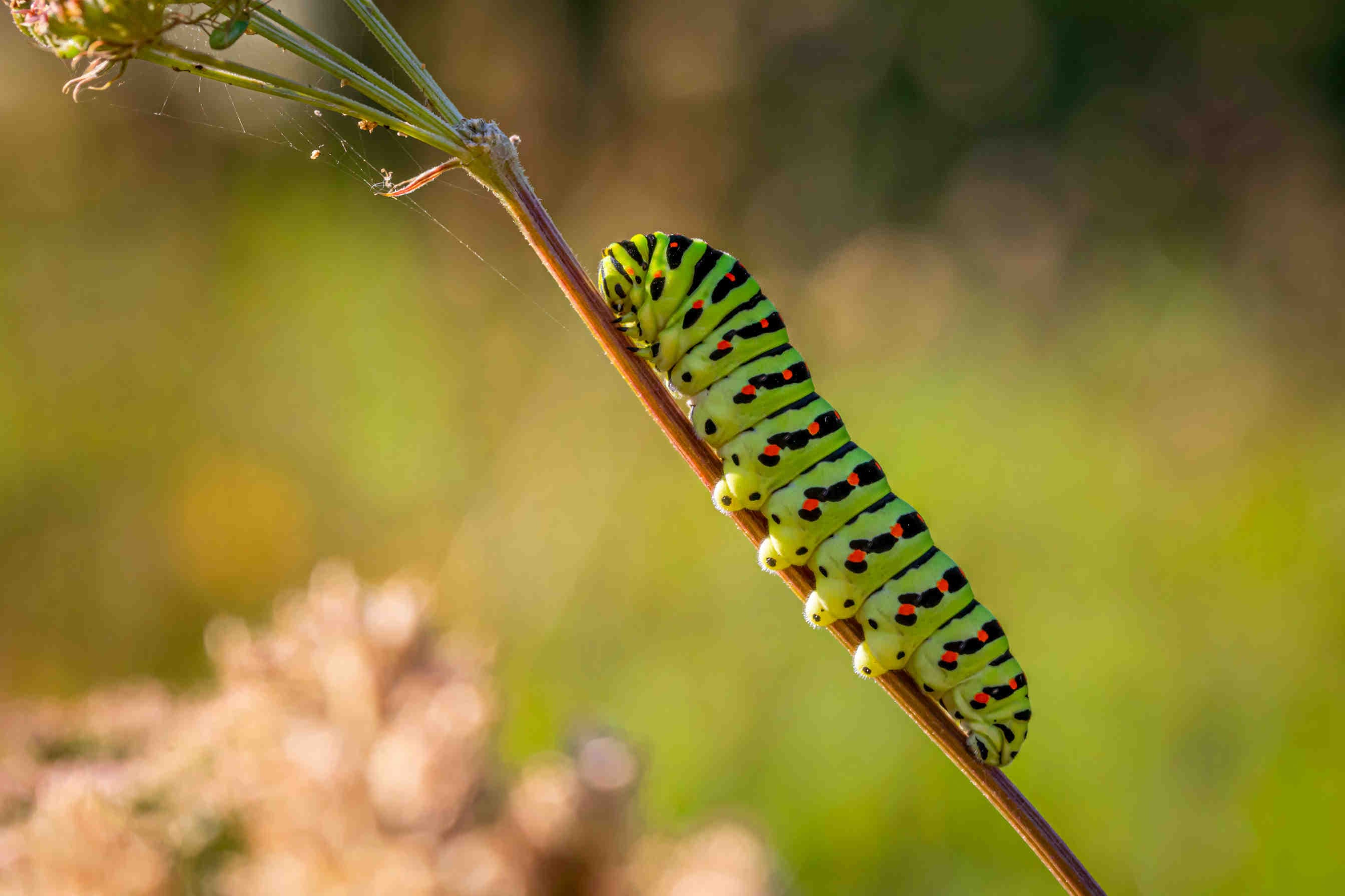
    When the eggs hatch, the eggs begin to feed and grow. Their first meal is usually the egg shell, which provides them with important nutrients. Afterwards, they begin to eat the nutrient plant. Almost all caterpillars feed on leaves, but some also eat stems, roots, fruits, seeds, pods and flowers. There are species of lepidopterans that feed on a single nurse plant called monophagous (species-specific interaction) while others called oligophagous have a broader food spectrum (extended to include several plant species of the same family). Monophagous species feed only on the nurse plant and do not move to adjacent plants even if they find themselves without food. As they eat, their body expands and the cuticle, an inelastic exoskeleton, becomes taut, begins to split and finally detaches, giving birth to the newly formed one. This process is called mutation and is repeated on average four to five times during the growth of the larva.

    bruco

    From chrysalis to adult butterfly

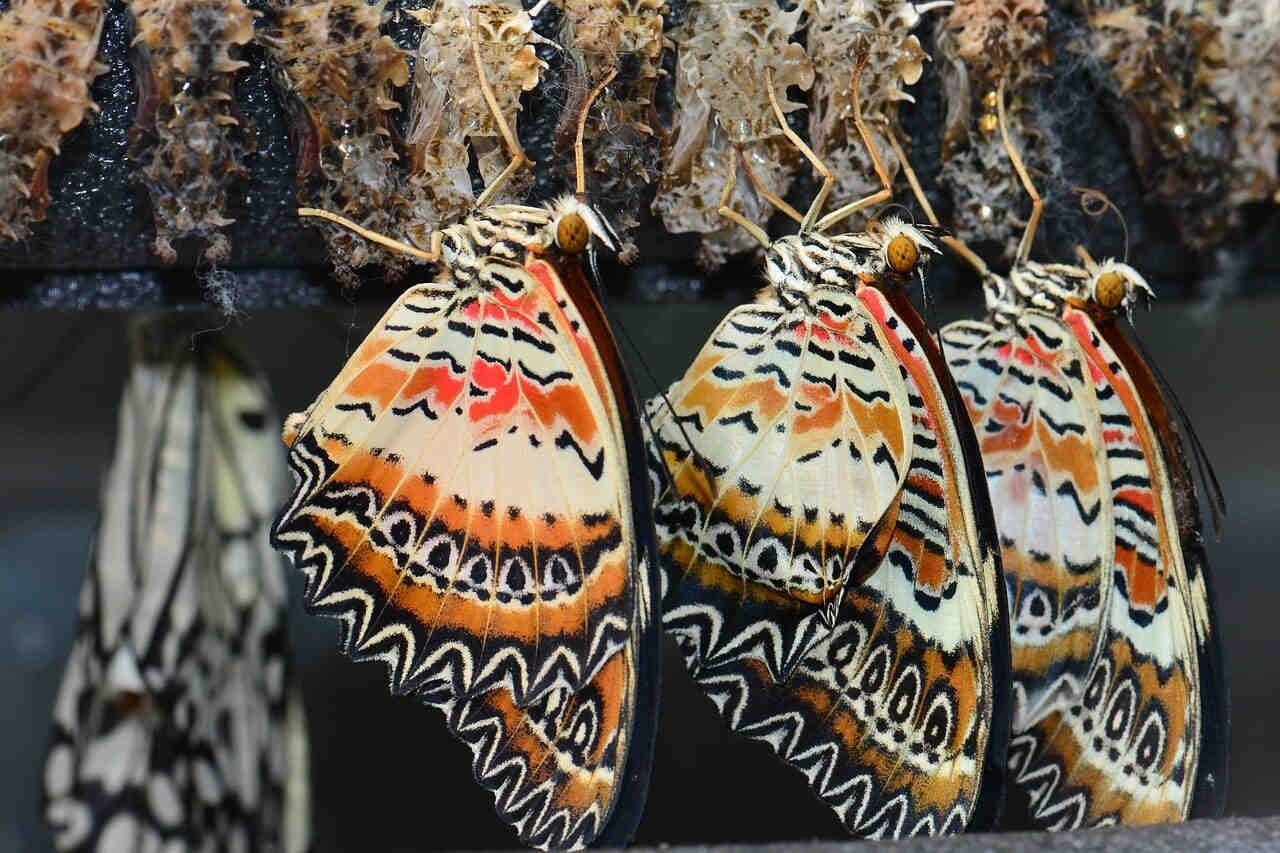
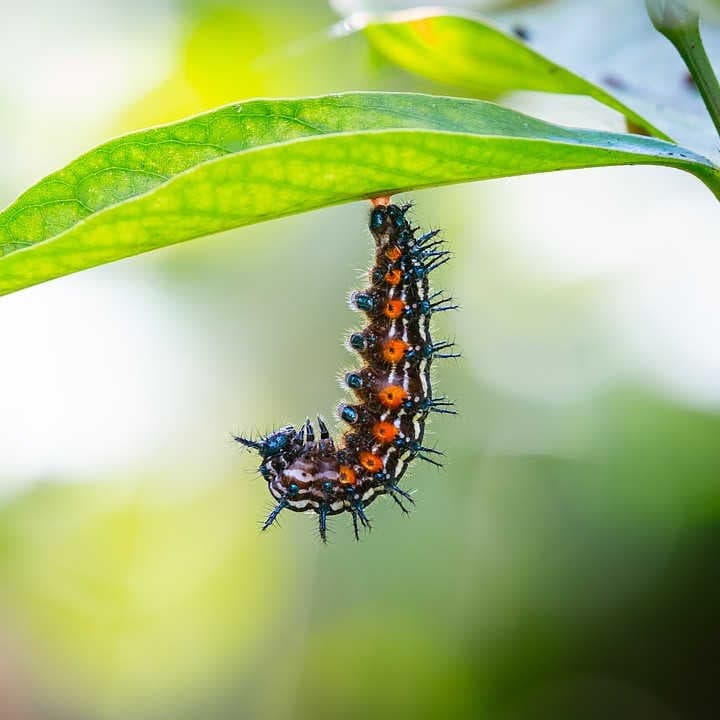
    Having reached maximum development and completed all its moults, the caterpillar turns into a chrysalis: it encloses itself in a hard, rigid shell within which it undergoes many transformations until it becomes a fly. The chrysalises generally attach themselves to the nurse plant, but some prefer to hide, e.g. between stones or in the grass. Characterised by a mimetic colouration, the chrysalises begin to break when environmental conditions and temperature are optimal, allowing the adult form to emerge. As soon as it emerges, the butterfly cannot fly immediately because its wings are still moist and curled up: it therefore positions itself upside down to favour their complete expansion thanks to the pressure given by the circulation of the body hemolymph. When the wings are dry, the adult butterfly takes flight and the life cycle begins again. The lifespan of an adult butterfly can vary from a few days up to 11 months.
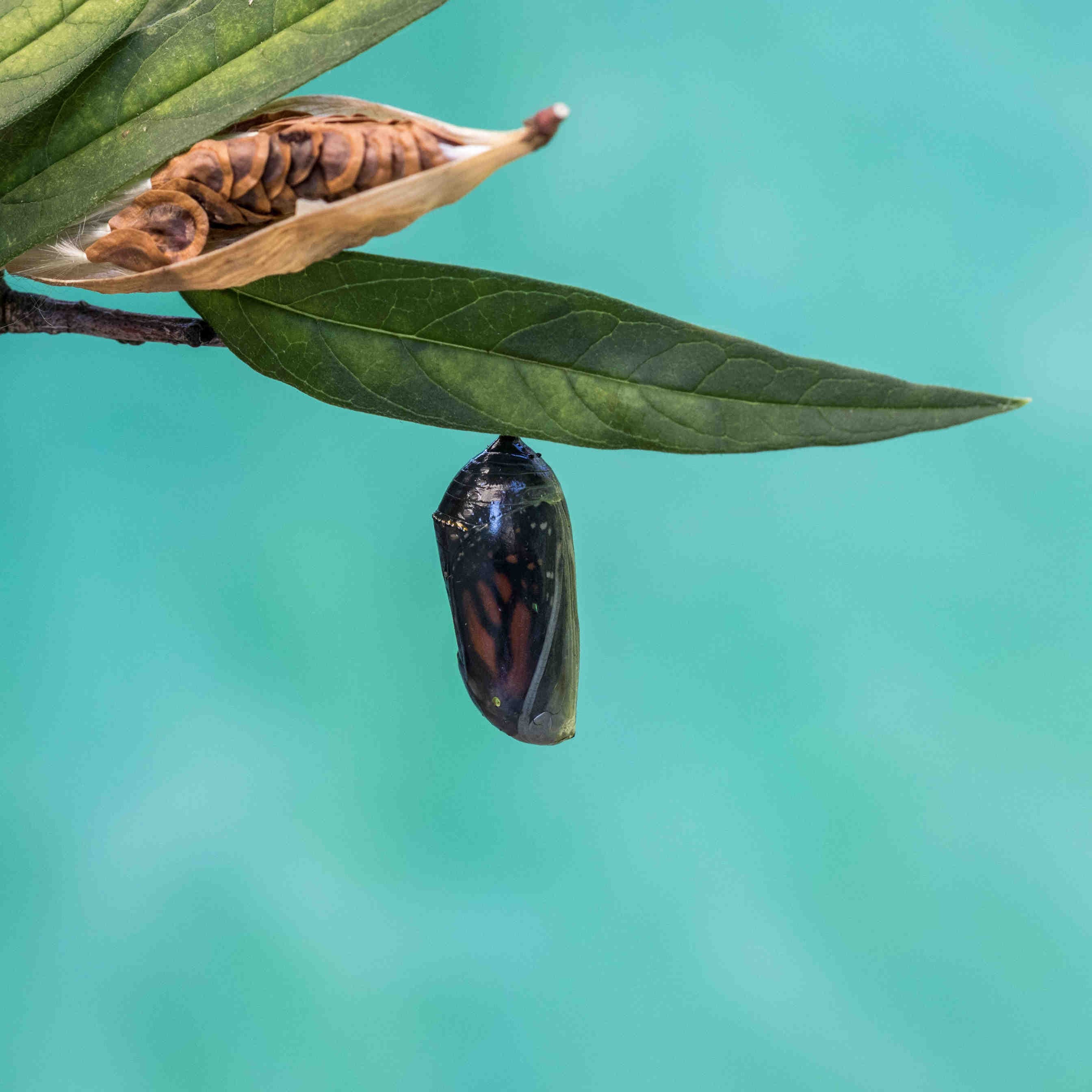
    crisalide
    XNatura

    Do butterflies have memories of when they were caterpillars?

    metamorphosis involves radical changes in the body shape and lifestyle of butterflies. It would therefore seem unlikely that learned associations or memories formed in the larval stage would be accessible to the adult form. However, a recent Georgetown University study has shown that associative memory in lepidopterans can survive metamorphosis. The brain and nervous system of caterpillars are drastically reorganised during the pupal stage and it was unclear whether memory could survive such drastic changes. The results of the study show that memory retention is dependent on the maturity of the developing caterpillars' brains: caterpillars that have learnt to avoid an odour less than three weeks old do not remember this information as adults, whereas in 'older' caterpillars, conditioned in the last larval stage, the acquired information persists even in the adult form.

    bruco a testa in giù
    3Bee

    Protecting butterflies and their habitats

    The results of the study by Georgetown University also have ecological and evolutionary implications, as memory retention through metamorphosis could allow a fly or another insect to lay eggs on the specific nurse plant it had fed on when it was larvae, a behaviour that could influence the selection of the habitat and eventually lead to the development of a new species. The butterflies represent a valuable treasure trove for global biodiversity, but unfortunately they are declining dramatically due to certain human activities, including intensive agriculture and deforestation. According to the ISPRA, 9 per cent of bees and butterflies are at risk of extinction and even some of the species, classified as critically endangered in the IUCN Red List, are almost completely extinct. In order to protect biodiversity, it is important to encourage the creation of areas with favourable habitats and seasonal blooms, such as the 3Bee Biodiversity Oases.
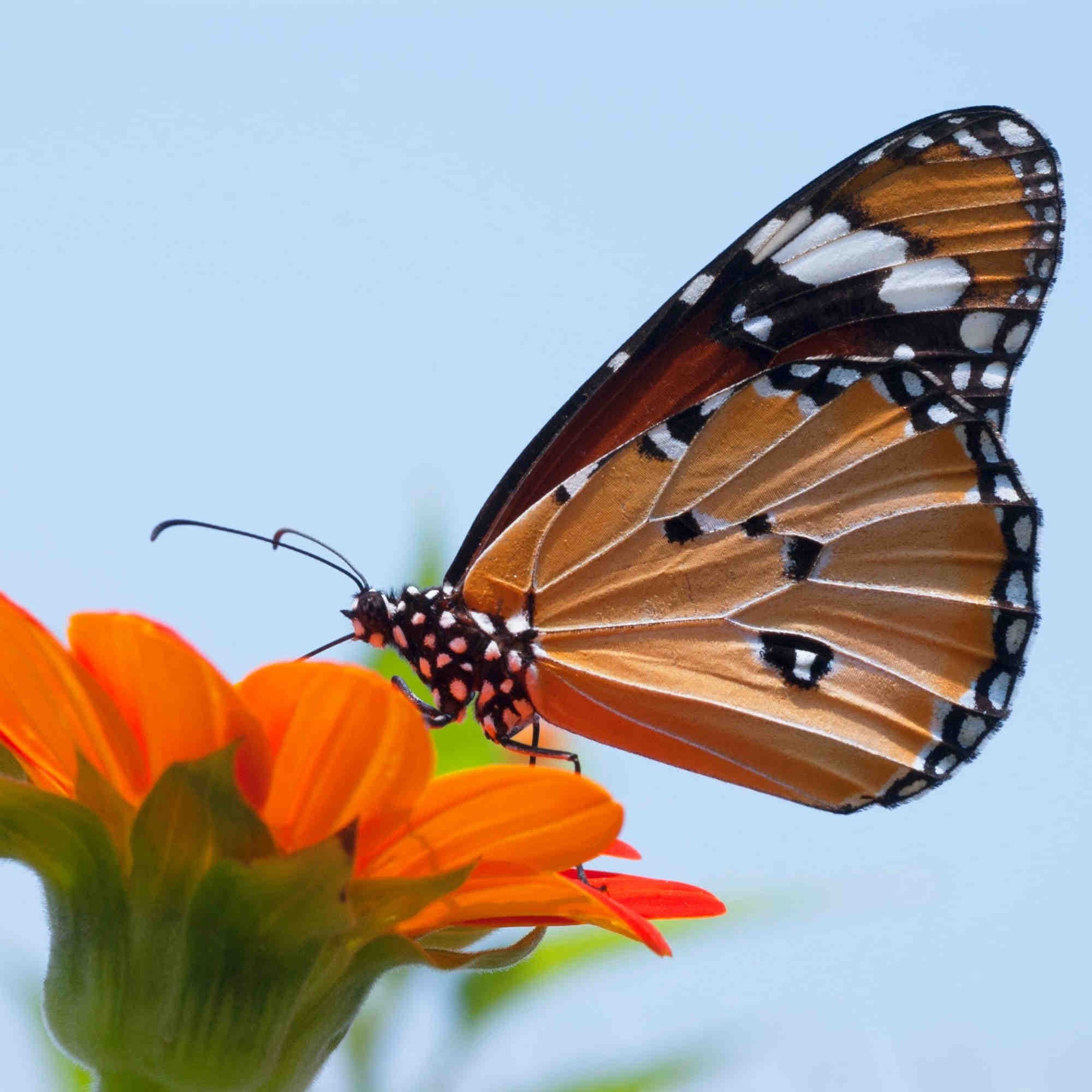
    farfalla monarca
    06/02/2024Of 3Bee, Elena Fraccaro
    3002 Views
    Newsletter
    newsletter
    Subscribe to the Blog about bees and biodiversity

    Frequently Asked Questions

    Do you have any doubts or other curiosities about this article? Here you will find some insights