Dolphins Communicate Through Smiles While are Playing
    SmileGameRiteSearch

    Dolphins Communicate Through Smiles While are Playing

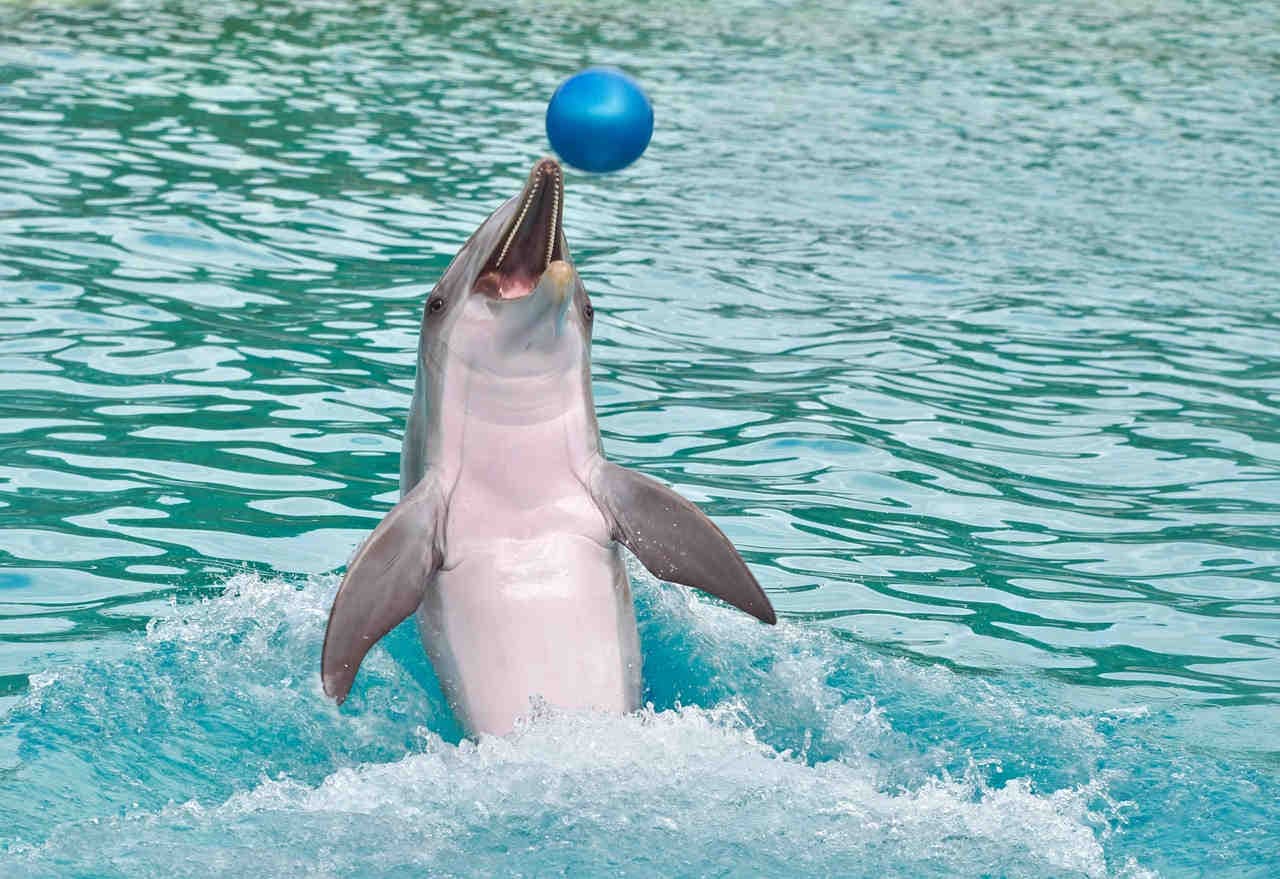
    Researchers from the Universities of Pisa and Turin have discovered that dolphins use an open-mouthed expression, similar to a 'smile', during social play to communicate with others in their field of vision.

    Read the article
    18/10/2024Of 3Bee, Chiara Pertile
    825 Views
    18/10/2024Of 3Bee, Chiara Pertile
    825 Views

    Dolphins Smile: How Facial Expressions Support Social Play

    Disclaimer: this is an automated translation from Italian. Go to the original article.

    Bottlenose dolphins (Tursiops truncatus) are known to be very playful animals, but how do they communicate with each other? According to new research published on 2 October in iScience (Cell Press), conducted by the University of Pisa in collaboration with the University of Turin, the University of Rennes, and led by Italian ethologist Elisabetta Palagi, these dolphins use an "open-mouthed" facial expression, called "Open Mouth" (OM), during social play sessions. This behaviour, which could be comparable to a human smile, appears during playful interactions and would seem to encourage mimicry responses from playmates: when they are in the same field of view, they respond in fact in 33% of cases, opening their mouths in turn .

    gruppo di delfini

    Understanding Play in Dolphins: The Role of the 'Open Mouth'

    Play is a widespread behaviour in nature and observed in many species, including mammals, birds and even some invertebrates. It has an important evolutionary function and plays a central role in the development of individuals' social and cognitive skills. But when can behaviour be defined as play? According to ethologist G. Burghardt, there are five criteria that define play: it lacks a defined function in relation to the context and is not purposive; it is voluntary, spontaneous and rewarding in itself; it is exaggerated and involves amplified movements; it has repeated but not stereotyped patterns; and it always occurs in a relaxed state. In a situation of lack of animal welfare, there is no behaviour that can be attributed to play.

    Delfino che gioca
    XNatura

    The ritualisation of behaviour

    Social play requires complex communication skills, especially when it includes motor activities such as biting, which could escalate into actual aggression. In fact, many mammals use specific signals, such as the 'open mouth' (OM), to regulate play interactions. Niko Tinbergen, a Nobel Prize winner, proposed the ritualisation theory to explain the evolution of such signals. According to this theory, signals evolve from functional behaviour that, over time, is modified and transformed into ritualised actions. In the case of the OM, this signal would be derived from the action of biting, deprived of actual contact, leaving only the preparatory phase:a ritualised version of the intention to bite. The relaxed open mouth of several social carnivores, the playful expressions of monkeys and laughter in humans are all ritualised visual signals that play an essential role in the communication of the playful state.

    Delfini compagno

    New Discoveries on Dolphin Communication

    In marine mammals, this is the first time that such behaviour has been observed. The study by iScience, conducted on captive dolphins at Zoomarine in Pomezia (Italy) and Planète Sauvage in Port-Saint-Père (France), monitored 837 play sessions recorded in 80 hours of video. The game sessions included both solitary and social interactions and during the analysis, they focused on the role of the 'open mouth' (OM) and observed whether this expression had a specific function in social interactions. The researchers found that OM occurs almost exclusively during social interactions, and is particularly frequent when a dolphin is in the field of vision of its playmate. This behaviour, reminiscent of the visual cues of other social species, was observed in all groups of dolphins examined.

    tursiope
    XNatura

    Improving communication

    During the study, 1,288 OM events were recorded, with a distribution of 92% during social play between dolphins and only a small proportion during interactions with humans. The 'open mouth' was emitted mainly (89% of cases) when another dolphin was in the mate's field of view, suggesting a mutual focus on visual perception. Furthermore, it was found that in 33% of the cases, the receiving dolphin immediately replicated the OM. Such behaviour probably contributes to strengthening the bond between the dolphins and maintaining a playful atmosphere during play sessions. According to Elisabetta Palagi, some scholars might claim that dolphins imitate 'open mouth' expressions from other individuals purely by chance, but this would not explain why the probability of imitating another dolphin's OM within one second is 13 times higher.

    gruppo delfini
    3Bee

    Future research on smiles

    The response rates observed in dolphins are consistent with what has been observed in some carnivores, such as the suricates and the orsi, and represent an important first step in understanding the behaviour of these animals. Future research will instead focus on the use of acoustic signals by bottlenose dolphins in play sessions, precisely to understand whether these are complementary to visual signals. Dolphins, in fact, have one of the largest vocal repertoires in the animal kingdom and it is not unlikely that they coordinate visual and vocal signals to communicate. The discovery by the Universities of Pisa and Turin not only broadens our understanding of dolphin social communication, but also highlights fascinating parallels with human behaviour by pushing further and further the differences that distinguish human from non-human. In short, dolphins 'smile' and their smile is contagious, just as it is with us humans.

    delfino
    18/10/2024Of 3Bee, Chiara Pertile
    825 Views
    Newsletter
    newsletter
    Subscribe to the Blog about bees and biodiversity

    Frequently Asked Questions

    Do you have any doubts or other curiosities about this article? Here you will find some insights