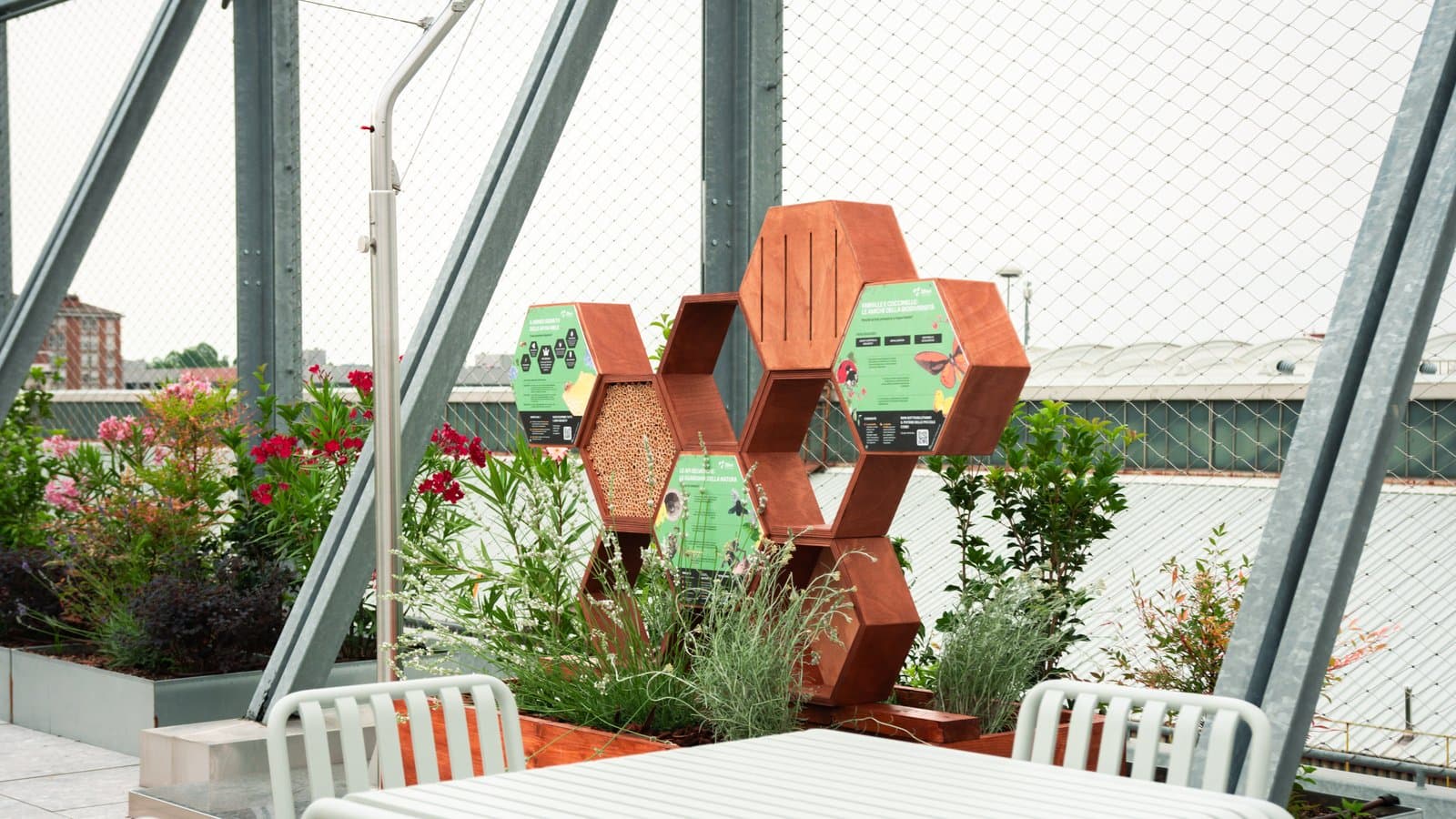
A beehive on the roof is not biodiversity
In recent years, beehives have moved onto the rooftops of offices, hotels, and facilities. Urban beekeeping brings people closer to bees, but on its own it does not increase biodiversity: the honey bee is a farmed animal and in the city it seeks the same flowers as wild bees. In Paris, a study published in PLOS ONE measured that where there are more colonies within a 500-meter and one-kilometer radius, wild pollinators visit flowers less, with the strongest effect on large solitary bees, beetles, and bumblebees. In 14 Swiss cities, beehives doubled between 2012 and 2018, from 3,139 to 6,370, and the available flowers are no longer enough to sustain them (npj Urban Sustainability). One more beehive without more flowers takes space away from nature instead of giving it: we also talked about it in Bees in the city, let's be clear.