Honey extraction: what it is and how it works
    3Bee approachHoney extractionToolsWhen

    Honey extraction: what it is and how it works

    In beekeeping, one of the most satisfying moments is certainly that of honey extraction. When we speak of honey extraction, we mean in a broad sense all those operations that are carried out by the beekeeper in order to extract honey from the combs and make it available for consumption.

    Read the article
    14/06/2019Of 3Bee, Elena Fraccaro
    2237 Views
    14/06/2019Of 3Bee, Elena Fraccaro
    2237 Views

    3Bee's approach to biodiversity protection
    3Bee is the Nature Tech company that develops technologies for the protection of biodiversity. 3Bee Hive-Tech is 3Bee's first system for analysing the health and 'starvation' status of honeybees, environmental bees par excellence. Over time, we have developed other technologies to study and monitor all the pollinating insects and created more than 200 Oases of Biodiversity with thousands of nectariferous plants to provide them with nourishment. Thus, we want to create a virtuous circle: our beekeepers are transformed by necessity into Oasis growers and promoters of environmental biodiversity. We do not encourage massive production and intensive breeding, which have a negative impact on biodiversity and pollinators. We do, however, recognise the value of honey as a valuable symbol of the biodiversity of an environment and a tool for disseminating the commitment and protection of an area, to be consumed sparingly and with respect for the life cycle of these insects.

    3Bee Hive-Tech

    What is honey extraction?

    Let's start at the beginning, though. What is honey extraction? We have said that honey extraction means the extraction of honey and its subsequent preparation for consumption. It can be carried out directly by the beekeeper, if he has a specific honey extraction room that complies with standards, or it can be contracted out. Depending on the type of beekeeping, the location of production and the needs of the beekeeper, there may be several honey extractions during the course of the beekeeping season. There are those who organise themselves by extracting in spring, summer and autumn, or those who only do one at the end of the season, or even those who extract several times during the production season. Obviously there is no fixed rule here: everyone organises themselves according to their needs and availability, also taking into account external factors such as the weather.

    XNatura

    The tools of honey extraction

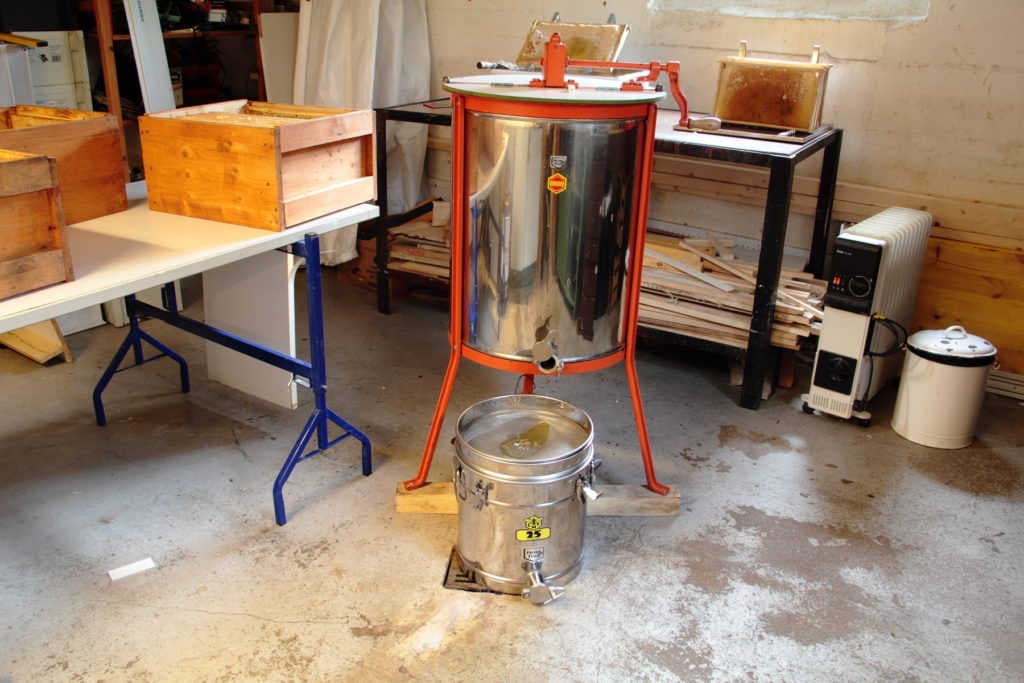
    Before looking in detail at the various stages of honey extraction, it is useful to list the tools required to extract honey correctly. The tools are as follows: apiscope, blower, brush, various tools (protective suit, lever, smoker), uncapping bench, knives or forks, honey extractor (or extractor), maturator. The extractor is the instrument that allows the true extraction of honey. There are different models, electric or crank, tangential or radial, large or small
    The tools of honey extraction

    When honey is ripe for extraction

    Generally, when 2/3 of the combs are operculated on both sides, i.e. when the honey-filled cells are covered with a layer of wax that seals them, this means that it is 'ready'. Why, however, is it necessary to wait for this moment? When the bees operculate the cells, the honey inside them has reached the right degree of humidity (17/18%). This prevents the honey from fermenting. This is why we wait for the combs to be operculated, resulting in an optimal product ready for storage. A other technique for calculating the right time to take out the honeycombs is to wait a few days after the end of the nectar flow. Alternatively, the weight of the hive can be monitored. When the estimated maximum weight is reached, proceed with removal.

    XNatura

    Harvesting the honeycombs

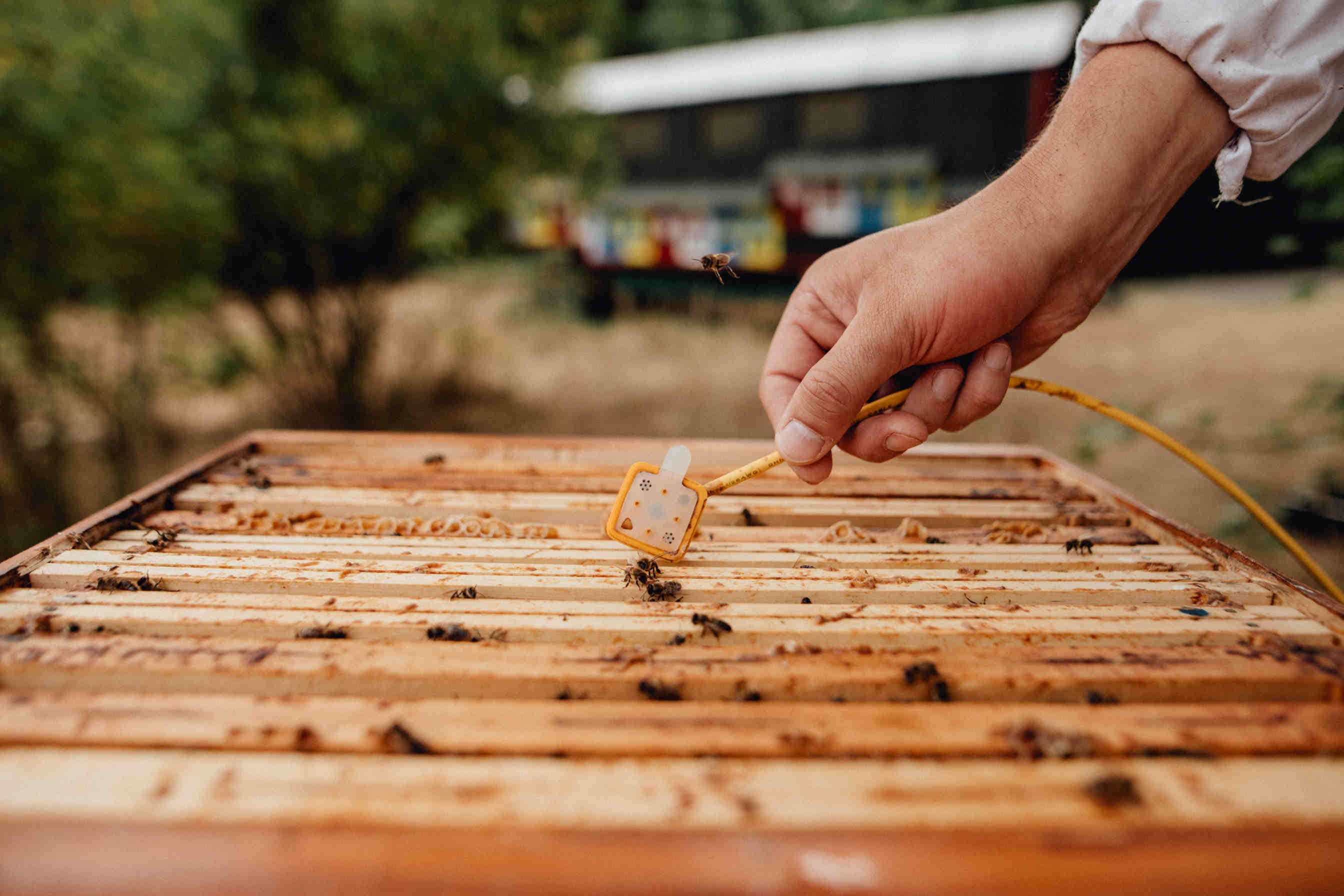
    When the beekeeper decides it is time for the harvesting of the honeycomb, he can use two techniques to rid them of bees. The first involves the use of the beekeeper, the second that of the blower. If one chooses the apiscope, it must be placed between the nest and the honeycomb or between the honeycomb to be taken and the one remaining in the apiary. The blower, on the other hand, is more immediate and hurried. The bees are pushed down to the nest by the flow of air emanating from it. This solution is certainly preferred by professionals who have many hives and whose apiaries are far from home. Not recommended is the use of the smoker to remove bees from the hive. In addition to damaging the quality of the honey and its flavour, it can make the bees nervous and trigger episodes of looting

    3Bee

    Uncapping

    Once the honeycombs have been collected, they must be transported to the honey extraction room. This room must meet strict standards and must be compliant. These precise regulations apply to those who produce honey for trade. Once the maturity of the honey is established, uncapping is carried out. By this term is meant the removal of the layer of wax that seals the cells and the honey inside. This operation takes place on a special uncapping bench. The honeycomb is placed on a sort of stand and the opercula are removed manually either with a special knife or a fork. The wax is deposited at the bottom, where there is a grid that allows subsequent filtering and recovery of the honey remaining attached to the opercula by squeezing or dripping. Large professional beekeepers generally rely on automatic or semi-automatic uncapping machines, which streamline the work considerably.

    The actual honey extraction

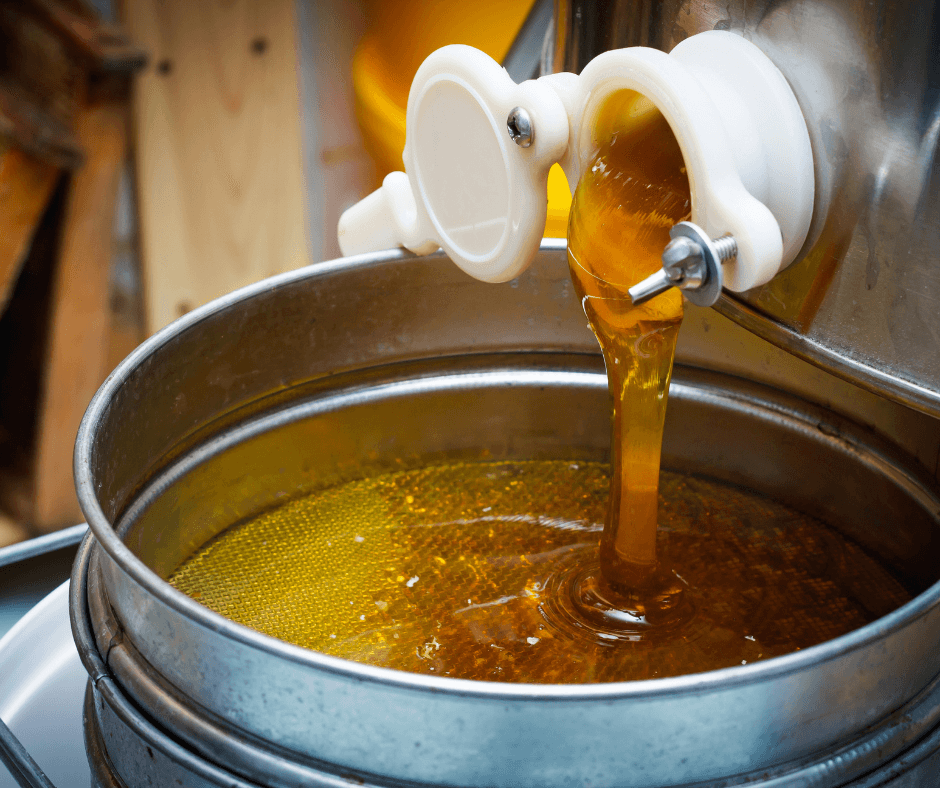
    Once the honeycomb has been uncapped, the actual extraction takes place. This is done using a special stainless steel honey extractor, of which there are several models on the market. All extractors make use of centrifugal force, whereby the honey is extracted from the honeycomb. Moreover, this type of operation allows cold processing, without heating the honey and thus altering the product. Various models of honey extractors are available on the market. For those who conduct beekeeping as a hobby and have only a few hives, manual extractors can also be used, while when the number of honeycombs increases, automatic extractors are required. It is then possible to choose between radial, semi-radial or tangential extractors. Once the extractor has been operated and the frames have been emptied, they can be re-stored with the honeycombs. It is then at the beekeeper's discretion whether to take them back to the bees to be cleaned.

    Filtering and decanting

    The honey extracted from the combs is then filtered to remove any residual wax or honeycomb. This operation is carried out with very fine-meshed wire nets. One can decide whether to proceed with filtering during the transition from the extractor to the ripener or after the decanting period. Next, the honey is placed in the ripener (or decanter), where it is allowed to decant to allow any residues to rise to the surface or settle to the bottom. At the same time, air bubbles are allowed to emerge. During this time, a white patina of foam forms, which is nothing more than the accumulation of these light residues on the surface. The beekeeper then removes it. The settling period varies, from a few days to a few weeks depending on the characteristics of the honey and the temperatures.

    Weight control for the removal of honeycombs

    Honey extraction is therefore a process that requires specific operations. Certainly the part that requires the most attention is that of choosing the right time to pick the honeycomb. We have seen what the general indications are, but it is not always possible to test the maturity of honey if you have many apiaries located far from each other. Therefore, assessing the weight curve can be essential. When the measured weight reaches the estimated level for a full hive, removal is carried out. Using the 3Bee monitoring systems you can check this data from the comfort of your mobile phone and schedule your apiary interventions. You can also set specific alerts that warn you when you are reaching your weight limit.

    14/06/2019Of 3Bee, Elena Fraccaro
    2237 Views
    Newsletter
    newsletter
    Subscribe to the Blog about bees and biodiversity