EU Taxonomy: what is it and what does it mean for companies?
    EU TaxonomyReportingObjectivesDisclosure

    EU Taxonomy: what is it and what does it mean for companies?

    The European Taxonomy is an EU tool for classifying sustainable economic activities, promoting transparency and sustainable investment. Read this article to find out how it works, what its main objectives are and how it can benefit companies.

    Read the article
    18/09/2024Of 3Bee, Lisa Santillo
    346 Views
    18/09/2024Of 3Bee, Lisa Santillo
    346 Views

    What is the European Taxonomy?

    The European Taxonomy is a classification system created by the European Union to determine whether an economic activity can be considered environmentally sustainable. It is based on scientific criteria developed by the Technical Expert Group (TEG) on Sustainable Finance. It aims to provide investors with a tool to identify and assess investments that meet EU environmental standards, thereby contributing to the green transition. The European Taxonomy, introduced by EU Regulation 2020/852, aims to reduce greenwashing by regulating non-financial reporting requirements. Companies subject to the regulation must disclose their environmental, social and governance (ESG) policies.

    ESG

    European Taxonomy: Steps for reporting

    The first step in reporting according to the EU taxonomy is to identify eligible activities, based on the NACE codes, which classify economic activities in specific sectors such as energy, transport or construction. Only activities that fall into these categories can be considered for alignment with the taxonomy. Once identified, the company must assess whether these activities meet the sustainability criteria. This includes making a significant contribution to one of the six environmental objectives and complying with the principle "Do No Significant Harm" (DNSH) principle, which ensures that none of the other five environmental objectives are compromised. In addition, the activity must meet minimum criteria for the protection of human and social rights, in line with international guidelines. To access the sustainability and human rights criteria for each economic activity, you can consult the EU Taxonomy Compass provided by the EU.

    rendicontazione sostenibile
    XNatura

    Objectives of the European Taxonomy

    As we have seen, the European Taxonomy focuses on six key environmental objectives in order to guide companies towards a sustainable transition. The objectives of the European Environmental Taxonomy are:
    - Mitigating of climate change
    - Adaptation to climate change
    - Sustainable use of water and marine resources
    - Transition to a circular economy
    - Prevention and control of pollution
    - Protecting and restoring biodiversity and ecosystems.

    obiettivi

    Disclosure of Turnover, CAPEX and OPEX

    The third reporting step requires the disclosure of the percentage of Turnover, CAPEX and OPEX related to activities aligned to the European Taxonomy, calculated in relation to the company's total or, if the company operates in more than one sector, in relation to the total of the relevant sector. Companies are required to disclose the percentage of their turnover derived from sustainable activities (Turnover), the long-term investments (CAPEX), such as infrastructure or technology, made in projects that contribute to sustainability goals, and the operating expenses (OPEX) associated with maintaining sustainable activities, such as the efficient use of resources. This type of disclosure is essential to demonstrate a company's commitment to sustainability and to provide transparency to investors.

    finanza sostenibile
    XNatura

    EU Taxonomy, SFDR Regulation and CSRD Directive

    The EU Taxonomy is closely linked to two important pieces of legislation: the SFDR Regulation and the CSRD Directive. The SFDR (Financial Sector Sustainability Disclosure Regulation) requires financial companies to provide information on the sustainability of their products. The EU Taxonomy serves as a reference for classifying investments according to environmental criteria, helping to prevent greenwashing and ensure that investments are truly sustainable. Companies are required to disclose the level of sustainability of their products according to specific articles of the CSRD (6, 8 and 9), which determine whether a product has ESG purposes. With the CSRD, more companies will be required to disclose detailed information on sustainability with reference to ESG criteria. The EU taxonomy provides a clear framework for this disclosure, facilitating compliance and increasing investor confidence.

    sostenibilità
    3Bee

    European taxonomy: benefits for companies

    Adapting to the European taxonomy offers several competitive benefits for companies. The first benefit is easier access to sustainable finance, as the taxonomy clearly defines which projects are considered sustainable by investors. In addition, compliance enhances a company's reputation by demonstrating a concrete commitment to sustainability, which is increasingly important to consumers and business partners. With the introduction of the CSRD Directive, the Taxonomy will become a key reference point for mandatory ESG reporting, ensuring that companies communicate their environmental impact in a transparent manner.
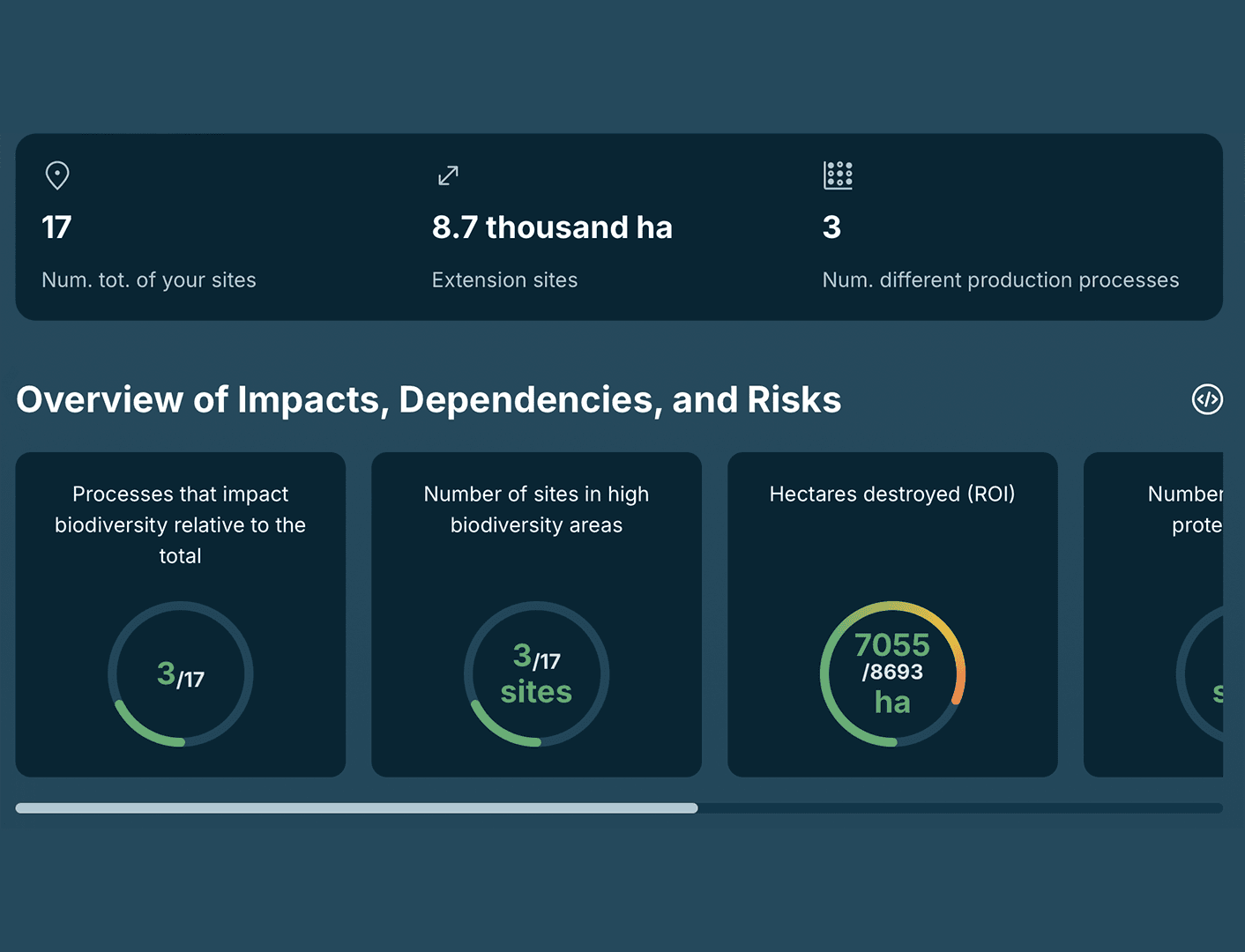
    piattaforma 3bee

    The XNatura Score Environmental Platform

    In this context, 3Bee is positioned as a strategic partner in the implementation of climate strategies for companies and municipalities. The XNatura Platform provides a comprehensive solution for companies wishing to assess and mitigate their impact on biodiversity, in line with the European Taxonomy. Through the use of innovative proprietary technologies, 3Bee enables the collection of transparent data that is then processed to estimate the biodiversity impact of company sites and supply chains, enabling the planning of a true climate and biodiversity strategy. 3Bee's approach to biodiversity assessment, restoration and monitoring is based on the guidelines of the verified XNatura Protocol, developed in line with the CSD Directive and key international reporting standards.

    18/09/2024Of 3Bee, Lisa Santillo
    346 Views
    Newsletter
    newsletter
    Subscribe to the Blog about bees and biodiversity

    Frequently Asked Questions

    Do you have any doubts or other curiosities about this article? Here you will find some insights