Queen bee: birth, growth, nutrition and tasks
    StructureThe queen beeTasksCoupling

    Queen bee: birth, growth, nutrition and tasks

    The Bee Caste: the queen bee is the head and heart of our hives. Alone, she leads the family to grow, collect nectar, clean the hive and proliferate. The queen of the hive is single, alone, except in rare cases when 2 queens may share the sceptre for a short time.

    Read the article
    23/11/2018Of 3Bee, Elena Fraccaro
    5058 Views
    23/11/2018Of 3Bee, Elena Fraccaro
    5058 Views

    The structure of the hive super-organism

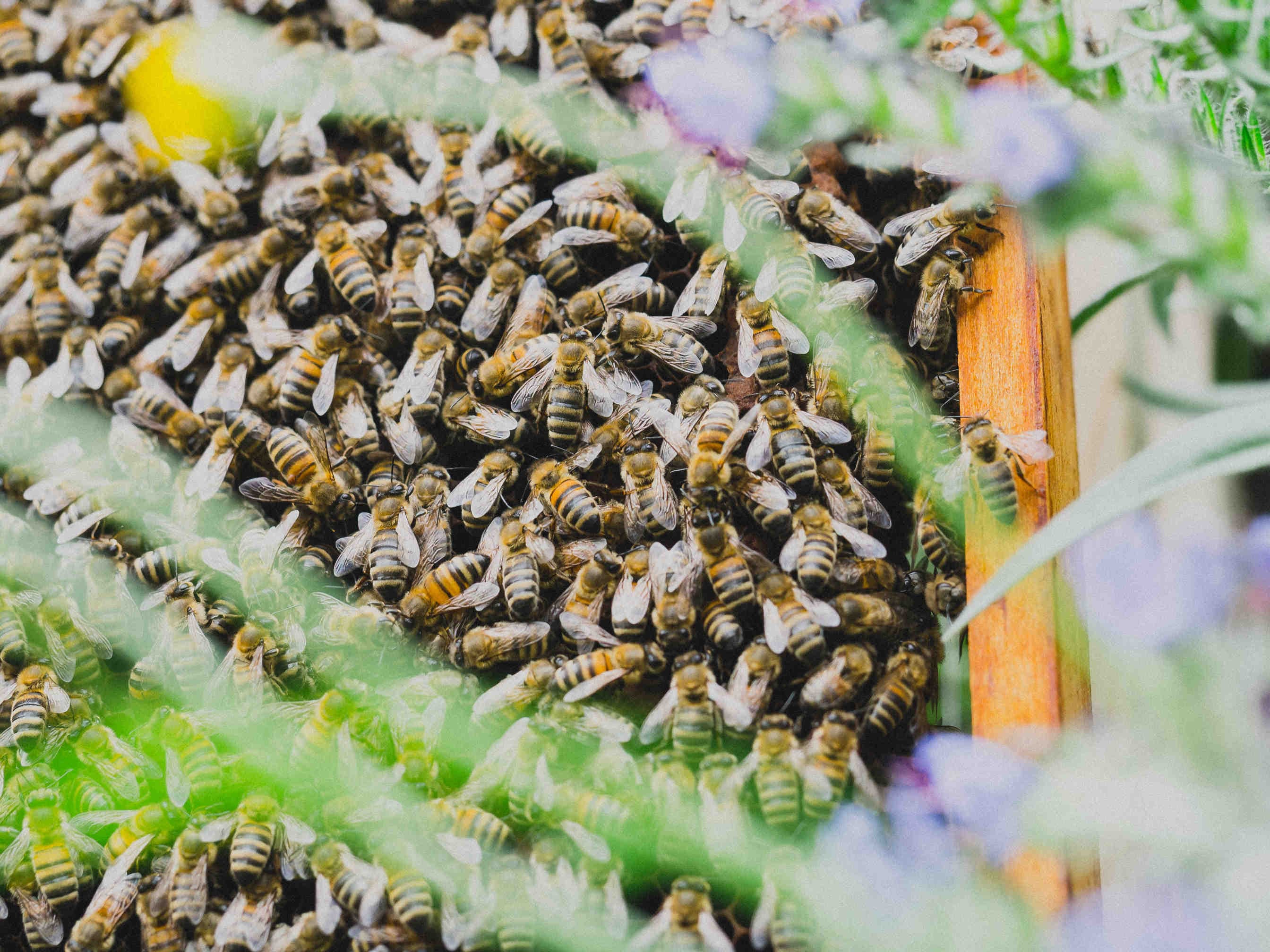
    The bee is an extremely evolved insect and is defined as eusocial. It, in fact, lives in a well-structured society, the beehive, which, as we all know, is organised into three castes, each of which has clearly differentiated and precise characteristics and tasks. More precisely, we find the queen bee, the drones and the worker bees. These different types of bees are not presented in terms of importance, as they are all indispensable for the maintenance of balance. We know that most bees are female, but only one of them, in an entire hive, is fertile and performs the important task of laying eggs and growing the colony. We are of course talking about the queen bee, the mother of all bees in a hive. She is commonly regarded as the undisputed head of the hive, but this title of nobility does not hold the same impotence as it does in human society.
    The structure of the hive super-organism

    Characteristics and peculiarities of the queen bee

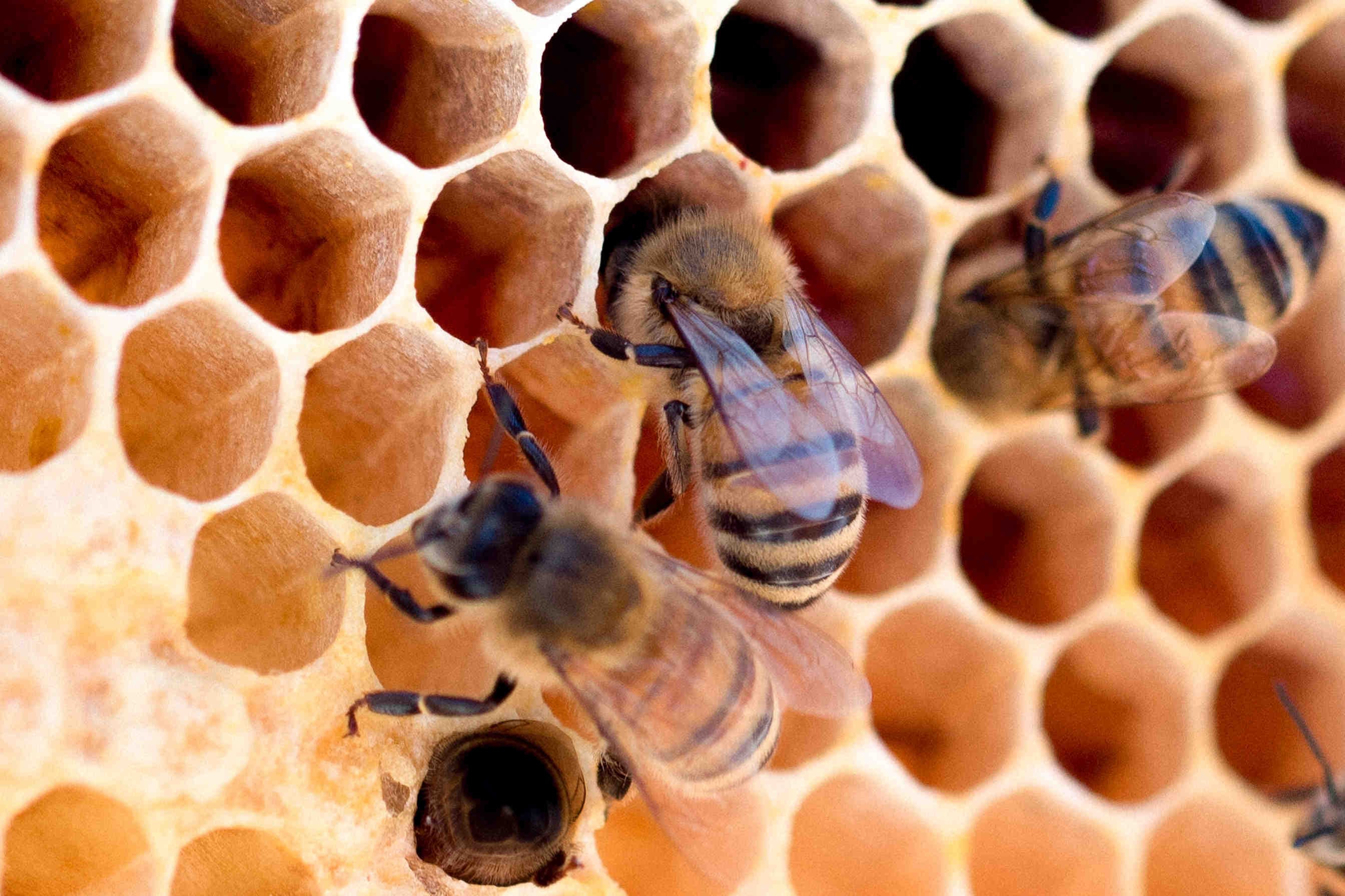
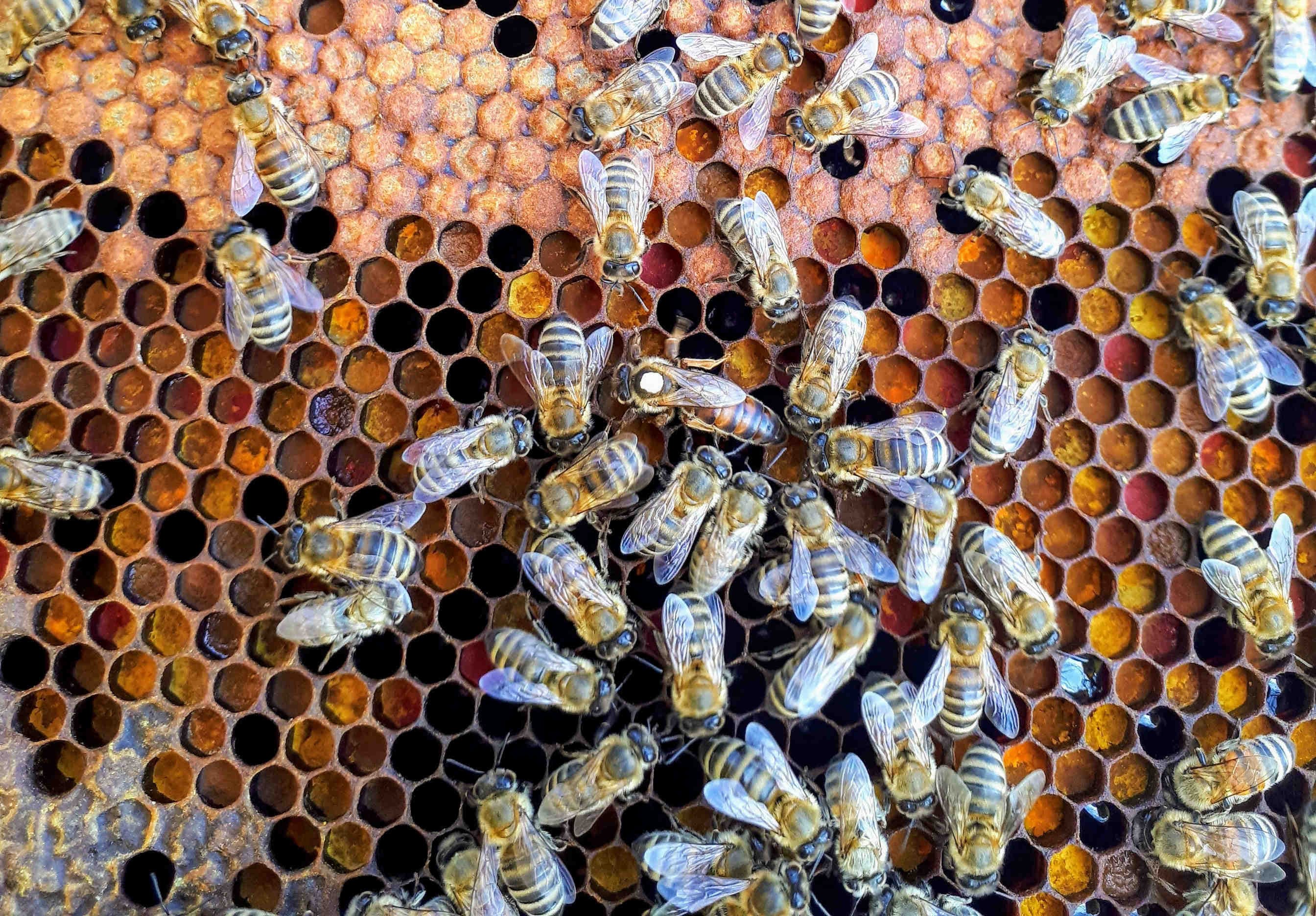
    The peculiarities that differentiate it from other worker bees are many, starting with the royal cell in which the egg is laid. In fact, the queen grows and develops inside a royal cell, an elongated acorn-shaped cell that is often built by the workers either along the edges of the combs or, in some cases, in their centre. The queen's diet is also very special: she is the only bee that is fed royal jelly all her life! The most striking difference, however, is related to its morphology and allows it to be recognised quite easily. The queen bee is much larger than the workers and has a highly developed abdomen. Its particular diet, based on royal jelly, is not only responsible for its different appearance, but also for its longevity. She can survive for up to 5 years. Pictured, marked in white, the queen bee
    Characteristics and peculiarities of the queen bee
    XNatura

    Its tasks

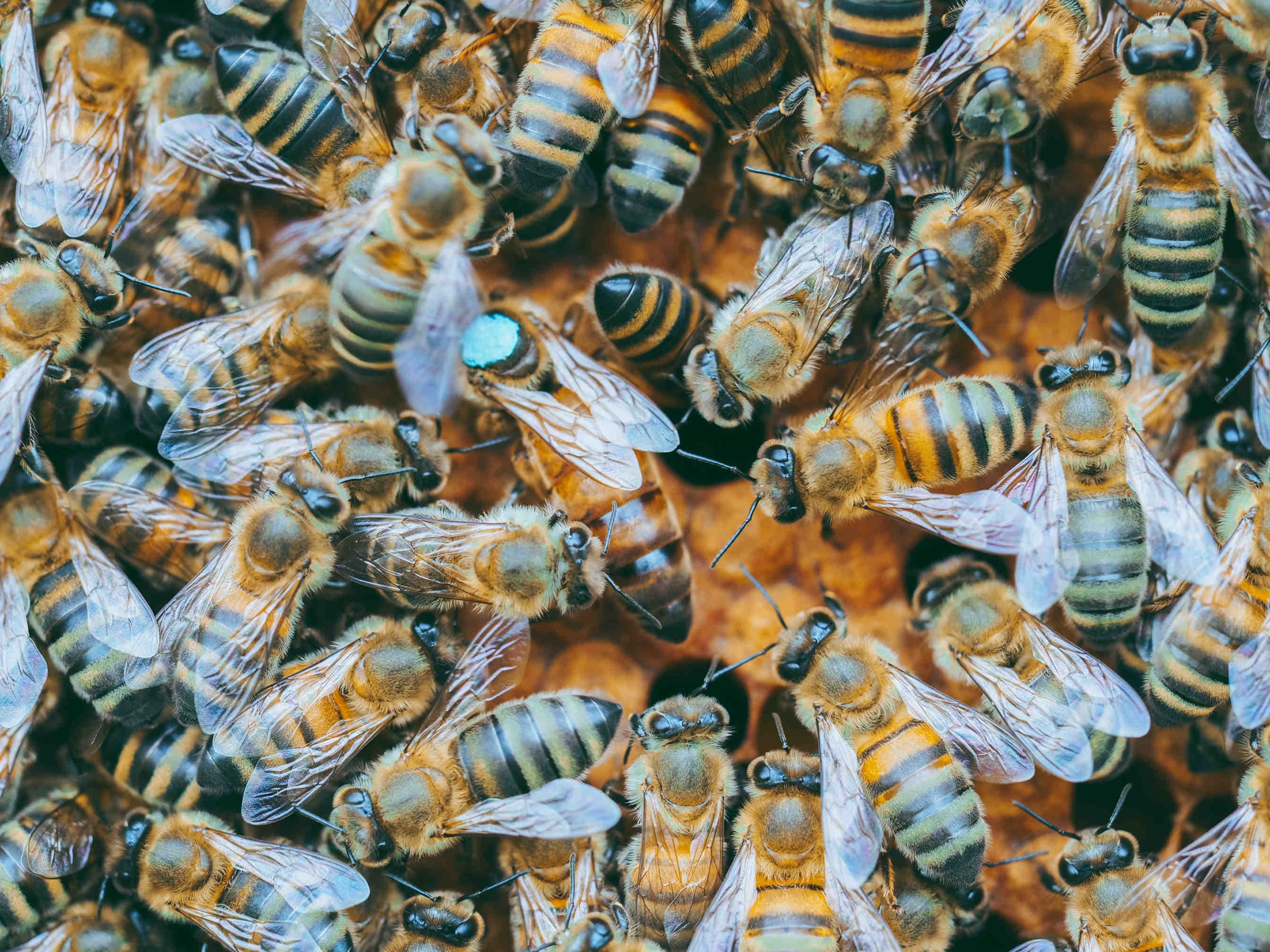
    The queen's main task, compared to the other worker bees, is as simple as it is fundamental: taking care of the colony's growth and ensuring its cohesion. The queen bee, being the only fertile female, only has to worry about laying eggs. At the height of the family's expansion, she can lay up to 2000 eggs a day! The most interesting aspect is that the queen has no decision-making power regarding the type of bees that will be born from the eggs she lays. The cells, in fact, are built by the workers and their different shapes and sizes determine the birth of a worker, a drone (if the egg is not fertilised) or another queen. In the worker cells, she will lay fertilised eggs, while in the drone cells there will be unfertilised eggs. This means that female bees have the genetic traits of both mother and father, while drones only those of the mother. Pictured is Blue's marked queen bee
    Its tasks

    Mating and fertilisation

    When a queen comes out of her cell, she is said to be 'a virgin queen bee', i.e. not fertilised. In this condition, she can be of no help to the development of the colony. For this reason, between the 5th and 15th day after her birth, she will start scouting flights outside the hive, culminating in the so-called 'nuptial flight' to the gathering place. This is nothing more than the place where the drones concentrate to allow mating with virgin queens. During a nuptial flight, the queen mates with several drones (male bee), becoming a fertile queen. The higher the number of drones fertilising her, the greater the constancy of oviposition over time, allowing a high genetic variability for the bees present. The drones, however, do not emerge from mating unscathed. Once the act is over, their genitals are torn off.

    Mating and fertilisation
    XNatura

    How is a queen bee born?

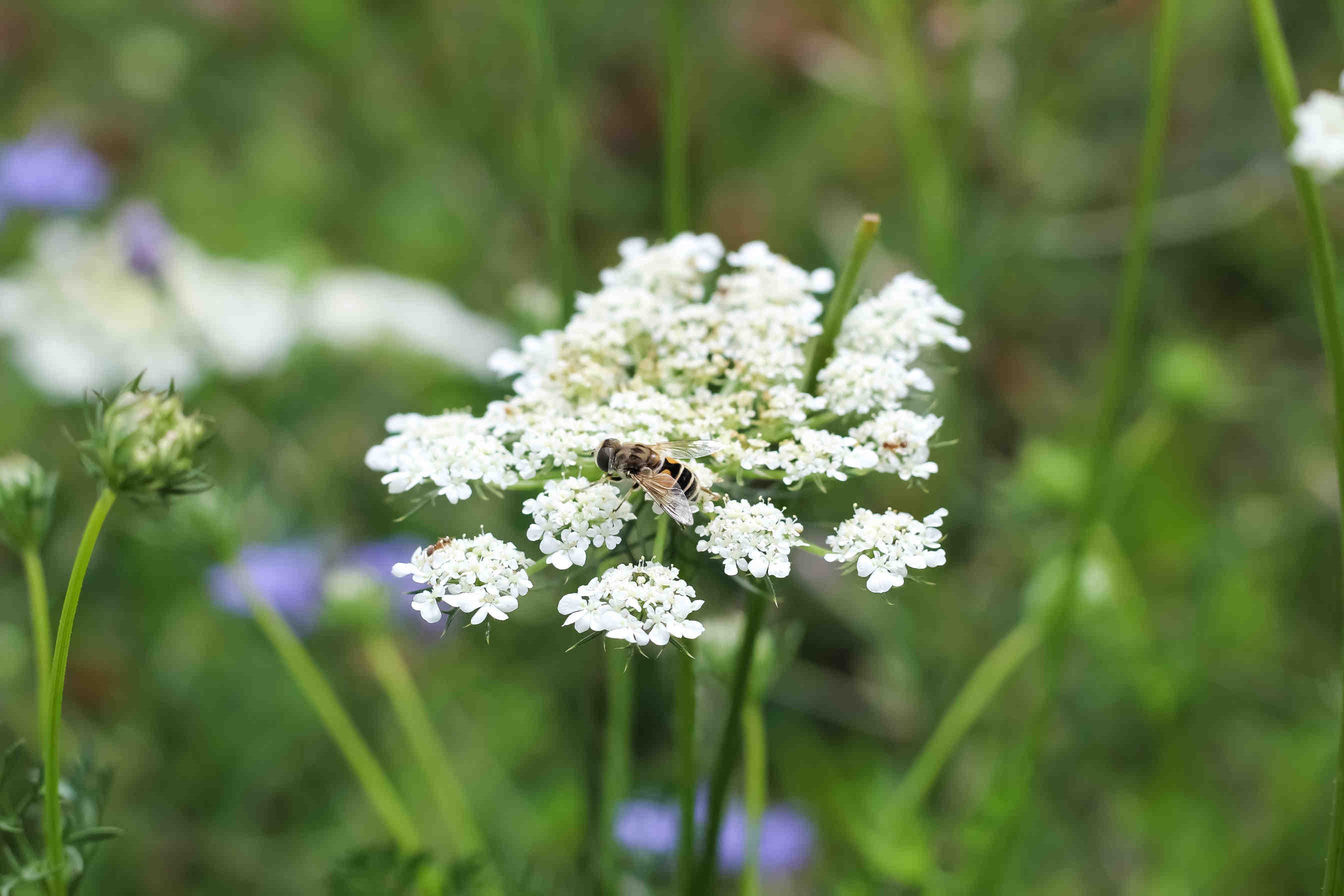
    The differences from other bees also extend to the development process of the queen bee. From the laying of the egg to its birth, approximately 16 days pass. Of all the different castes, this is the shortest period. During her life, the queen emits special pheromones that can be said to bring order to the bees. These pheromones in fact prevent the development of the reproductive apparatus of the female workers, who thus remain sterile, but they also serve to make it clear that there is a queen laying and that the survival of the hive is guaranteed. These pheromones are spread throughout the colony by a special process called 'trophallaxy'. By feeding the queen, the nurse bees impregnate themselves with these pheromones.
    How is a queen bee born?
    3Bee

    New queens

    When the family is booming and the number of bees grows exponentially, these pheromones risk not reaching all members of the community. The same problem occurs when the queen, now advanced in age, can no longer deploy efficiently and pheromones are drastically reduced. The third situation one may find oneself in is that of the total absence of the queen. In these cases, the worker bees must act quickly to raise a new queen and ensure the survival of the hive. These different situations can also explain the differences that can be seen between the various royal cells. There are cells created specifically by the bees to breed new queens. These will be located along the edges of the combs and will be more prominent. Royal emergency cells, on the other hand, are created from worker cells, are less prominent and can also be found in the centre of the combs.
    New queens

    The fucaiola queen bee

    What happens, however, if the queen bee is not fertilised or if the spermatozoa in the spermatheca are exhausted? In such cases, one is faced with a so-called 'femiolous queen. Basically, she is only able to lay unfertilised eggs from which drones will be born. A droning queen would result in the death of the entire hive, because the workers would no longer have fertilised eggs from which to raise a new queen. In this case, the beekeeper's intervention becomes decisive. Generally, however, a queen that no longer performs her task efficiently is quickly replaced by the workers and, barring unforeseen events during the nuptial flight of the new queen, the survival of the hive is guaranteed.

    The fucaiola queen bee

    The Queen's song

    A very curious aspect of these particular insects is the sounds they make. Queen bees are said to emit a true singing. This can be produced by a newly-born virgin, to alert the others still in the cells of her presence. The other virgins can also emit it in response. It is also a sign of the imminent birth of a queen. The sound they emit is a SOL sharp and seems to be clearly audible even outside the hive. The study of this kind of call is very important because it can be used to predict the swarming phenomenon.

    The Queen's song

    How long does a queen bee live?

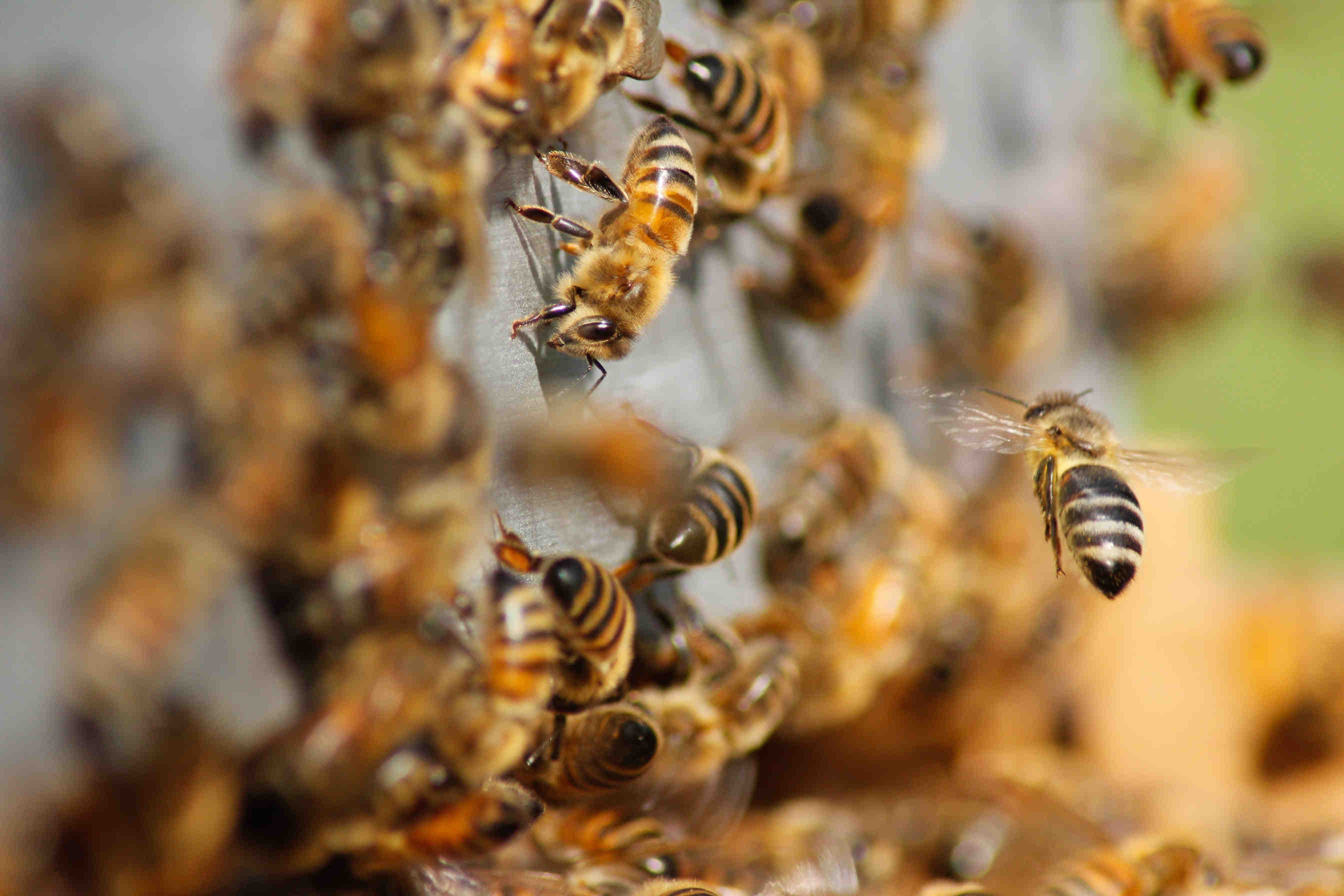
    The age of the queen bee is very important for the hive to be able to grow and develop properly. There are various methods to tell whether the queen is young or old. A young queen is generally smaller, with hair on her thorax, has intact wings and lays in a compact manner. The opposite is usually the case with an older queen. To make this assessment more accurate, however, the beekeeper proceeds with marking. This consists of marking the queen's thorax with a suitable coloured chalk marker (or with special enamel). This not only makes it easier to identify the queen among the workers, but also makes it easier to assess her age, as each year involves marking her with a different, standardised colour according to a five-year colour scheme. Queen bees can live up to 6/7 years, and it is often the hive that decides the end of their crown.
    How long does a queen bee live?

    Follow family development with 3Bee hives

    Being able to witness live the development of the colony, the birth of new queens and their evolution is not for everyone, unfortunately. However, it is possible to get closer to the life of the colony thanks to remote hive monitoring systems. These instruments allow the detection of some important biological parameters of the colony, including weight, temperature, humidity and sound. Based on these data, it can be understood whether the family is growing or not, whether the queen is laying and whether she is present in the hive. By adopting a 3Bee hive you will not only be able to monitor the day-to-day development of your family directly from your mobile phone, but also receive the honey produced by it directly to your home! Find out how on our page.
    Follow family development with 3Bee hives
    23/11/2018Of 3Bee, Elena Fraccaro
    5058 Views
    Newsletter
    newsletter
    Subscribe to the Blog about bees and biodiversity