Biodiversity: only 6 EU countries have a strategy
    BiodiversityImpreseRischiStrategie

    Biodiversity: only 6 EU countries have a strategy

    Biodiversity loss is an urgent emergency that needs to be addressed globally. European states have committed to protecting biodiversity in the EU Biodiversity Strategy 2030, but out of 27 states only 6 have notified the European Commission of their commitments.

    Read the article
    31/05/2024Of 3Bee, Angelina Tortora
    630 Views
    31/05/2024Of 3Bee, Angelina Tortora
    630 Views

    EU countries and biodiversity: where do we stand?

    The targets of the EU Biodiversity Strategy 2030, require the preservation of 30% of the EU territory and 30% of marine areas. The European Commission hoped that the member states would submit their individual commitments to achieve the ESG targets, but only 6 out of 27 states have notified the Commission of their clear and concrete commitments under the 2030 Biodiversity Strategy (France, Germany, Denmark, Luxembourg, Sweden and Spain). It should be noted that states are not obliged to notify their commitments, but this failure does not allow the Commission to make an assessment of whether the EU is in line with its biodiversity targets to be achieved by 2030.
    farfalla

    Businesses and biodiversity strategies

    In this context, European organisations and businesses are increasingly aware that the loss of biodiversity is an issue that needs to be addressed in order to limit not only environmental, but also social and economic damage, with the integration of targeted biodiversity protection actions into decision-making strategies. The report by the Capgemini Research Institute, "Preserving the fabric of life: Why biodiversity loss is as urgent as climate change" shows that only a quarter of organisations have structured a biodiversity strategy and four countries lag far behind: Australia (15%), Germany (16%), Canada (17%) and Italy (18%). Furthermore, only 16% have completed an assessment of their supply chain's impact on biodiversity. Broadly speaking, the report shows that organisations agree on the importance of conserving biodiversity, but 59% of respondents say the challenges are numerous and complex.

    strategie biodiversità
    XNatura

    The risks of biodiversity loss for companies

    The loss of biodiversity in the world has now reached significant dimensions. The Report Preserving the fabric of life: Why biodiversity loss is as urgent as climate change, shows that 47% of executives see biodiversity loss as a medium-term risk for their companies and 30% perceive it as a long-term risk (2050), while only 17% see it as an immediate concern with large regional differences. The loss of biodiversity has an impact on business economics, the report published by the United Nations Environment Programme (UNEP) and its partners during the COP28 reveals that nearly $7 trillion is invested each year in activities that directly harm nature, and is equivalent to approximately 7% of global gross domestic product (GDP).

    foglia goccia

    Strategies for dealing with risks

    In order to halt biodiversity loss in 2023, at the Sixth International Conference of the Nations that signed the Convention on Biological Diversity (CBD), 123 governments made commitments to reduce biodiversity loss at local, national and regional levels. In addition, the Global Biodiversity Framework Kunming-Montreal (GBF) was adopted during the COP 15 as a guide for the achievement of the Sustainable Development Goals in 2030 and 2050. The 2030 Biodiversity Strategy is a long-term global plan to safeguard nature and reverse the degradation of ecosystems. In order to achieve the climate neutrality goal in Europe by 2050, the Commission has also initiated the European Green Deal, a package of strategic initiatives to achieve the biodiversity and ecosystem protection goals.

    strategie
    XNatura

    Italian companies and climate change

    The report Global Compact Network Italia, photographs the situation of Italian companies, highlighting that only one company out of five has a structured organic plan on the theme of combating climate change, the level rises to two-thirds for UNGC member companies. Italian companies adhering to the UN Global Compact demonstrate an increased awareness of the importance of integrating sustainability into business strategies, this approach is considered a success factor for 99% of adherents. 64% of Italian companies have defined a sustainable strategy to counteract climate change, investing in training and employee awareness. However, there is a skills gap on climate issues especially among small and medium-sized enterprises, compared to large companies.
    rana biodiversità
    3Bee

    What can companies do to protect biodiversity?

    Investing in biodiversity restoration benefits both the community and businesses. According to an estimate presented at the European Business&Nature Summit (Ebns) 2023, if Italy were to invest just EUR 93 per year per million in the restoration and protection of biodiversity, within 30 years it would be possible to recover 90% of habitats in a poor state of conservation. It is estimated that it would cost €260 million a year to support recovery actions, which translates to 0.013% of the national GDP. In the analysis of the EU's Impact Assessment Study it appears that investing in biodiversity is cost-effective for businesses, investments that include conservation projects and biodiversity restoration could bring significant economic benefits. These benefits derive from ecosystem services, such as climate regulation, and pollination.

    bombo

    Sustainability reporting: ESRS E4 and GRI 101 standards

    But how can companies monitor, improve and communicate their impact on biodiversity? Reporting is supported by a set of international standards, some of which are specifically related to the topic of biodiversity. The European Commission and the EFRAG have worked closely with GRI to ensure a high degree of interoperability between the ESRS and GRI standards, in order to promote global comparability. The new GRI Standard 101 - Biodiversity 2024 aims to provide full transparency on biodiversity impacts, even at procurement stages where such impacts are often difficult to identify. In contrast, ESRS Standard E4 - Biodiversity and Ecosystems, which is mandatory for companies subject to CSRD, requires companies to publicly disclose the strategies they have adopted to protect biodiversity, and to specify how company activities exert pressure on biodiversity.

    Bilancio green

    The importance of biodiversity monitoring

    The GRI Standard 101: Biodiversity 2024 emphasises the hierarchy of action that follows the logic of avoid and reduce, restore and rehabilitate and finally compensate. First, companies must monitor their impact on biodiversity, both at the site and supply chain level. Monitoring therefore plays a key role both to calculate the baseline, i.e. the initial impact that the company's activity has on biodiversity, and to report on the offset and restoration projects implemented. Monitoring can take place on different levels, on the one hand impacts and drivers of biodiversity loss such as land use and pollution can be measured, on the other hand the ecosystem services that biodiversity can provide. According to the new GRI 101 standard, biodiversity can be measured either directly or indirectly, through specific indicators such as Mean Species Abundance (MSA).
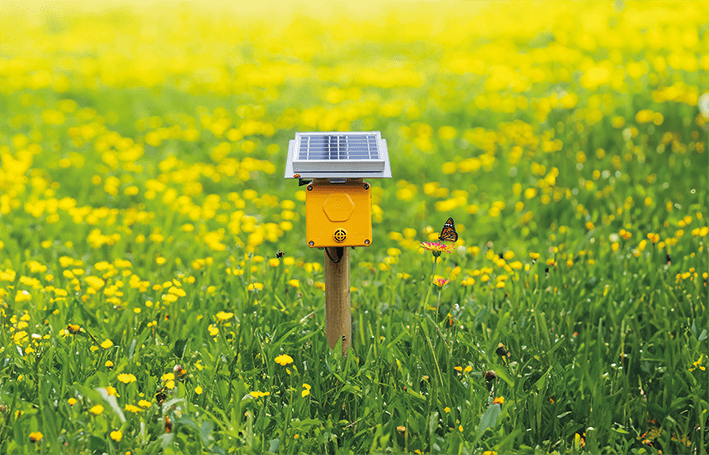
    Spectrum 3Bee

    Biodiversity strategy with 3Bee

    This is the context for 3Bee, the nature tech that develops technologies for monitoring, protecting and regenerating biodiversity. 3Bee works side by side with municipalities and businesses - from the agri-food, highway, energy and other sectors - to develop certified protocols for the protection of biodiversity through regeneration projects: firstly, it analyses the impact on biodiversity and, starting from the data, identifies ad hoc strategies to mitigate and improve it. In addition to monitoring and regeneration, 3Bee deals with training in sustainability for companies and has developed a network of professionals that companies can access to keep up-to-date on key issues, also with reference to European regulations and corporate sustainability reporting.

    Oasi 3Bee
    31/05/2024Of 3Bee, Angelina Tortora
    630 Views
    Newsletter
    newsletter
    Subscribe to the Blog about bees and biodiversity

    Frequently Asked Questions

    Do you have any doubts or other curiosities about this article? Here you will find some insights