What does it mean to be a sustainable company?
    sustainabilityGreenwashingEnvironmentSociale

    What does it mean to be a sustainable company?

    More and more companies are claiming to be sustainable and to put environmental and social compliance before their economic goals. But beware! All that glitters is not gold. It takes more than a few green actions and effective communication to call oneself a sustainable company.

    Read the article
    28/12/2022Of 3Bee, Elena Fraccaro
    737 Views
    28/12/2022Of 3Bee, Elena Fraccaro
    737 Views

    Where does the concept of sustainability come from?

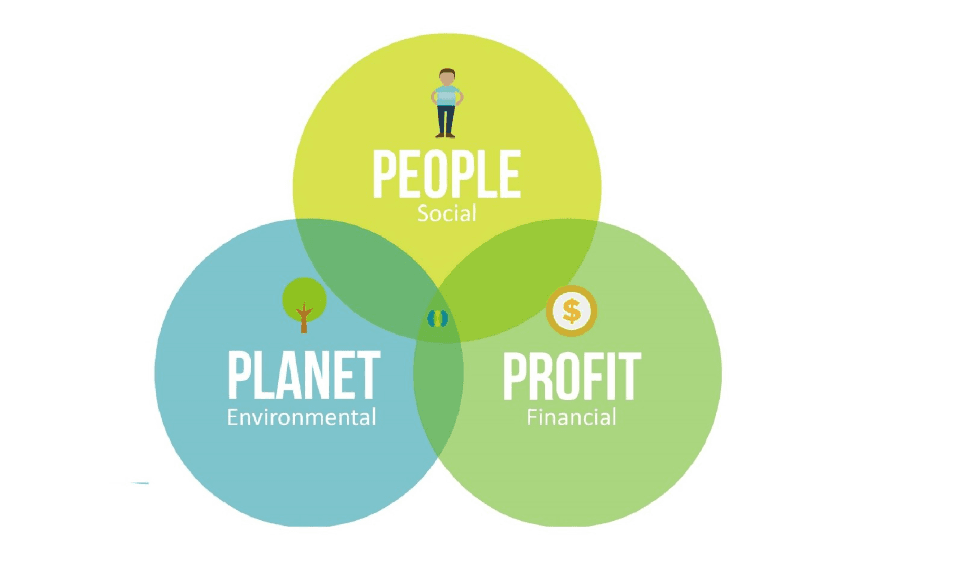
    Today, every advertisement, project or corporate initiative focuses on sustainability. Although 'sustainability' has been a term in our vocabulary for relatively few years - there was little talk of it before the Paris Agreement - its definition dates back to 1987. In that year, the World Commission on Environment and Development adopted the report "Our Common Future"(also known as the "Brundtland Report"), which defined the cornerstones of sustainable development, which are still valid today. It was thus established that "Sustainable development is development that meets the needs of the present without compromising the ability of future generations to meet their own needs". It emerges strongly from the Brundtland Report that the only way to ensure sustainable development is to balance three dimensions simultaneously: environmental, social and economic sustainability. These same dimensions led to the drafting of the Agenda 2030 in 2015.

    piantina

    How to become (really) a sustainable company?

    No company can call itself sustainable unless it is committed to ensuring the simultaneous well-being of the planet, of people (inside and outside the company's borders) and of the economy (again, both in terms of corporate and non-company profit). Despite this, environmental sustainability is the dimension to which everyone seems to give most weight. This results in many companies communicating, even rather aggressively, their sporadic 'green' initiatives while totally glossing over the other two aspects. Sustainability in this sense is only a façade, hence the term 'greenwashing', i.e. communicating the company's focus on environmental issues for the sole purpose of attracting consumers, without really implementing any sustainability strategy. So, how does one become a (more) sustainable company? Where does one start? To answer that, let us look at the three dimensions of sustainability.

    azienda sostenibile schema
    XNatura

    Environmental Sustainability

    Environmental sustainability encompasses all stages of business activity, from the conception of the product/service to its distribution/delivery. For example, a garment made of organic materials cannot in any way be defined as sustainable if the dyes used are then poured into watercourses or - and here we come back to the need to balance all three dimensions of sustainability - if those who produce such a garment work in slave-like conditions and do not receive a decent wage. In strictly environmental terms, the most immediate actions to put into practice to be sustainable are: use energy produced from renewable sources (even the energy with which you power the computers in your offices has a significant impact on the environment), sdispose of waste properly, reduce water consumption and create products that can be repaired or recycled at the end of their life cycle.

    piante

    Social sustainability

    It is essential that your company is also committed to ethics. This means that business activities should in no way harm the wellbeing of employees, collaborators and, more broadly, customers, suppliers and the communities where the company operates. In short, a sustainable company strives to have apositive impact locally and globally on all its stakeholders. As such, it is necessary to ensure that workplaces are safe, healthy, inclusive and absolutely free of any gender or racial discrimination. It is also mandatory to ensure that every worker throughout the supply chain receives a decent wage, is not subjected to harassment and that all their rights (sickness, working hours, etc.) are respected. It is then necessary to offer products/services that are safe and of quality. Finally, building relationships with local communities to improve their quality of life completes the corporate social responsibility framework.

    3Bee
    XNatura

    Economic sustainability

    If it is true that we talk a lot about environmental sustainability, it is also true that we talk too little about economic sustainability. The reason may be that talking about profit when issues such as climate change and the exploitation of workers are at stake does not exactly arouse positive emotions. However, the discourse is much broader and not all that complex. We start with the obvious: companies must make a profit in order for business to exist. The difference lies in what is behind the profit. An ethical profit must be pursued in order to pay employees, create new jobs, invest in sustainable product/service innovation and create value for the community. In these cases one can speak of economic sustainability. On the other hand, all profit-making activities that swell the company coffers by polluting the environment, using raw materials of dubious origin and underpaying people are not to be promoted.

    bombo
    3Bee

    How to demonstrate sustainability?

    In order to prove that they respect the environment and society and make profits in an ethical manner, companies can obtain and make use of one or more certifications. Indeed, stating that one's commitment is concrete is no guarantee of anything, nor does it make the company sustainable. But there may be exceptions. Before going any further, we would like to make a clarification. Obtaining certain sustainability certifications can be very expensive indeed, and many small, perhaps fledgling, companies cannot afford too high a cost, if not putting their very survival at risk. However, their efforts deserve to be appreciated and supported, as long as they prove - with the means at their disposal - that their activities do not have negative impacts. We recommend, for example, relying on certified and sustainable suppliers or contributing to projects that demonstrate through, for example, data, testimonials and visual documentation of their work.


    beenergy

    3Bee can help you make your company sustainable

    As a Climate - Tech company, all our projects and services are created and developed with the aim of protecting biodiversity at 360°. Companies can invest in sustainability by bringing value in all three of the previously analysed areas: environmental, social and economic. Pollinators are first and foremost bio-indicators that tell us about the health of our planet. Their loss is a consequence of numerous factors that we try to reverse by monitoring hives, planting nectariferous forests and studying through ESA satellites the level of biodiversity in our peninsula. Knowing where to take action allows us to support beekeepers and farmers and direct companies wishing to generate a positive impact through their choices.

    Hive - Tech
    28/12/2022Of 3Bee, Elena Fraccaro
    737 Views
    Newsletter
    newsletter
    Subscribe to the Blog about bees and biodiversity