What to do in January in the beehive?
    VoliStocksFioritureListening

    What to do in January in the beehive?

    We can still consider January to be a month of calm as far as apiary work is concerned. Generally speaking, depending on the area, the bees should still be closed in the glomeres and the queen should not have started laying again. Here is what to do in January in the apiary

    Read the article
    07/06/2022Of 3Bee, Elena Fraccaro
    369 Views
    07/06/2022Of 3Bee, Elena Fraccaro
    369 Views

    Purification flights

    Certainly one of the most commonly paid attention to is droppings. We know that bees, when weather conditions permit, also leave the hive in winter to make their 'purification flights'. The purpose of these excursions is to empty the rectal ampulla and avoid soiling the hive. Light-coloured, circular excrements correspond to a healthy family. If, on the other hand, one notices that, for example, the flight pod is strewn with dark, stringy and foul-smelling droppings, then we could be in the presence of a family affected by some disease such as nosemiasis. In that case, a targeted inspection may prove necessary.

    Stock status

    This is also a time when special attention must be paid to the state of stocks. By using instruments such as beehive weighing scales or relying on the old manual methods, it is good to know whether a hive needs to be fed with a lump of candy or not. This solid substance, which takes the form of a white lump, is generally placed over the hole in the hive cover. If, however, the bees are unable to access it to consume it, it is common practice to place it directly on the combs, at the glomere, and then place the coverlet upside down. This facilitates the intake of the food and averts the danger of the family starving. In these weeks when the bees do not yet have access to the blooms, in fact, this is not such a remote possibility.

    XNatura

    First blooms and treatments

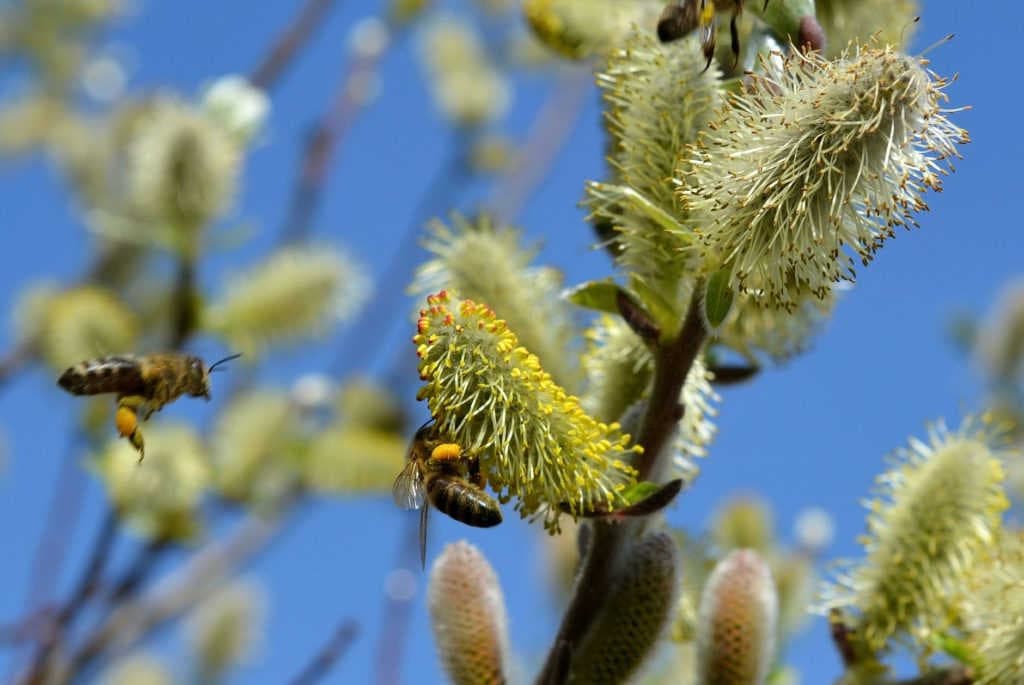
    It is possible, however, that a mild climate favours the blooming of certain plants of great beekeeping interest, such as the willow, hazel, calicanthus, dogwood and medlar of Japan. These are very important for the family's recovery. The first two, in particular, are an important source of pollen, necessary for the growth of the family. During this period, if time permits, sublimate or drip oxalic acid treatments can also be used. These aim to reduce the numbers of varroa present in the hive as much as possible. An excessive presence of these parasites would then lead to their exponential growth during the family growth phase, jeopardising their survival.
    First blooms and treatments

    Listening

    If, on the other hand, the weather is still harsh and the days do not allow the bees to make their daily flights, one of the expedients most frequently used by beekeepers to 'notice' whether the family is having problems or not is to approach the hive and tap on the wooden lining. A healthy family responds with a slight buzzing sound, while a more prolonged sound could be a sign of some problem such as orphanhood. Monitoring them constantly is essential to understand their state of health.

    XNatura

    Work at home

    The bulk of the work, however, is done in the warehouse and at home. This is the right time to find out what equipment to replace or purchase and to start preparing the material that will be needed later in the season. For example, you can start preparing frames with wax sheets to add to or replace old ones or you can disinfect hives and the material you intend to reuse. Everything is ready for the new season.

    3Bee

    Use of remote monitoring tools

    To be able to more pervasively follow the development of the family without having to open the crates is to use remote monitoring systems for hives. Our systems make it possible not only to monitor weight trends, but also internal vital parameters such as temperature, humidity and sound. You can thus see if the family is consuming stocks or has started importing again, if the queen is present and laying or if a problem has occurred. You can find out all the details about our products on our product pages or visit us directly at Apimell!

    07/06/2022Of 3Bee, Elena Fraccaro
    369 Views
    Newsletter
    newsletter
    Subscribe to the Blog about bees and biodiversity