In February in the beehive: What work needs to be done?
    ControlloStocksActivitiesInspections

    In February in the beehive: What work needs to be done?

    In the apiary, February is still a month of transition, although activities begin again little by little and the frenzy for the start of a new production season begins to make itself felt. In this month, important operations must be carried out to allow the family to recover properly

    Read the article
    07/06/2022Of 3Bee, Elena Fraccaro
    454 Views
    07/06/2022Of 3Bee, Elena Fraccaro
    454 Views

    Checking the health of the hive

    Monitoring the health of the hives starts first of all by observing the hive from the outside. On hot days, can you see bees going in and out of the box? Are there many dead bees around the hive? Do you notice strange droppings on the flight platform? All these can be telltale signs that something is wrong. A few bees can mean that the family is weak, while a large number of dead adult bees can be a sign of ongoing disease. Checking the state of the droppings is also useful to detect the presence of particular diseases.

    Stock status

    Fundamental is also the control of stock status For this, one can use the classic method, which involves lifting the crate to assay its weight manually, or one can use remote hive monitoring tools that keep track of all weight variations of the family. One can also work out where the bees are positioned and whether they are consuming honey from the combs by inspecting the saucer underneath the anti-moth net, if present. In this way, one can tell from the wax residue not only the level of consumption, but also the possible presence of flickering brood. In any case, since the bees' food requirements increase during this period, if one notices that their stocks are running low, it is a good idea to proceed with feeding by candy or by inserting specially stored combs of honey.

    XNatura

    Resumption of oviposition activity

    As we have said, one can already tell from observing the saucer whether we are in the presence of a family with a queen that has resumed laying or not. Darker wax residues, in fact, denote brood flickering. Even just by observing the bees and what they import into the hive, one can understand whether brood will be found inside the nest. If, in fact, the bees collect pollen, it is a clear sign that the family is growing and that the queen has resumed her activity. If we register none of these signs, it may well be that the queen has died and the survival of the family is at risk. Checking for the possible state of orphanhood of the families is another essential operation to be carried out at this time.

    Visual inspections

    On warmer days, when the temperature exceeds 10°C and weather conditions are favourable, one can start opening the boxes for quick inspections. However, care must always be taken to ensure that the bees and any brood are not excessively cooled during the extraction of the combs. Thanks to the internal inspection, we can see if diseases such as plague, whether American or European, or even any consequences of a massive Varroa infestation (presence of the peculiar viruses associated with it such as DWV and non-compact brood) are in progress. We can also directly see if there is brood and how the stocks are organised. If one sees the eggs laid in the cells and the bees are calm and do not show the characteristic signs of orphanhood, it will not even be necessary to look for the queen because she is present and has already clearly resumed her activity.

    XNatura

    Shrinking the nest

    This is also the right time to shrink the nest. It is already possible to choose which combs to bring outside the diaphragm and eventually remove. This operation, however, is not only justified with a view to cleaning and renewing the combs. It is also important to allow the family to maintain a constant temperature in the nest and not to spread out too much in the hive. This allows the family to remain more collected and to better rear the brood while wasting fewer resources. It is optimal to keep all the combs covered with brood and leave no more than two in stock.

    3Bee

    Last round of treatments

    If a Varroa control reveals that the number of mites is excessive, one can proceed, for example, with a round of treatments with sublimated oxalic acid, carried out every 7 days for 3 times, in order to cover the entire development cycle of a generation of bees and maximise effectiveness. In this way, an attempt is made to rid the colony of this dangerous pest as much as possible. These interventions are all the more important if adequate treatment has not taken place between November and December.

    Other Operations

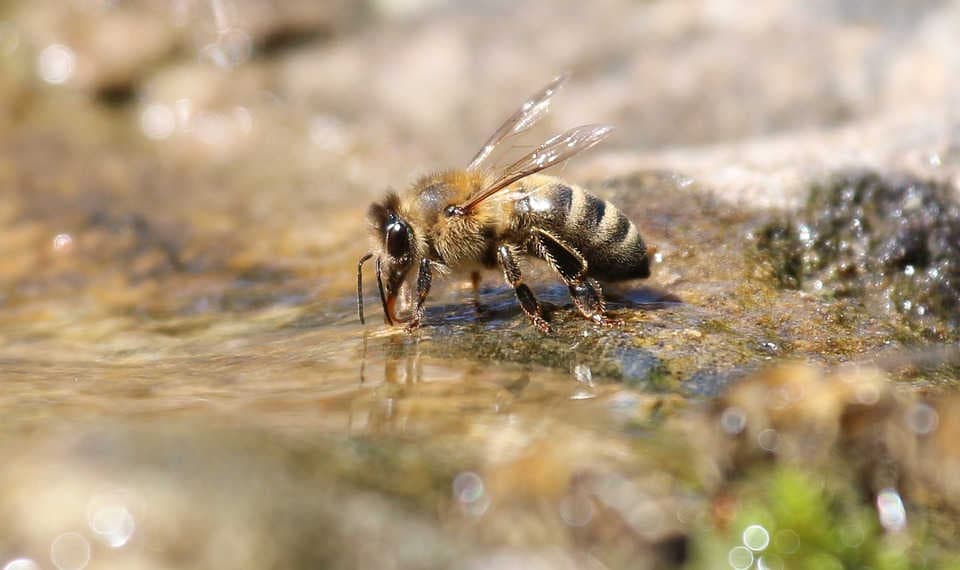
    Other operations that can be carried out in the apiary include moving any empty hives. If any families have been lost during the winter, it is a good idea to try to understand the reason and move the boxes. Should the reason for the death of the colony be some kind of disease, it is a good idea to sanitise the hive before using it again. This will prevent contagion not only of the family that will take up residence there, but also of the surrounding ones. It can also be useful to start setting up drinking troughs near the hives. The water inside them serves the bees to dissolve the crystallised honey in the combs and allow it to be used. Remember that bees prefer stagnant water and that specific supports must be provided to allow the bees to suck the water without the risk of drowning in it.

    Other Operations

    Use of remote monitoring systems

    As this is the period when the first blooms begin to appear, special care should be taken if you want to arrive prepared for the next, larger harvests. Having a system that allows remote control of the hive can be extremely useful. By being able to compare the data history, one can understand what situation the family is in and thus plan the operations to be carried out more precisely. In this way, not only can you optimise your time, but apiary management also benefits. Find out about the features of our products and all the advantages of using them. If you are interested in our devices, discover our special offer for you: order a scale now and get the solar panel for battery charging and the basic data plan for free. Subscribe now to info@3bee.it and visit us at Apimell on stand B-114!.

    07/06/2022Of 3Bee, Elena Fraccaro
    454 Views
    Newsletter
    newsletter
    Subscribe to the Blog about bees and biodiversity