Hive Diseases: The European Plague
    European PlagueCos'èSintomicause

    Hive Diseases: The European Plague

    We have already seen together the disease known as calcified brood, and now we will continue with another disease that affects brood, namely European foulbrood. Maintaining a healthy hive is essential

    Read the article
    03/06/2022Of 3Bee, Elena Fraccaro
    825 Views
    03/06/2022Of 3Bee, Elena Fraccaro
    825 Views

    Hive Diseases: The European Plague

    The job of the beekeeper is by no means easy, we say it time and time again. Not only is it a job that requires a lot of sacrifice and effort, but in order to be able to do it in the best possible way, you need to know your bees and their world well. Maintaining a healthy hive is the first, indispensable step towards doing one's job as correctly and efficiently as possible. To do this, however, it is necessary to know which are the main diseases that can endanger the colony. In this way you can try to prevent them or, if they occur, treat them without risking losing an entire family, the apiary and, even worse, affecting the integrity of neighbouring apiaries. We have already looked together at the disease known as calcified brood and now we will continue with another disease that affects brood, namely European foulbrood.
    What is the European Plague

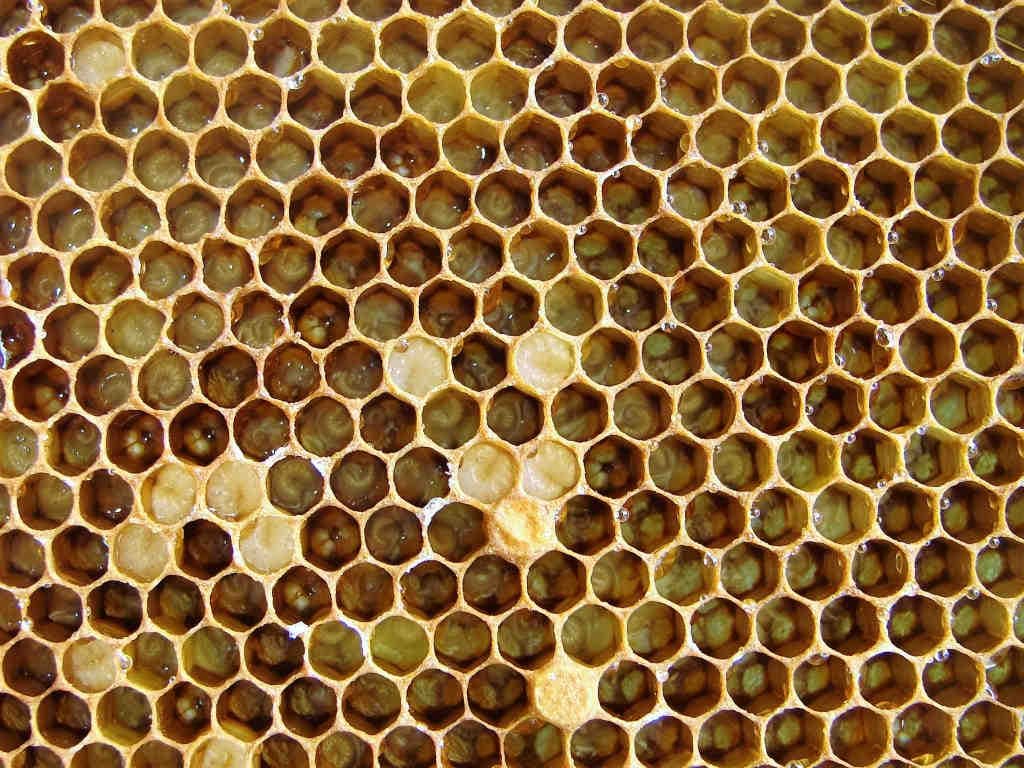
    The European plague is a bacterial disease, caused by the bacterium Melissococcus plutonius. Other bacteria may also be associated with it, whose role has not yet been clarified, but which allow the disease to present itself in different forms. European foulbrood is transmitted orally by nurse bees to the larvae they care for. The nurse bees, in fact, by trying to clean out the cells containing the dead larvae, become the vector for the spread of the bacterium, which develops in the intestine of the larva, rapidly leading to its death. This occurs in the first four days of the larvae's life, before the cells are operculated.

    XNatura

    What are the symptoms?

    The telltale signs of this disease are quite clear and allow it to be distinguished from another, certainly more serious disease, the American plague. Firstly, the brood appears non-homogeneous, mosaic-like, as bees tend to eliminate infected larvae from their cells. Secondly, the brood may emit peculiar odours, usually acidic or putrescent, although it may also be completely odourless. However, the clearest way to tell if a family is infected is to look at the larvae. These do not have the classic C-shaped arrangement at the bottom of the cell, but may be twisted, elongated, folded and may show their backs or ends towards the opening of the cell. They are also yellowish in colour, turning brownish once the larva has died, the mass of which softens without being viscous or stringy. Once dried, it forms a dark-coloured scale that can be easily removed by bees.

    The causes of the European plague

    Although bacterium is the main cause of this disease, it is not the only factor that comes into play. A weak family subjected to various stresses will tend to be more prone to the occurrence of the disease than strong families with a good tendency to cleanliness. In addition, the beekeeper also plays his role, especially when he creates imbalances between brood and adult bees. Other concomitant causes are food shortages and climatic-environmental factors. This disease can occur all year round, although it is more frequent in the spring season.

    XNatura

    Prevention

    Avoiding the occurrence of this pathology is possible, as long as you follow a few good practices when carrying out your work. Certainly, you must ensure that you never leave your families without a supply of food, especially pollen, and avoid creating internal imbalances that alter the numerical ratio between brood and adult bees. Replacing all combs in rotation every 2-3 years is also highly recommended. Furthermore, cleaning all objects that have come into contact with a sick family is certainly the best way to avoid spreading the bacteria to other families that could be affected by the disease.

    3Bee

    Cures

    What to do, however, if we notice that the family is sick? If the family is weak, the only solution is to proceed as in cases of American plague: eliminate the family with fire and then disinfect all material, including the hive, that came into contact with it. If, on the other hand, the family is strong enough and the time of year favourable (abundant harvest), certain practices can be adopted to try to save it. Certainly one of the first attempts involves changing the queen, hoping to solve the problem in this way. Another option is the so-called 'swarming', which involves removing all nest combs containing brood and transferring the bees to an uncontaminated hive containing wax leaves to be built.

    Cure

    Finally, one can proceed with bartificial brood caging. In this case, the queen is caged, proceeding to the elimination of any royal cells. After about twenty days, the queen is replaced with a new one. By the time the queen has been caged, the workers will have had time to remove all the dead larvae and build new combs from the inserted wax sheets. It should be borne in mind that these techniques must be implemented in a timely manner, with sufficiently strong families and abundant harvests to be successful.

    03/06/2022Of 3Bee, Elena Fraccaro
    825 Views
    Newsletter
    newsletter
    Subscribe to the Blog about bees and biodiversity


