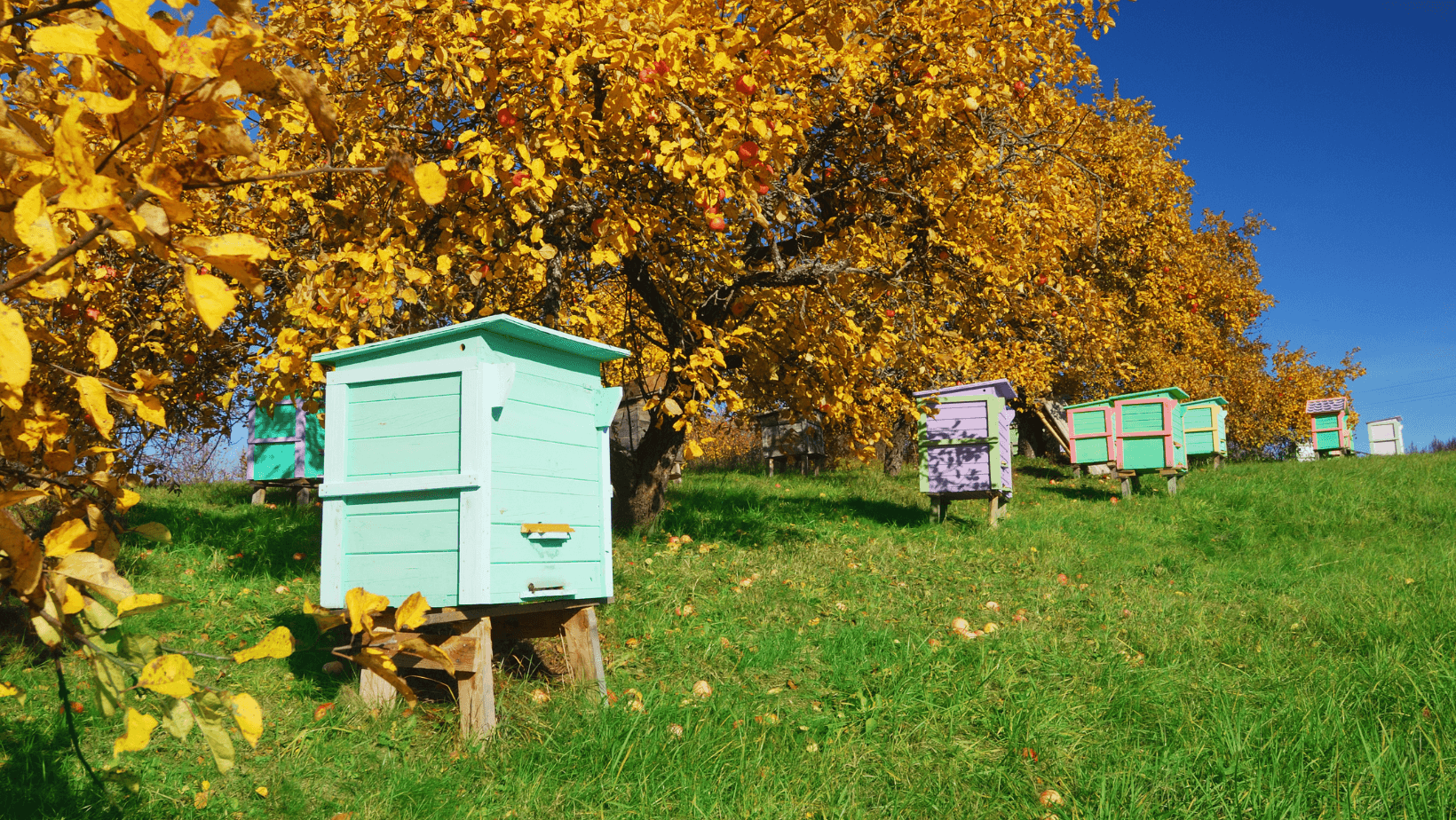
April in the apiary: The beekeeper's main jobs
    FreneticoFamilyStocksBrood

    April in the apiary: The beekeeper's main jobs

    April is an important month for beekeepers: there is a lot of work to be done in the apiary and it is the beginning of the harvest and production season. For this reason, it is very important to know what work needs to be done in order to have families in the best condition.

    Read the article
    13/04/2018Of 3Bee, Elena Fraccaro
    596 Views
    13/04/2018Of 3Bee, Elena Fraccaro
    596 Views

    A hectic month

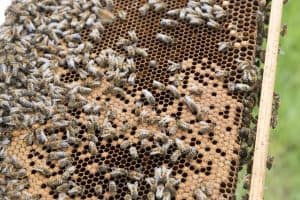
    The checks that must be carried out must focus mainly on the extension, firmness and status of the brood. What must be assessed, in fact, is whether the families are weak or strong, whether there is still stock, whether the brood is there and is healthy, whether there is a need to increase the space inside the nest, whether the combs need to be renewed and, finally, whether the families need to be levelled out and how to do this. Having some strong and some weak families is not very convenient: their production would be too different and the weak families would suffer, while in the strong ones the risk of swarming would increase. For this reason, it is important to have more or less similar families in terms of strength and development. For the beekeeper, this is also the time to begin the creation of new nuclei and to start controlling the production of real cells in preparation for swarming.
    A hectic month

    Is my family strong or weak?

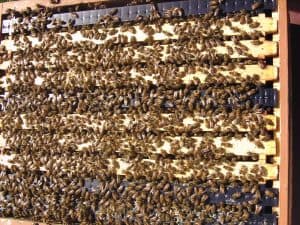
    Assessing the strength of the family is extremely important for the beekeeper. All his work is based on this preliminary assessment. A family that starts to import pollen, whose queen constantly lays eggs and whose ceraiole are in full activity, is a family that will grow by leaps and bounds. It will therefore be defined as a strong family, whose development extends over 5-6 frames. This is the kind of family that must be kept under close surveillance, both when preventing natural swarming and when proceeding with artificial swarming. A family that does not display these characteristics, on the other hand, is defined as weak and requires targeted intervention to strengthen it.
    Is my family strong or weak?
    XNatura

    How much stock does the family still have?

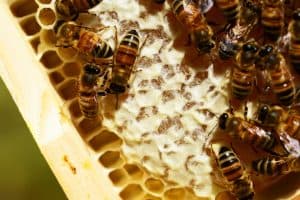
    Household consumption in the midst of development is very high, up to 6-8 kg of honey per month. If the weather is favourable, stocks are directly replaced by the bees themselves. If, on the other hand, the weather is prolonged, the lack of nectar intake can lead to a brood blockage, undermining the growth of the family itself. This is why, during inspections, it is necessary to check the state of stocks and, if they are deficient, to intervene with artificial nutrition, candy or syrup depending on the weather conditions and the period. Candied, contains not only sugars, but also a protein part that can make up for the lack of pollen. Syrup, on the other hand, must be given when the bees have the opportunity to perform almost daily purification flights. It is, therefore, not recommended to give syrup during cold, wet and rainy periods, also because this climate favours the onset of intestinal diseases.
    How much stock does the family still have?

    Brood status

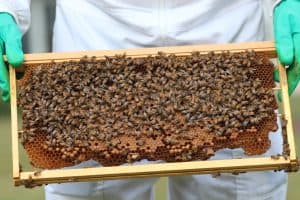
    This is the period of maximum brood development. Assessing its growth and development is of paramount importance. Extension of brood: it is not enough to check whether the queen is laying, but it is important to know how, where and what the health of the brood itself is. One must first check that there is room for brood extension. Then you have to see if the queen is laying regularly. In addition, it must be checked whether or not it is operculated: an operculated brood means that many bees will soon be born. Presence of diseases: no less important is checking for the presence or absence of diseases: American foulbrood, European foulbrood, sackbrood and calcified brood. They can be diagnosed by observing the shape and colour of the brood opercula and the position of the larvae in the alveoli. It is important to act promptly to prevent the spread of the diseases themselves.
    Brood status
    XNatura

    Should the space for the family be enlarged?

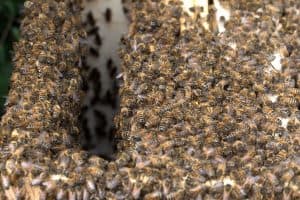
    As the family grows, it also becomes necessary to increase the space at its disposal, either by inserting combs that had been removed for wintering or by introducing new wax sheets. At an early stage of enlargement, it is recommended to reinsert combs that have already been built, to facilitate the bees' work. Insertion of wax sheets: if weather conditions are favourable and the family is sufficiently developed, wax sheets can be introduced, thus also facilitating wax renewal. However, the wax sheet cannot be placed where one wants. In order not to hinder their wax production work, it should not be placed outside, but rather between the last brood honeycomb and the first stock honeycomb. The importance of timing: It is also worth remembering that the ideal would be to place 2-3 wax sheets per year, for complete wax renewal every 4-5 years.
    Should the space for the family be enlarged?
    3Bee

    Balancing families

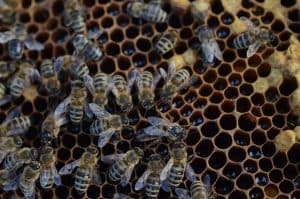
    It is very important, especially if you have many families, that they are as homogeneous as possible. Balancing the families, in essence, consists of moving brood combs covered with bees from the strongest to the weakest families. There are, however, some preliminary considerations to be made. Avoiding the spread of disease: first of all, the brood combs that are moved must not be affected by disease. This is essential in order not to spread disease and further weaken an already weak family. Choose families and combs well: next, the strong family must be able to withstand and cope with the removal of an entire honeycomb. If this is not the case, it is better to leave it alone. The honeycomb that fits into the weaker family must also have much more operculated brood than the non-operculated one.
    Balancing families

    Swarming control and creation of new nuclei

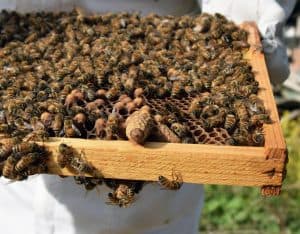
    Balancing families is also a method to keep swarming under control. In fact, the strongest families are the most susceptible to this phenomenon. Removing brood combs creates more space for the family, which is not 'forced' to split up. A very clear sign is the construction of real cells at the edge of the honeycomb. Elimination of royal cells: one of the techniques to prevent the emergence of a new queen and the occurrence of swarming is to break the royal cells one by one. This procedure, however, requires assiduous monitoring of the families and can be difficult when you have many families located far apart from each other. Creation of new nuclei: The procedure is very similar to that of levelling: from the strong family, brood combs with real cells are removed and used to create a new family. Adding a honeycomb can also help create more space.
    Swarming control and creation of new nuclei

    Help from 3Bee

    These are the main activities to be carried out in the apiary in April. Obviously, depending on the season and location, you will need to focus more on one aspect than another, but to have healthy and strong families these are all factors that need to be taken into account. 3Bee has come up with an innovative beehive monitoring system designed to help beekeepers manage their apiaries and safeguard bee health. Discover our Hive-Tech Solution and how it can improve your work.

    Help from 3Bee
    13/04/2018Of 3Bee, Elena Fraccaro
    596 Views
    Newsletter
    newsletter
    Subscribe to the Blog about bees and biodiversity