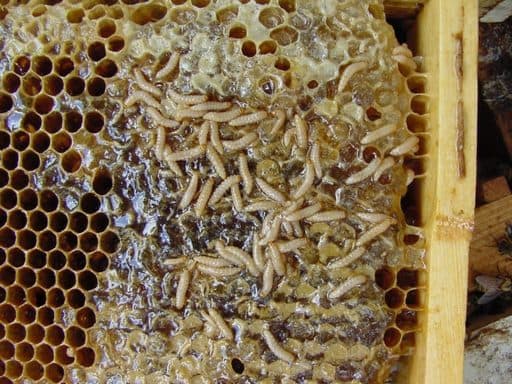
Aethina Tumida: What it is, How to recognise it, What to do
Aethina tumida Murray, also known as Small Hive Beetle (SHB), is a hive pest that gives rise to a particular disease, Aethiniosis, which must be reported. This parasite originates from South Africa and coexists with Apis mellifera scutellata and Apis mellifera capensis in some parts of the African continent without any particular problems. Indeed, the latter seems to have developed a particularly aggressive attitude towards the parasite, which only manages to get the better of the hive when it is already weak and in poor condition. The problem arises when Aethina tumida makes its appearance outside its 'natural habitat'. In 1996, it was detected in the USA. After two years, it had already created considerable damage in Florida, quantified at around $3 million. From there, it then spread throughout the United States, to Egypt, Australia and Canada. In 2004, it was detected in Portugal, the first report in Europe. In Italy, it made its appearance in 2014 first in Calabria, in Gioia Tauro, and in Sicily, in Melilli. Following these findings, the Ministry of Health took action to destroy infected hives and to monitor the spread of the parasite through specific national surveillance plans. This monitoring activity, confirmed also for 2021, involves randomised cyclical checks based on specific risk calculations.


