3Bee On The Road: Flowers No Longer Make Flowers
    The flowersOn the roadFirst 3 stages4th and 5th stages

    3Bee On The Road: Flowers No Longer Make Flowers

    On 17 August, our #3Beeontheroad tour ended in the province of Verona, at Francesco and Riccardo's Bear Beekeeping. Ours was a 17-day long journey, which took us to many regions of Italy, where we were lucky enough to meet our beekeepers.

    Read the article
    26/08/2020Of 3Bee, Elena Fraccaro
    330 Views
    26/08/2020Of 3Bee, Elena Fraccaro
    330 Views

    Flowers no longer make flowers

    We set off on 1 August, from the province of Biella, and travelled all over the peninsula to get to know beekeeping in the north and south and what problems are affecting the sector. From our direct confrontation with these beekeepers, common problems emerged. To summarise one of the issues affecting the sector, we could say that 'the flowers are no longer making flowers'. What does this mean? It means that the climate changes we ourselves are witnessing are hampering beekeeping and bee welfare in no small measure. Mild winters, early springs, but followed by torrential rains and frosts, torrid and dry summers make nectar collection extremely difficult for bees. Other accident factors are the use of pesticides and diseases that affect the hive. In addition, one of the greatest needs we perceived when talking to beekeepers is the need to enhance the value of honey produced in Italy.

    Flowers no longer make flowers

    3Bee on the road con Carrefour e Resicar

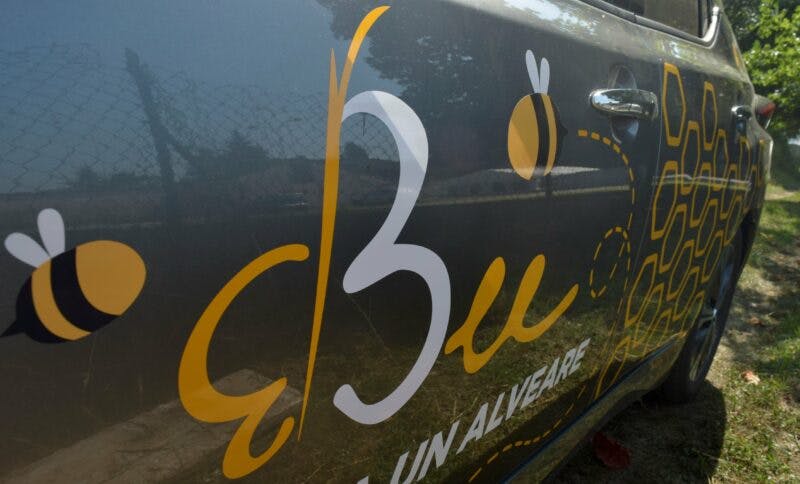
    This on-the-road experience around Italy to discover Italian beekeeping was also possible thanks to the support of companies that are increasingly aware that the promotion of a product such as honey is fundamental for a country that, like ours, can boast more than 50 different unifloral varieties. Carrefour supported us at every stage and thanks to Resicar we had our Polly, the electric car that was to accompany us throughout our journey.

    3Bee on the road con Carrefour e Resicar
    XNatura

    The first 3 stages of the tour

    The first stop on the tour was the province of Biella, where we met Igor Petracco and his bees. Igor has around 200 hives and produces the typical honey of the Piedmont region. He explained to us how it is not always easy for bees and beekeepers to live with the kind of intensive agriculture that is practised now. On the second stop, we met Paulin, who introduced us to his company based in the Asti region. Paulin arrived in Italy in 2008 to study at university and between books developed a passion for beekeeping. With him we talked about how climate change can disrupt the lives of bees. For the third stop, we treated ourselves to a breathtaking view in an incredible place: we went to Michela and Andrea, of the company Numero1, based in Ospedaletti. Here we understood why Ligurian beekeeping is called heroic: moving hives by hand along these inaccessible slopes is a feat!

    The first 3 stages of the tour

    Stages 4 and 5

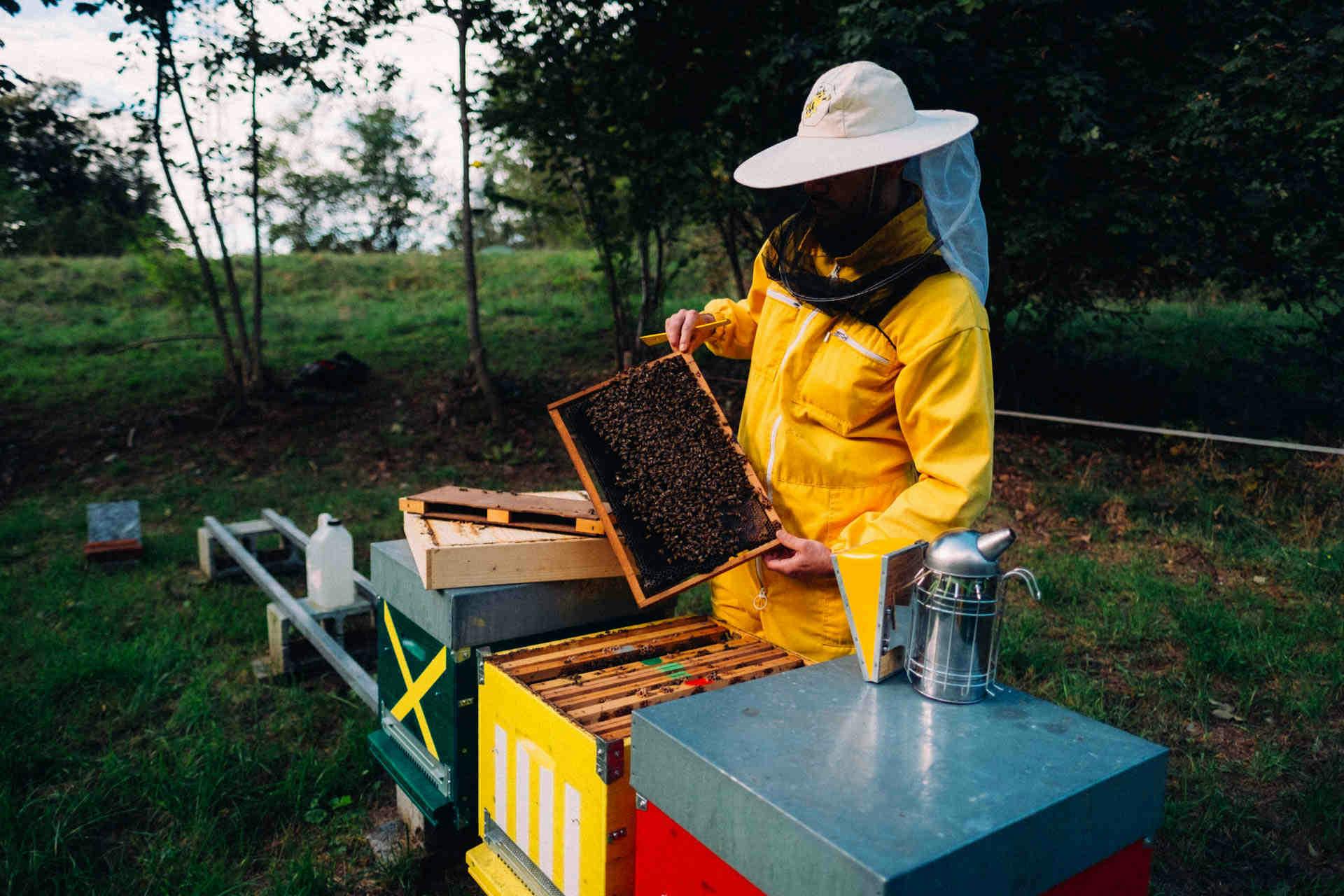
    The fourth leg of our tour did not start with the best of auspices. We got up at 3am and drove all the way to Alexandria, where we were left stranded. Oh yes, the ENEL columns failed us and we had to change cars. We then drove as far as Ferrara, more precisely to Bodeno, to a quarry. Here, in this former quarry that has been redeveloped into a protected oasis, Anna and Nicola have started their beekeeping business. Here they produce a millefiori honey, in which we find mainly alfalfa. On the fifth stop on our tour, we meet Matteo, from the Azienda Apiteo. Matteo's hives, of which there are about 50, are located near Senigallia, amidst rape fields and a stone's throw from the sea. With him, we talk about the differences between the different millefiori and the problems affecting his beekeeping, from poor flowering to the use of pesticides in agriculture.
    Stages 4 and 5
    XNatura

    Stages 6, 7 and 8

    On the sixth stop of our tour, we came to Castel di Lama, near Ascoli Piceno, to visit Riccardo of Azienda Agricola Il Riccio. He and his sister have created a virtuous local business, where they have the opportunity to make their honey and local products known. For the seventh stop on our tour, we chose to visit a beekeeping reality in the heart of Basilicata, the Apistica del Basento. Here we found Angelarosa with her whole family. This family-run business has been cultivating a passion for beekeeping for three generations. Today it has around 500 beehives and produces the honey typical of the area. On this eighth leg of our tour, we are in Calabria, at the home of the Francesco and Luigi Vescio brothers of the Briganti beekeeping business. In just six years, this beekeeping business has grown from 1 to around 400 hives spread over 10 apiaries where the typical local honey is produced.

    Stages 6, 7 and 8
    3Bee

    Stages 9, 10 and 11

    On the ninth leg of our 3Bee On The Road tour, we are still in Calabria, where we met Fabio Galati of Apicoltura Galati. He is helped in his work by his father, a beekeeper for over 40 years, who has passed on his passion for bees. This beekeeping farm, very close to the sea, has around 300 hives spread over 10 apiaries. For the tenth stop on our tour, we landed in Palermo, Sicily, where we met Davide and Sabrina of Amiche Api beekeeping. They are helped in their work by Davide's family. This beekeeping farm has around 1,200 hives spread over some 20 apiaries. On stop no. 11 of our tour we are in Molise, in the province of Isernia, where we met Giancarlo of the beekeeping company Miele del Tafarone. Giancarlo manages around 60 hives, built by his father and located in 2 apiaries in Molise and Abruzzo respectively.

    Stages 9, 10 and 11

    Stages 12 and 13

    We are in Pescina, the city of honey, where we met Franco of Apicoltura Dolce Lavanda. This historic company, completely family-run, has around 500 hives located in 10 apiaries in the heart of the Abruzzo National Park. Two of Italy's rarest and most prized honeys are produced here, witch hazel honey and savory honey, as well as various other native honeys. With Franco we talked about the problems afflicting beekeeping in Abruzzo and beyond. We are in Gambassi Terme, guests of Thomas of Apicoltura Salvi. This ten-year-old company has around 200 hives spread over 10 apiaries and practices nomadism for acacia and chestnut production. Thomas told us his story, his choice of organic beekeeping and what it means to be a beekeeper. We also talked about production and the main problems plaguing beekeeping in Tuscany.

    Stages 12 and 13

    The last three stages

    On this stop we are in Como, to meet Riccardo and Elena of Apicoltura L'Ape Balzerina. Due to the bad weather, we were unable to go to the apiary, but we went to have a peek at 3Bee's premises! Riccardo and Elena are not only beekeepers but also work together at 3Bee. Riccardo's beekeeping has about 50 hives spread over 6 apiaries that allow the production of native honeys. They told us their story, the main problems affecting bees and production. We arrived in Valtellina, to meet Massimo of Apicoltura Caprari. The company has around 130 hives spread over 16 apiaries. Native honeys such as lime, acacia and chestnut are produced, as well as high mountain honeys. On the last leg of our tour we are in the province of Verona, with Francesco and Riccardo of Apicoltura Dell'Orso. This name originates from a very special story! This company has around 200 hives spread over 13 apiaries.

    The last three stages
    26/08/2020Of 3Bee, Elena Fraccaro
    330 Views
    Newsletter
    newsletter
    Subscribe to the Blog about bees and biodiversity