What it isCauseSignsCome

    Swarming: Modes, Causes, Prevention And Control

    With the end of April and the beginning of May, a very busy period begins for the beekeeper, not only because the bees begin to forage and produce honey, but also because, in these early spring months, the famous swarming phenomenon occurs.

    Read the article
    18/04/2018Of 3Bee, Elena Fraccaro
    3431 Views
    18/04/2018Of 3Bee, Elena Fraccaro
    3431 Views

    What is swarming

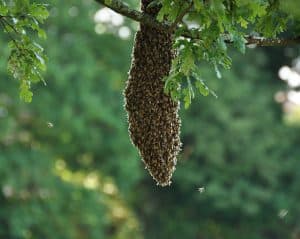
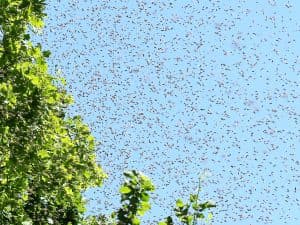
    By definition, swarming is the definitive departure from a colony of a queen followed by a portion of the workers. It is an entirely natural phenomenon, part of the annual life cycle of bees, and represents the way in which the hive 'superorganism' reproduces. When it reaches its maximum size, it divides, creating a new family. This swarm that leaves the hive of origin consists of young worker bees, a few kelps and, of course, the queen bee, which leaves the hive a few days before the new queen is born.
    What is swarming

    The causes of swarming

    The tendency to swarm is a hereditary characteristic, but can also be influenced by internal and external factors. The main internal causes include the age of the queen, the space available and the health status. The older the queen, the higher the tendency to swarm, as will be the case when the available space within the hive is limited and prevents further development of the family. Diseases can also affect this phenomenon: some of them, in fact, can be a real cause of swarming. External factors, on the other hand, include the climate, the abundance or otherwise of harvesting, the position of the hive and insulation. It is important to note that most of these causes can be traced back to the presence or absence of the queen's pheromone: the less it is present, the higher the probability of swarming.
    The causes of swarming
    XNatura

    The telltale signs of swarming

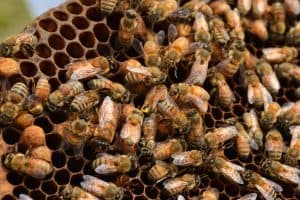
    Before swarming takes place, it is possible to record the occurrence of telltale signs that can alert the beekeeper. Drones and royal cells: first of all, bees start breeding drones well before the family is able to support them. Next, one notices the construction of royal cells, which are located along the lower edges of the combs. Another macroscopic sign is the scarcity of available empty cells. Factors not directly observable by the human eye: On a level not directly observable by the human eye, however, is the considerable increase in the temperature inside the hive, the high level of carbon dioxide, the change in the sound frequency produced by the bees and their smell. Adult bees, in fact, smell differently depending on their age: the younger the bees, the more favourable this is to swarming.
    The telltale signs of swarming

    How it takes place

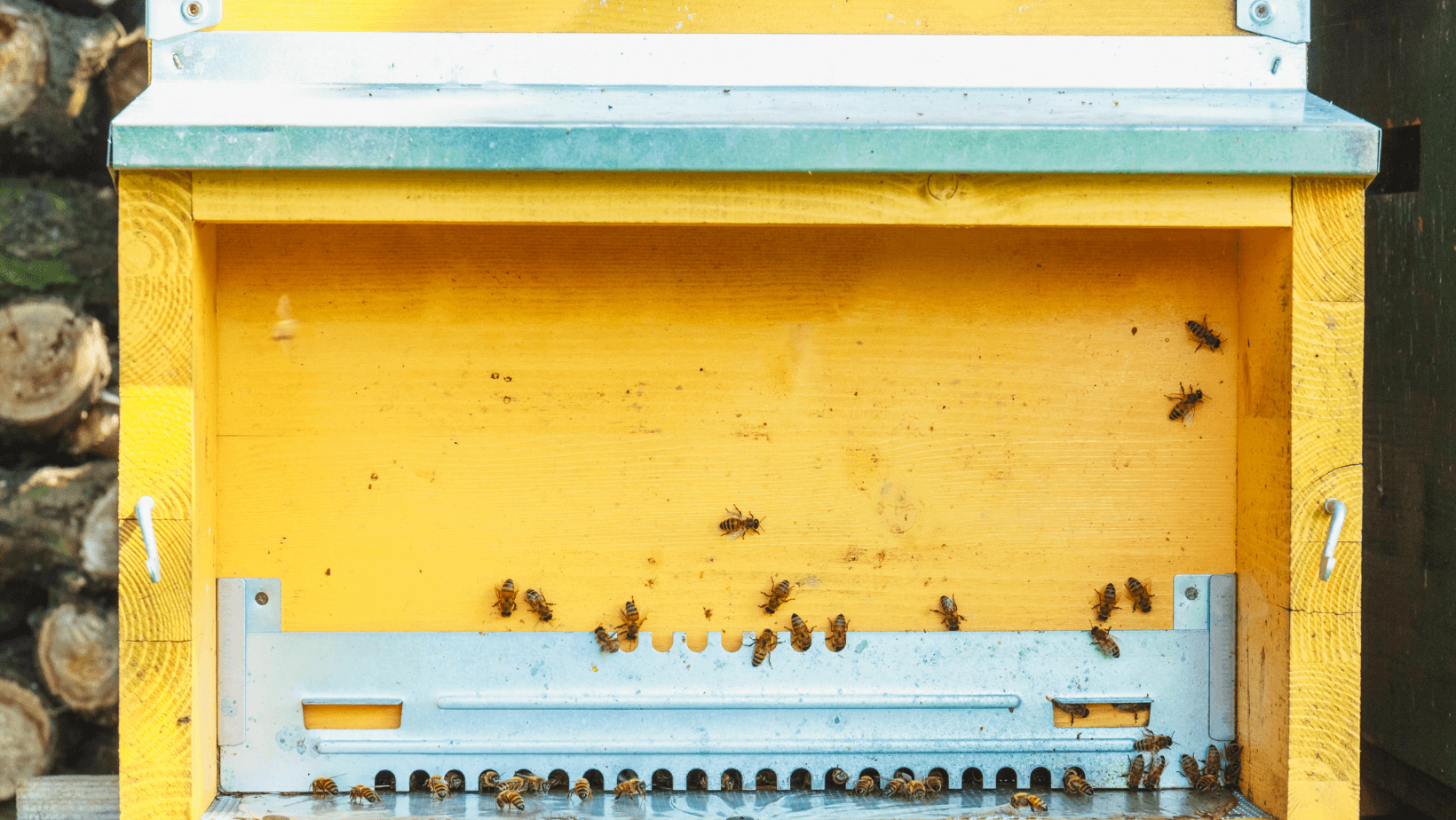
    When the worker bees decide that it is time to swarm, this choice entails a change in the glands and the musculature of the bees themselves. Swarming fever: Shortly before swarming occurs, the bees enter what is known as 'swarming fever'. Forager bees slow down their nectar and pollen gathering activity, while they develop the tendency to 'beard', i.e. to gather in clusters outside the hive. At the same time, the explorer bees concentrate all their efforts on searching for a new place to establish their new hive. The swarming worker bees then begin consuming honey stocks, filling their honey bags so that they carry the necessary supplies for the first needs of the new hive.
    How it takes place
    XNatura

    What happens to the queen?

    In addition, the queen is put on a diet: in this way, she stops laying, loses weight and the volume of her abdomen decreases, allowing her to leave the hive and fly. Once ready to leave, the queen is stimulated by the workers to leave the hive and, once she takes flight, she takes about 70% of her bees with her. Once they have left the hive, they position themselves in a specific location, often a branch or other support, waiting for the scouts to complete their search for their new home, where the new family will settle.

    3Bee

    Prevention systems

    For the beekeeper, a swarming family equals a loss, because instead of a strong family ready for production, he will end up with a smaller and weaker nucleus. Swarming control practices are very important. Family levelling: a very useful practice, basically, frames with operculated brood are removed from strong families and then placed in the boxes of weaker families and replaced with wax sheets or honeycombs that have already been built. This decongests the larger family and strengthens the weaker one. Creation of new nuclei: another practice is the creation of actual nuclei from the strong family ready to swarm. In this way, a true artificial swarming takes place. Elimination of royal cells: finally, the elimination of every royal cell is also a method that is still widely used.

    Swarm recovery

    If, on the other hand, you were unable to prevent your bees from taking flight, here are a few pointers for recovering your swarm. First, you should equip yourself with a swarm carrier, a lightweight hive consisting of 5 or 6 combs and large grid vents. Although swarming bees are very tame and unlikely to sting, it is still advisable to equip oneself with a suit, a face mask and a smoker. Recovery procedure: the hive is placed under or near the swarm, which is introduced by shaking it off the support on which it stands. This is the typical situation when the swarm has positioned itself on the not too large branch of a tree. If this procedure is not possible, a special brush can be used to get the bees into the recovery hive. For more inaccessible places and more complex positions, specific equipment has also been put on the market.

    Some tricks

    These recovery procedures are best carried out in the middle hours of the day, to allow all the bees to enter the new hive. Moreover, these operations are not always successful, because the bees may have already chosen a new home and will again be pushed to leave the hive. To avoid a new "escape", it is advisable to place a honeycomb with uncovered brood in the hive, which would prompt the bees to stop and take care of it. Another useful tip is to always leave an empty hive open near the apiary during the swarming period. This offers a possible swarm a safe and immediately accessible dwelling in which to take refuge.

    The help of 3Bee

    The swarming period is very intense for beekeepers and requires a lot of commitment and effort from them. The measures taken are not always successful and the risk of losing a family and reducing production remains high. This is why the use of a monitoring system can be very useful in alerting the beekeeper that the time is right to act. 3Bee Hive-Tech, by monitoring weight, temperature and sound, succeeds in providing the beekeeper with a useful contribution. By interpreting the graphs and data, one can tell when the family is preparing to swarm. Thanks to the subsequent processing of predictive algorithms, it will be possible to receive alerts conveniently on your mobile phone in case any anomalies occur.

    The help of 3Bee
    18/04/2018Of 3Bee, Elena Fraccaro
    3431 Views
    Newsletter
    newsletter
    Subscribe to the Blog about bees and biodiversity