SOLACE at Ecomondo: XNatura and 3Bee accelerate the EIA for photovoltaics
    SOLACEThe problemThe engineThe pilots

    SOLACE at Ecomondo: XNatura and 3Bee accelerate the EIA for photovoltaics

    SOLACE is the European project with which XNatura and 3Bee developed the engine that writes the Environmental Impact Study of a photovoltaic plant starting from the site perimeter. From 3 to 6 November we present it at Ecomondo, pavilion D3, stand 414-412.

    Read the article
    03/11/2026Of 3Bee, Niccolò Calandri
    1 Views
    03/11/2026Of 3Bee, Niccolò Calandri
    1 Views

    What is SOLACE

    SOLACE, SOLar Assessment and Compliance Engine, is the project with which 3Bee and XNatura® accelerate the permits for photovoltaic plants in Europe. It is funded by the European Union under RENEW-BOOSTER Eurocluster, open call Strand B dedicated to photovoltaics, and lasts six months, from 15 July 2026 to 15 January 2027. The starting point is simple: today photovoltaics in Europe is not slowed down by panels but by permits, and the longest step is the Environmental Impact Assessment. With SOLACE we built on the XNatura platform an engine that prepares the Environmental Impact Study of a photovoltaic or agrivoltaic plant starting from the site perimeter, with Italy as the first national module and an architecture designed for the other European countries.
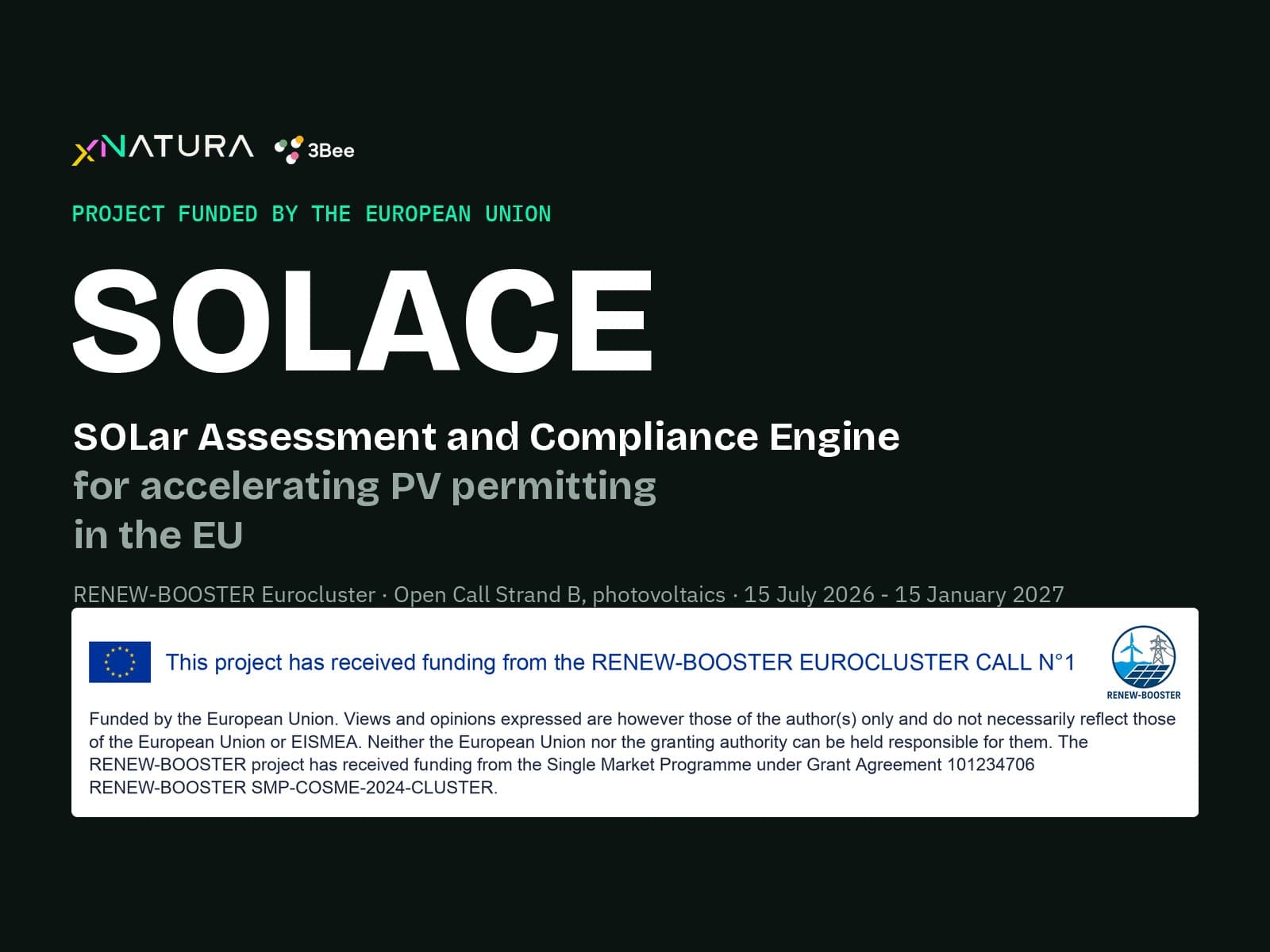
    SOLACE, SOLar Assessment and Compliance Engine: a project funded by the European Union under the RENEW-BOOSTER Eurocluster, with the EU emblem and the RENEW-BOOSTER logo

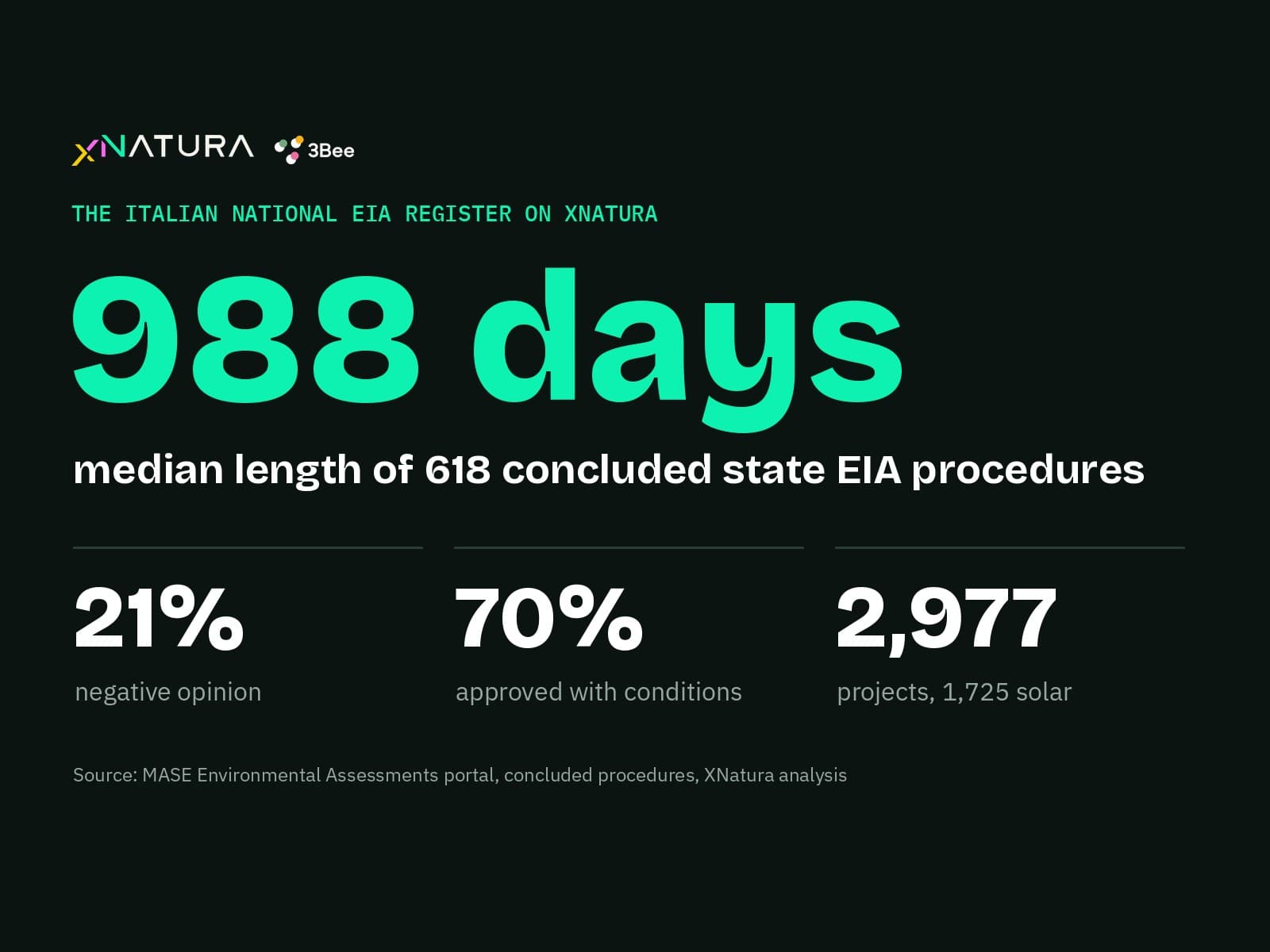
    The bottleneck: 988 days for an EIA

    To understand where plants get stuck, we brought the Ministry of the Environment's national EIA register to XNatura: 2,977 projects, 1,725 of which are solar between photovoltaic and agrivoltaic, 3,362 procedures and 474,000 documents. The numbers are stark: the median duration of 618 completed state EIAs is 988 days, almost three years; 21% end with a negative opinion and 70% with conditions to comply with after the decree. Much of that time goes into collecting and lining up data that already exists: Natura 2000 and protected areas, flood and landslide hazard, land use, air quality, cumulative effects with other plants. This is work an engine can do in little time, leaving to experts what matters. The updated figures are on the XN Impact EIA page and in the Projects and authorizations catalog.

    988 days, the median length of 618 concluded state EIA procedures in Italy: 21% negative, 70% approved with conditions, 2,977 projects in the register
    XNatura

    The engine: the recoverable data, not the judgment

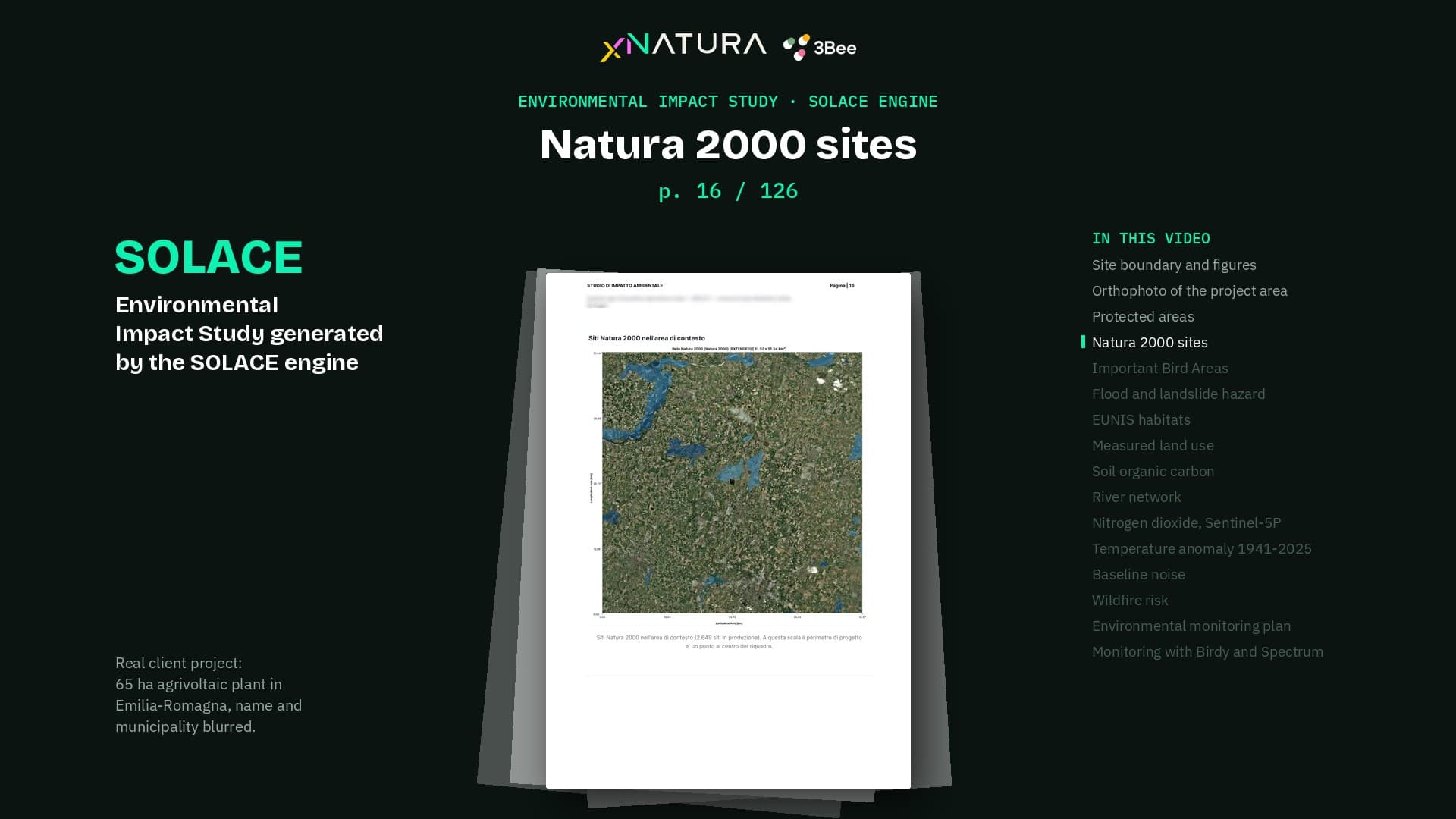
    It starts from the perimeter of the plant. The engine applies the Environmental Impact Study model built on Italian law (Legislative Decree 152/2006, Annex VII): 373 requirements, derived from 32 studies filed with the Ministry and 15 monitoring plans. For each environmental component, it calculates maps and indicators on the site and on a control area, completes the programmatic framework with PAI, Natura 2000, IBA and regional plans, estimates cumulative effects and proposes mitigation measures and a monitoring plan. The complete Study is output in PDF and DOCX. The boundary is clear: the engine produces the recoverable data, the designer enters the project data, and the judgment on impacts remains with the qualified technician who signs. Every empty box states who is responsible for it. The video scrolls through 16 real pages of a study generated by the engine; the others are on the EIA page of XN Impact.

    video cover

    The first results: two pilot plants

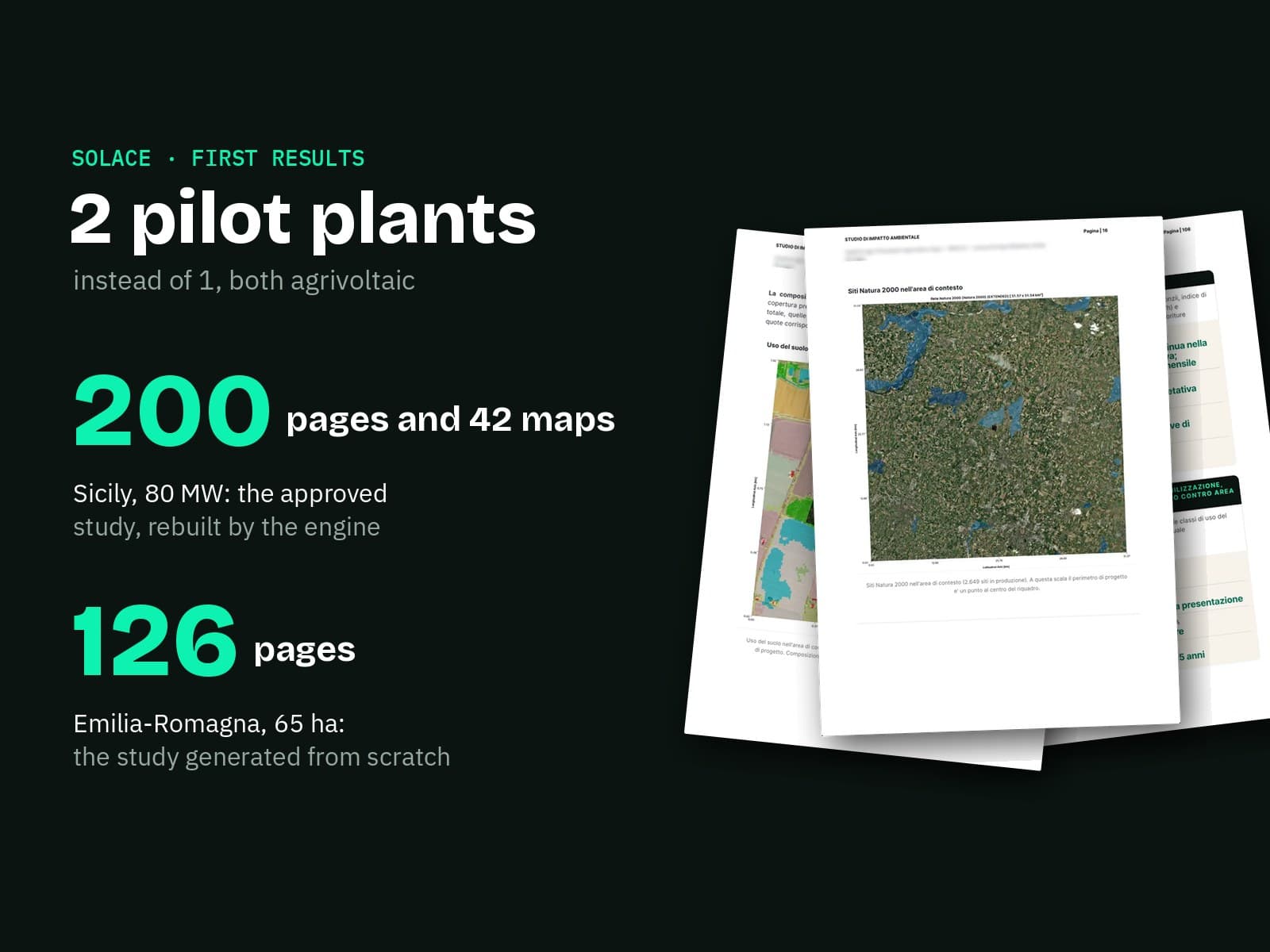
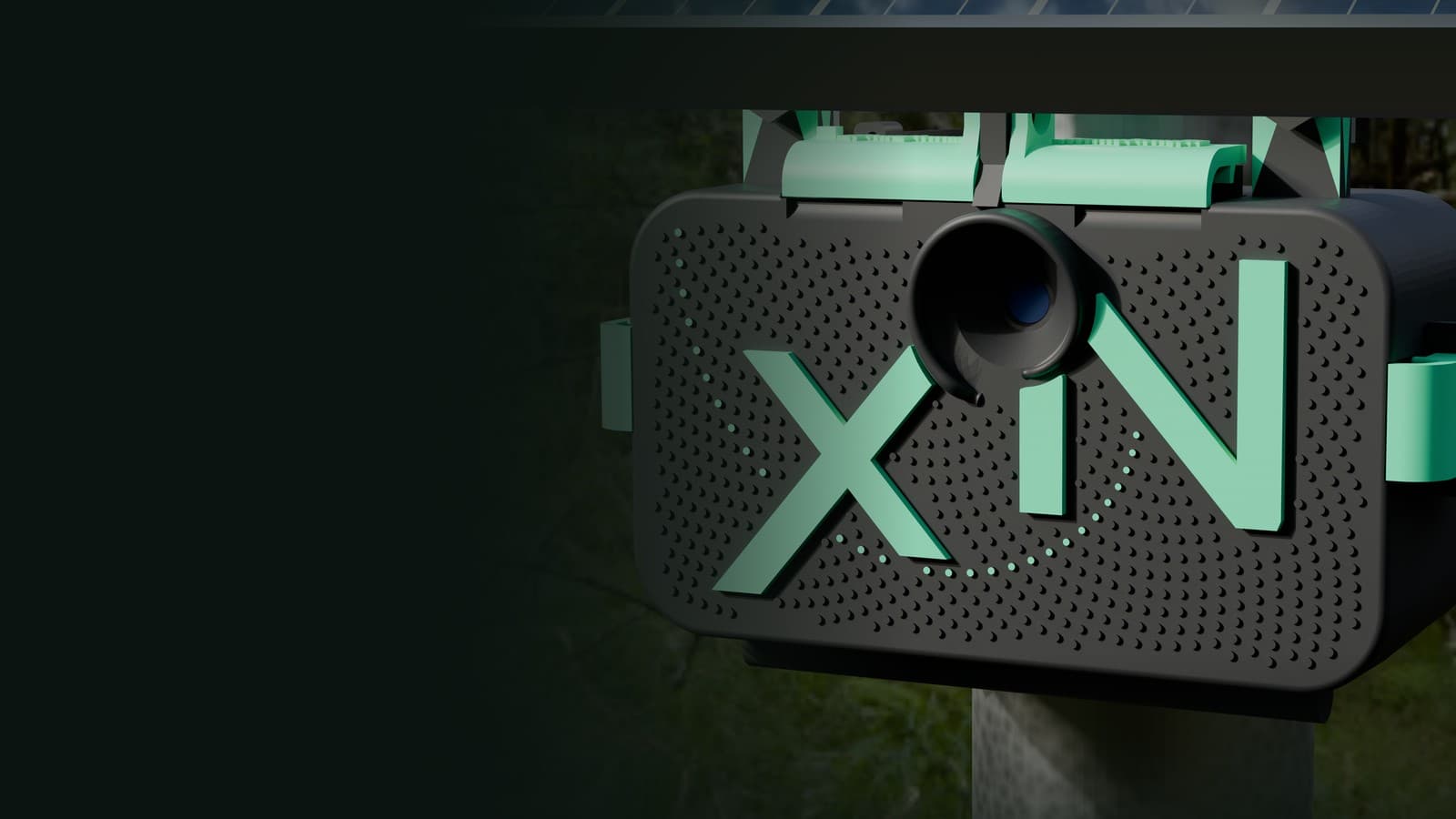
    In the application we had promised a pilot site: today there are two pilot plants, both agrivoltaic. On the first, an 80 MW plant in Sicily with the EIA already approved, the engine redid the study: 200 pages and 42 maps, to be compared chapter by chapter with the one written by the consultants. On the second, 65 hectares in Emilia-Romagna, it generated from scratch a 126-page study, with the proponent entering only the project data. Alongside the software, we are finishing designing a new field sensor for photovoltaic plants, for the acoustic monitoring and environmental monitoring of biodiversity before and after the permit. Next steps: structured export of the study in GeoJSON and CSV, the self-service flow for consultants, validation of the pilot studies by December, and the final report in January 2027.

    The two SOLACE pilot plants: 200 pages and 42 maps in Sicily, 126 pages in Emilia-Romagna, with real pages of the study
    XNatura

    At Ecomondo: try SOLACE at the stand

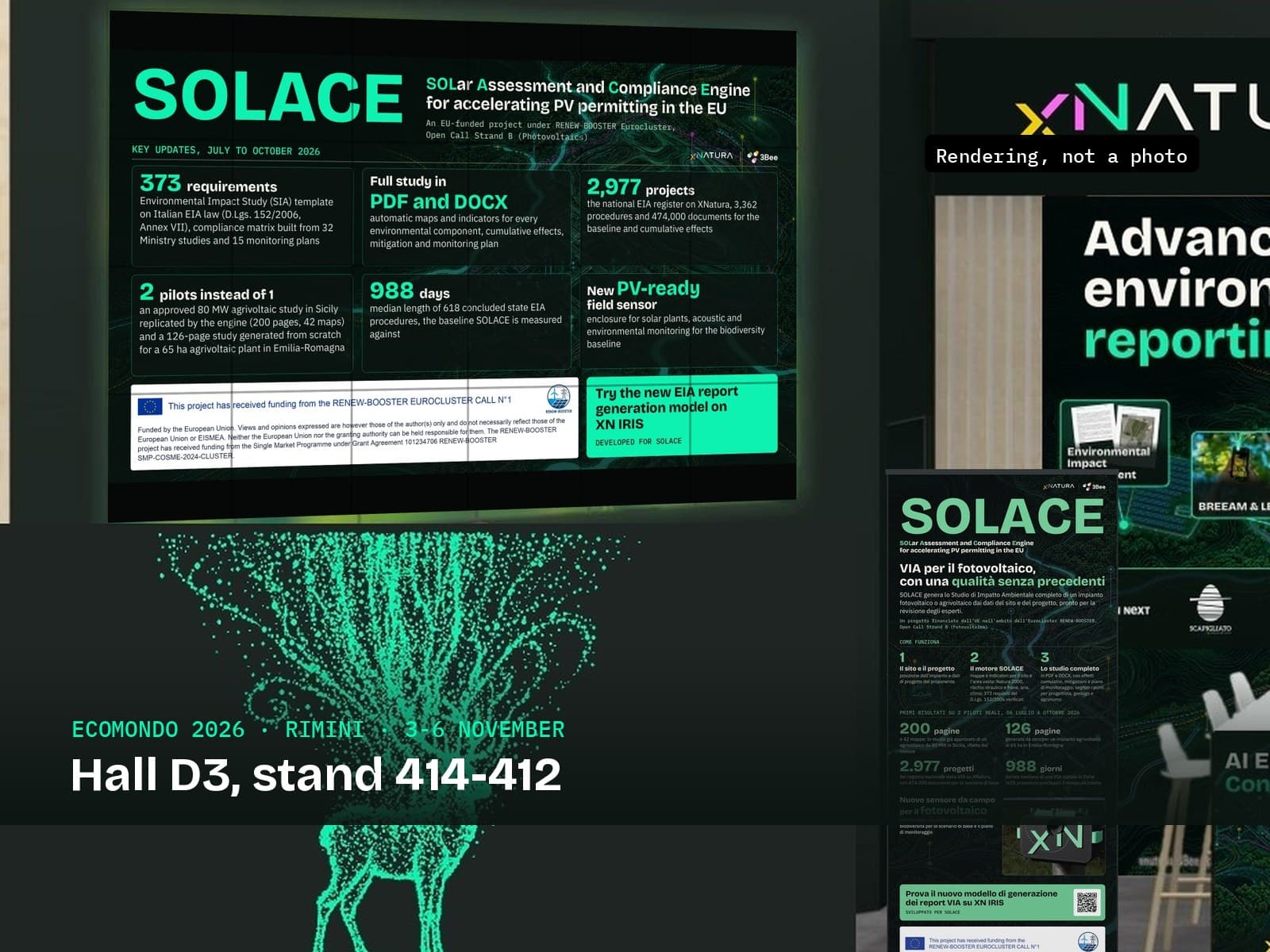
    From 3 to 6 November we will be at Ecomondo, at the Rimini Exhibition Centre, hall D3, stand 414-412. Part of the stand is dedicated to SOLACE: the project's latest updates scroll on the large screen and we try it together on your plant. On 3, 4 and 5 November at 11 am and 3 pm there is the workshop «From site to report», on a real site.

    This project has received funding from the RENEW-BOOSTER EUROCLUSTER CALL N°1. Funded by the European Union. Views and opinions expressed are however those of the author(s) only and do not necessarily reflect those of the European Union or EISMEA. Neither the European Union nor the granting authority can be held responsible for them. The RENEW-BOOSTER project has received funding from the Single Market Programme under Grant Agreement 101234706 RENEW-BOOSTER SMP-COSME-2024-CLUSTER.

    Rendering of the SOLACE area of the XNatura and 3Bee stand at Ecomondo 2026, hall D3, stand 414-412
    3Bee
    03/11/2026Of 3Bee, Niccolò Calandri
    1 Views
    Newsletter
    newsletter
    Subscribe to the Blog about bees and biodiversity