Kiro: the XNatura® sensor that listens to bats
    KiroWhy they matterEcholocationHow it works

    Kiro: the XNatura® sensor that listens to bats

    Bats navigate using ultrasound that we cannot hear. Kiro, the new XNatura® bioacoustic sensor, listens to them day and night without disturbing them: why bats matter, how echolocation works, and what we recorded in the field test.

    Read the article
    21/10/2026Of 3Bee, Niccolò Calandri
    0 Views
    21/10/2026Of 3Bee, Niccolò Calandri
    0 Views

    Listening to the night

    At night, above fields, woods and cities, the bats hunt and orient themselves with sound pulses that the human ear largely does not hear: they are ultrasounds. We cannot hear them, Kiro can. It is the new bioacoustic sensor from XNatura®, developed by 3Bee: it stems from the experience of Spectrum, which listens to pollinators, and Birdy, which recognizes birds. Kiro just listens: it emits nothing, requires no field technicians and does not disturb in any way the bats it observes. It is currently in field test in an agricultural and semi-natural environment.
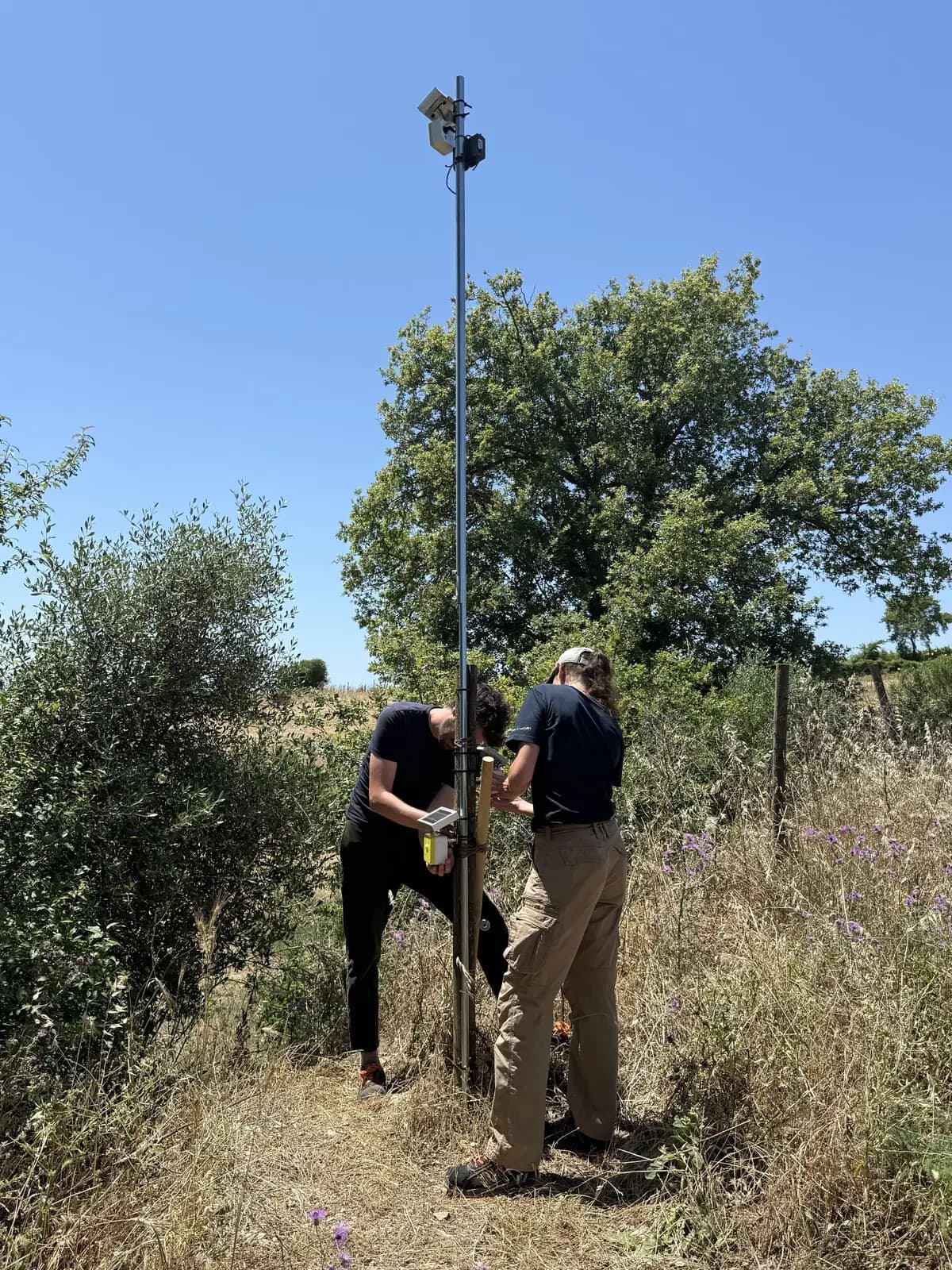
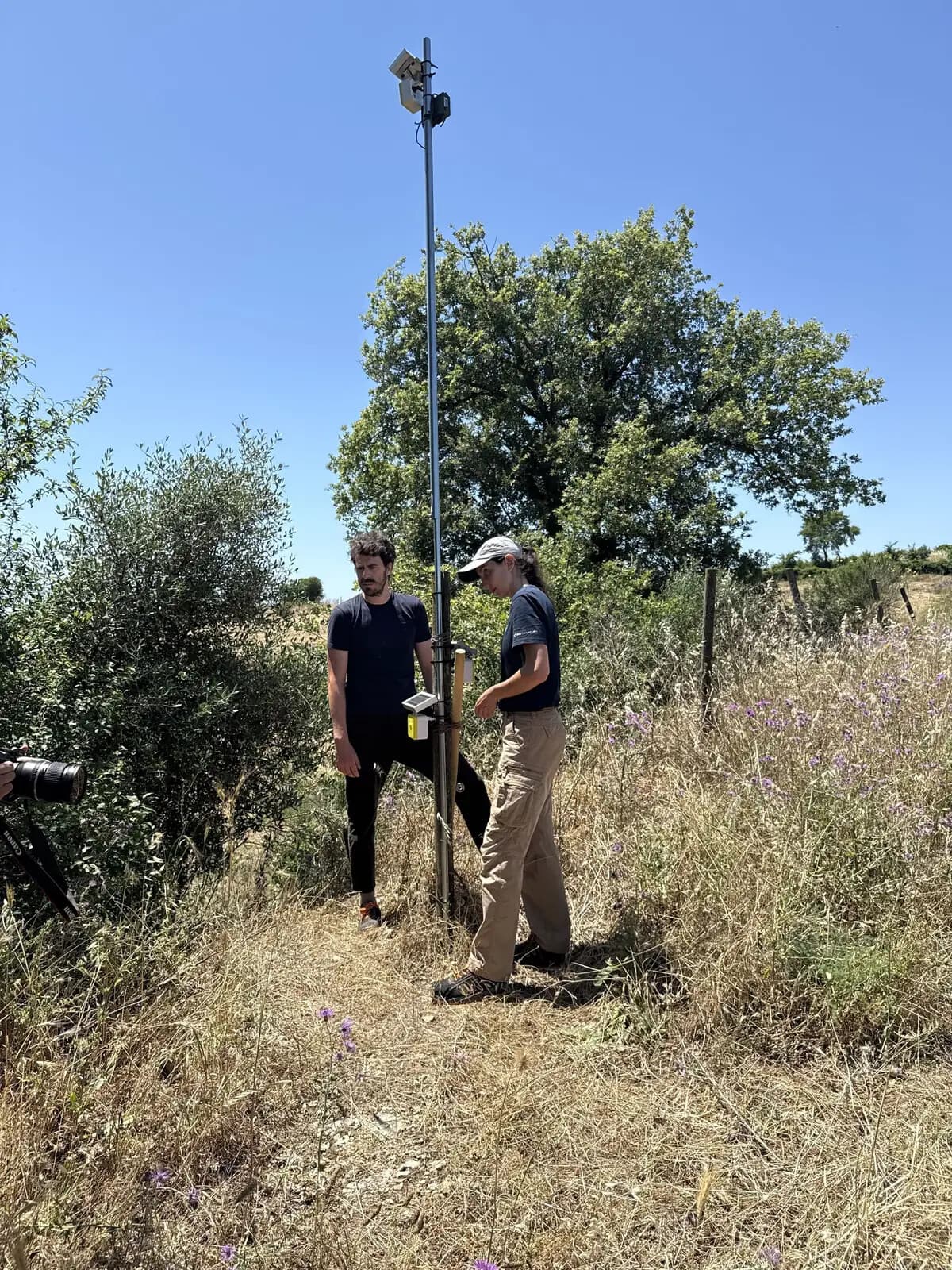
    Tecnici 3Bee installano Kiro durante il field test

    Why bats matter

    Bats are among the best indicators of biodiversity health. They live wherever there is food and shelter: in cities, in the countryside and in natural environments, in tree cavities and caves, but also in farmhouses, attics and bat boxes. They are nocturnal insectivores and feed on insects, including mosquitoes and crop pests such as the brown marmorated stink bug: where there are bats, there are insects and a functioning ecosystem. Many Italian species are at risk in the Red Lists, and in Europe all bats are protected by the Habitats Directive: monitoring them is useful for nature and for those who must report on it.

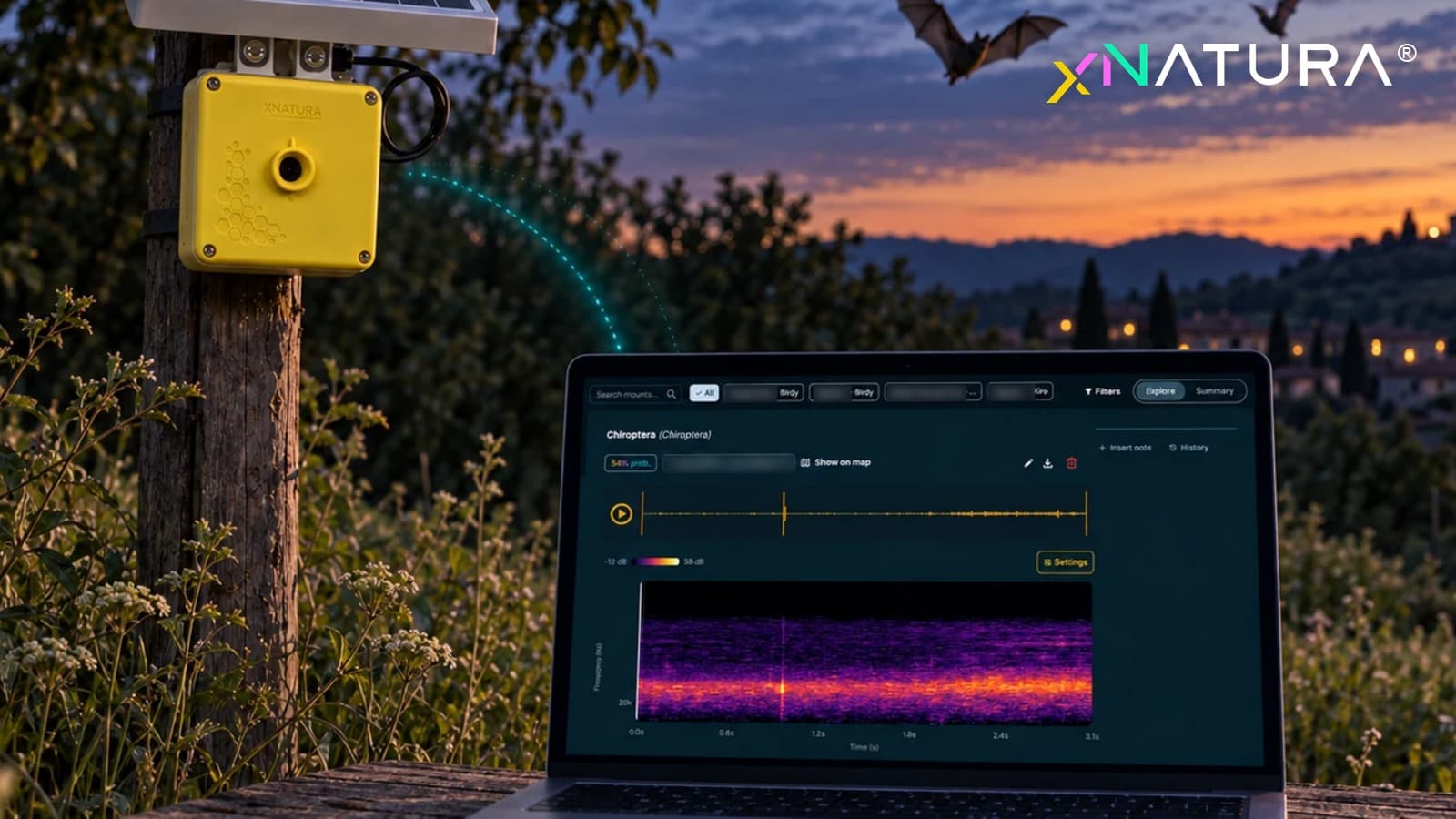
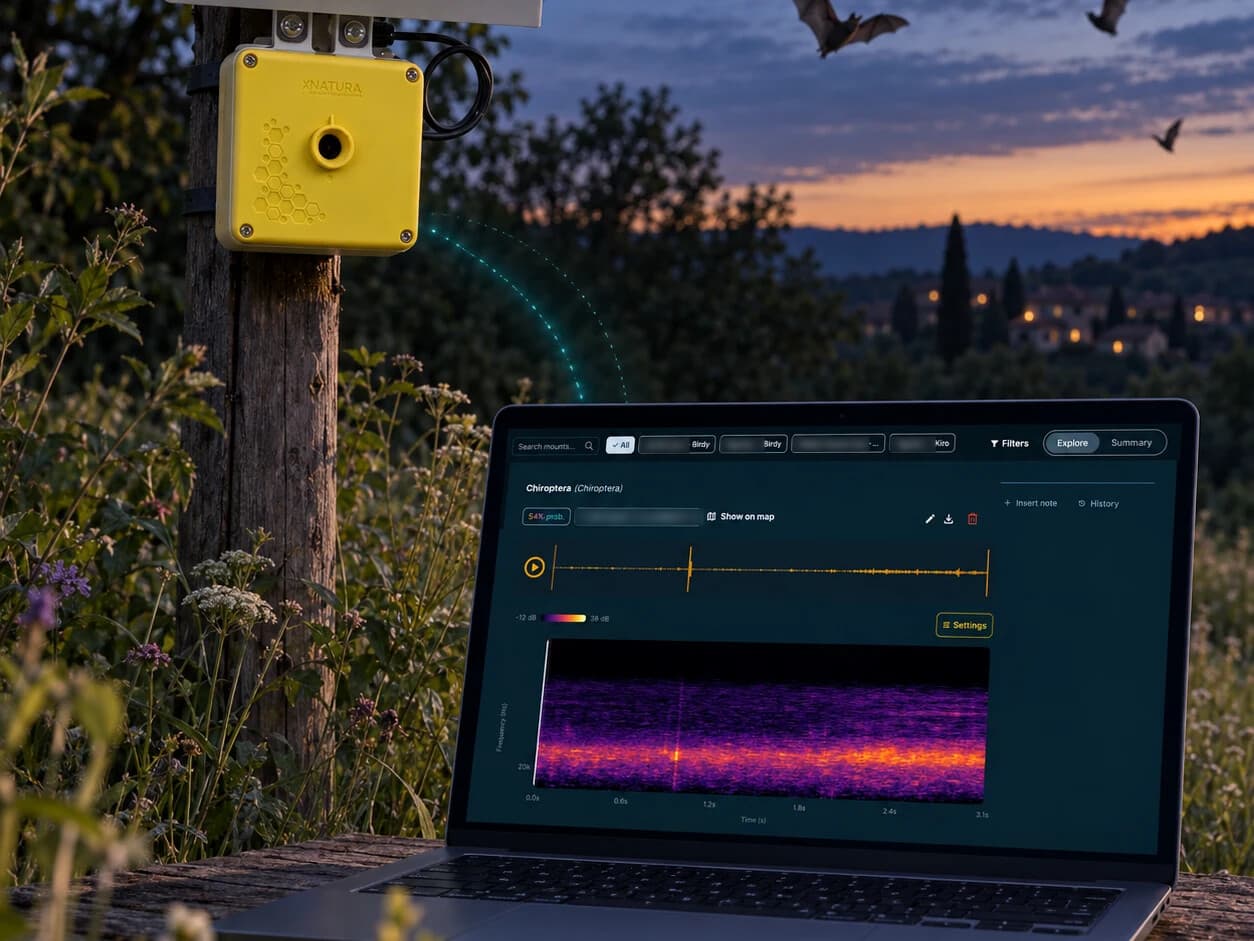
    Pipistrelli al tramonto e un rilevamento di Kiro sulla piattaforma XNatura
    XNatura

    Echolocation, the biosonar of bats

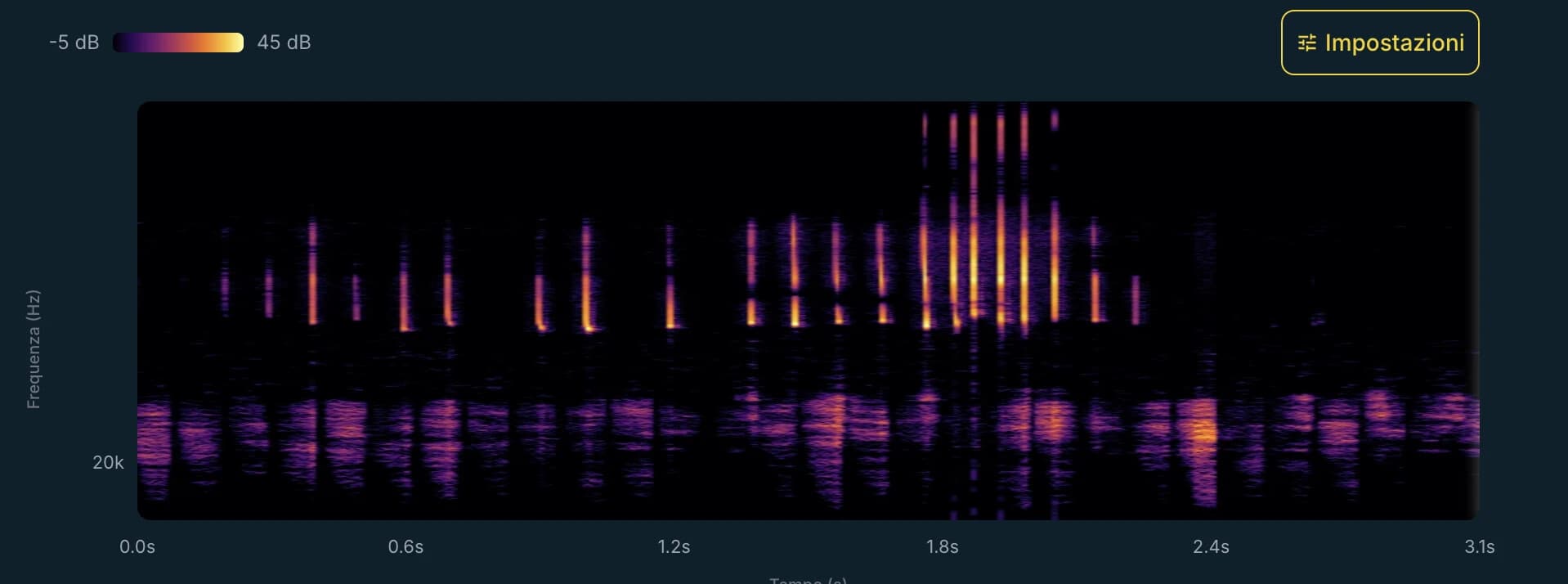
    Although they can see, bats move and hunt mainly thanks to echolocation. They emit ultrasonic pulses that bounce off surfaces and prey and return: from the echoes they build a true acoustic image of the environment. Each pulse lasts a few milliseconds and is mostly above 20 kHz, beyond the limit of our hearing. On a spectrogram these pulses become very sharp vertical traces, well separated from background noise: this is how, on the XNatura® platform, the pulses recorded by Kiro become visible and audible. In the video you listen to two real recordings of Kiro, with ultrasounds brought into the audible range.

    video cover

    How Kiro is made and how it works

    Kiro uses Birdy's hardware platform with a sampling board designed specifically for bats and ultrasonic MEMS microphones. It samples sound at 256 kHz, with an onboard neural network, and in field recording mode saves 3 seconds every 20 onto a microSD card. It is installed at about 4 meters high in the area to be monitored, an integrated solar panel keeps it on day and night and a multi-operator SIM continuously sends data to the XNatura® platform. Other systems count individuals but do not provide real-time data: Kiro is automatic and detections arrive on the dashboard as they happen. In the video, Kiro in 3D with its boards, from ultrasonic microphones to the battery.

    video cover
    XNatura

    From field test to species

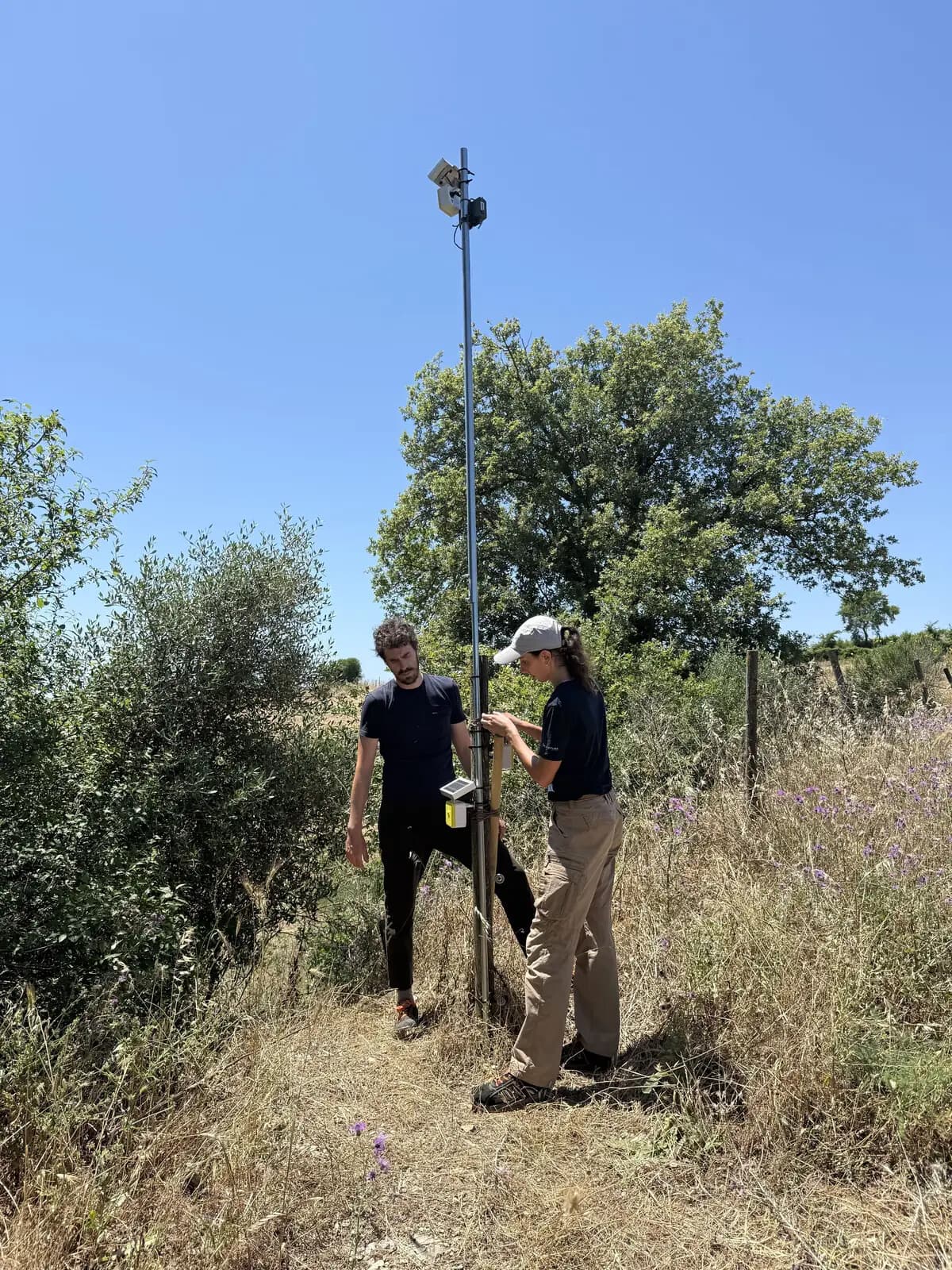
    Since summer 2026 Kiro has been in field test in agricultural and semi-natural environments, and has already recorded at night the first ultrasonic bat pulses, which you can listen to on the Kiro page on xnatura.com. The next step is species recognition: the same path that with Birdy led us to a model trained on the sounds from our sensors. Like the other XNatura® sensors, Kiro is not bought off the shelf: it becomes part of biodiversity monitoring projects, alongside Birdy, Spectrum and satellite maps, to have the life of the night in one place too. If you want to be among the first to monitor bats at your sites, tell us about your project.

    Il field test di Kiro in ambiente agricolo e semi-naturale
    3Bee
    21/10/2026Of 3Bee, Niccolò Calandri
    0 Views
    Newsletter
    newsletter
    Subscribe to the Blog about bees and biodiversity