Italian companies and sustainability: where do we stand?
    SustainabilityEnterprises ItalyResultsConclusions

    Italian companies and sustainability: where do we stand?

    What is the approach of Italian companies to sustainability? In this article we will analyse, starting from some studies and research, how sustainability is becoming a strategic business lever, helping to manage risks and reduce costs.

    Read the article
    27/10/2023Of 3Bee, Elena Fraccaro
    1299 Views
    27/10/2023Of 3Bee, Elena Fraccaro
    1299 Views

    The importance of sustainability

    Understanding the importance of building business sustainability means buildinga business that aims for success. Developing sustainable strategies and practices increases the efficiency of business activities and processes, enables a more rational use of resources and a greater understanding of the market. Choosing to integrate sustainability policies also results in an increased reputation of the company and greater employee, customer and stakeholder satisfaction. The long-term result will be a company with a relevant role in the market. Are Italian companies accepting the managerial challenges of sustainability?

    Impresa sostenibile

    A look at Italian companies

    In order to understand where Italian companies stand in terms of sustainability, we present the results of the Business for the Common Good research with reference to 2022 conducted on a sample of 213 companies. Dynamo Academy and the Sustainability Lab SDA Bocconi supported the survey, which aimed to outline the general picture in our country. The research showed strategies and tools of intervention used to carry out social projects in Italian communities and territories aimed at inclusion, equity and support for diversity. 59% of Italian companies have set up an ESG/Sustainability Committee showing interest in sustainability strategies. Diversifying sectors, 71% indicated 71% for healthcare, 69% for transport, 68% for consumer goods and 65% for manufacturing.

    Ambiente
    XNatura

    The most significant results

    98% of companies have a board of directors with visibility on ESG issues - Environmental, Social, Governance - i.e. dimensions aimed at verifying, measuring, monitoring and supporting the sustainable commitment of the company or organisation. 83% of international companies work towards the Sustainable Development Goals defined in the 2030 Agenda and 72% of corporate strategies are aligned with the SDGs. The research pointed out that 37% of Italian companies have joined the United Nations programme for the adoption of sustainable policies and to make public the results of actions taken. 44% of the companies sampled stated that they draw up their ownsustainability strategy and action plan (69% in the transport sector, 59% in the consumer goods sector and 55% in the energy sector.

    Research conclusions

    All analysed companies usethe GRI reporting standard to report on the economic, social and environmental impacts and measure the ESG compliance of companies. Defining ESG criteria results in performance ratings that are developed through analysis processes that comply with international evaluation parameters. In the sample, 8% have a sustainability rating. The data reported is intended to invite reflection on trends, partnerships, and business cases to develop and enhance the role of companies as a driving force for the good of society and as a drive to generate impact in the region. Business leaders must take advantage of thisnetworking opportunity that involved the largest (96% of sampled companies have a turnover of more than 50 million euro) and most impactful companies in Italy that we saw being driven by social investment strategies.

    XNatura

    ISTAT data on sustainable practices

    In order to deepen the approach to sustainability of Italian companies, we examine the results of an ISTAT survey on the sustainable practices of companies in 2022 and 2023/2025 with particular emphasis on manufacturing companies. 59.5% of companies have taken sustainability actions. Of these, 50.3% have taken environmental protection actions, 44.6% social sustainability and 36.8% economic sustainability. The survey points out that the most active in terms of sustainable practices are large companies with 81.5% compared to 36.1% of small companies. The latter have yet to realise the potential of sustainable finance, but this is an awareness that needs to be acquired as soon as possible given that the lack of information on the attention of Italian SMEs to sustainability issues is becominga growing problem for Italian and foreign investors.

    Sostenibilità ambientale
    3Bee

    Italian SMEs, a problem to be solved

    The absence of specific legislation does not help small and medium-sized companies to embrace sustainability as a goal to pursue. Only for companies with more than 500 employees is there an obligation to report information of a non-financial nature (Decree Law 30 December 2016, number 254). No Social, sustainability or corporate reporting in terms of impact on the community and the environment for SMEs, which find themselves subject to a serious shortcoming. The non-financial balance sheet serves to enable the company to orient its business choices by followingsustainability criteria in order to improve its market position. The obligation to draw up sustainability reports encourages companies to act with an eye to the future, to create value in the long term. Without obligation, SMEs do not set targets that push the company towards greater efficiency and competitiveness. They stay out of innovation and do not attract investment.

    Sustainability practices

    The ISTAT survey analysed sustainability practices implemented by Italian companies. 22.3% of manufacturing companies have invested in the production of energy from renewable sources and 20.4% have adopted energy efficiency systems. 14.9% use water recycling, 11.8% secondary raw materials (materials derived from the recycling, regeneration or transformation of existing products that are reprocessed and transformed into new raw materials) and 5.5% have adhered to industrial symbiosis (waste from one company is valorised as raw materials for another). Only 5.2% reuse residual production waste while 4.7% of the companies recycle materials by redesigning production processes.

    Pratiche di sostenibilità

    A glimpse into the future

    The ISTAT data refer to 2022, but it is estimated that the percentages will increase in the three-year period 2023-2025. It is expected that 64.5 per cent of manufacturing companies will undertake sustainability practices to improve corporate performance and reputation. Sustainability is also a goal of service companies. 52.5% of the respondents stated that they would like to include environmental protection initiatives in their business plans in the near future. 3Bee fits into this context with its Biodiversity Oases: urban and agroforestry habitats with refuges for pollinators and native flora. Here, biodiversity is constantly monitored with the XNatura monitoring protocol developed by 3Bee and validated by a third-party certification body.
    Ambiente

    Between yesterday, today and tomorrow

    The time seems to have come to address the sustainability challenge more decisively after two years of deteriorating performance. Whereas up to 2019 the trend in sustainable development showed continuous growth, in 2020 and 2021 it came to a standstill. The data show a decrease to 42.5% in the share of improving measures and an increase to 37% in the share of deteriorating measures during the pandemic years from Covid 19. The same two-year period saw a slowdown in the race to achieve the sustainability goals of the 2030 Agenda. But Covid has simultaneously necessitated a modernisation of companies, the digitisation of the business world as well as a push for innovation to aim for sustainable and efficient production. Hence the revival of sustainability issues and the increased commitment to reporting on the sustainable practices adopted.

    Flora

    Business commitment

    Talking about sustainability is not enough, we need to address a path that more effectively increases sustainable acting in business. Embracing sustainability means using a strategic element to trigger new, increasingly competitive dynamics. Being an active player in combating environmental emergencies is, therefore, a smart move to make, especially if specific goals can be identified. For example, the protection of pollinator insects, 9% of which are at risk of extinction according to the ISPRA. Setting a target like this means demonstrating one's commitment to sustainability and the pursuit of ever-better ESG performance while complying with the CSRD Directive. Hence the need for a biodiversity certification to be presented on the market in the future: this is the goal of XNatura, the biodiversity monitoring protocol developed by 3Bee.


    Article edited by Valentina Trogu

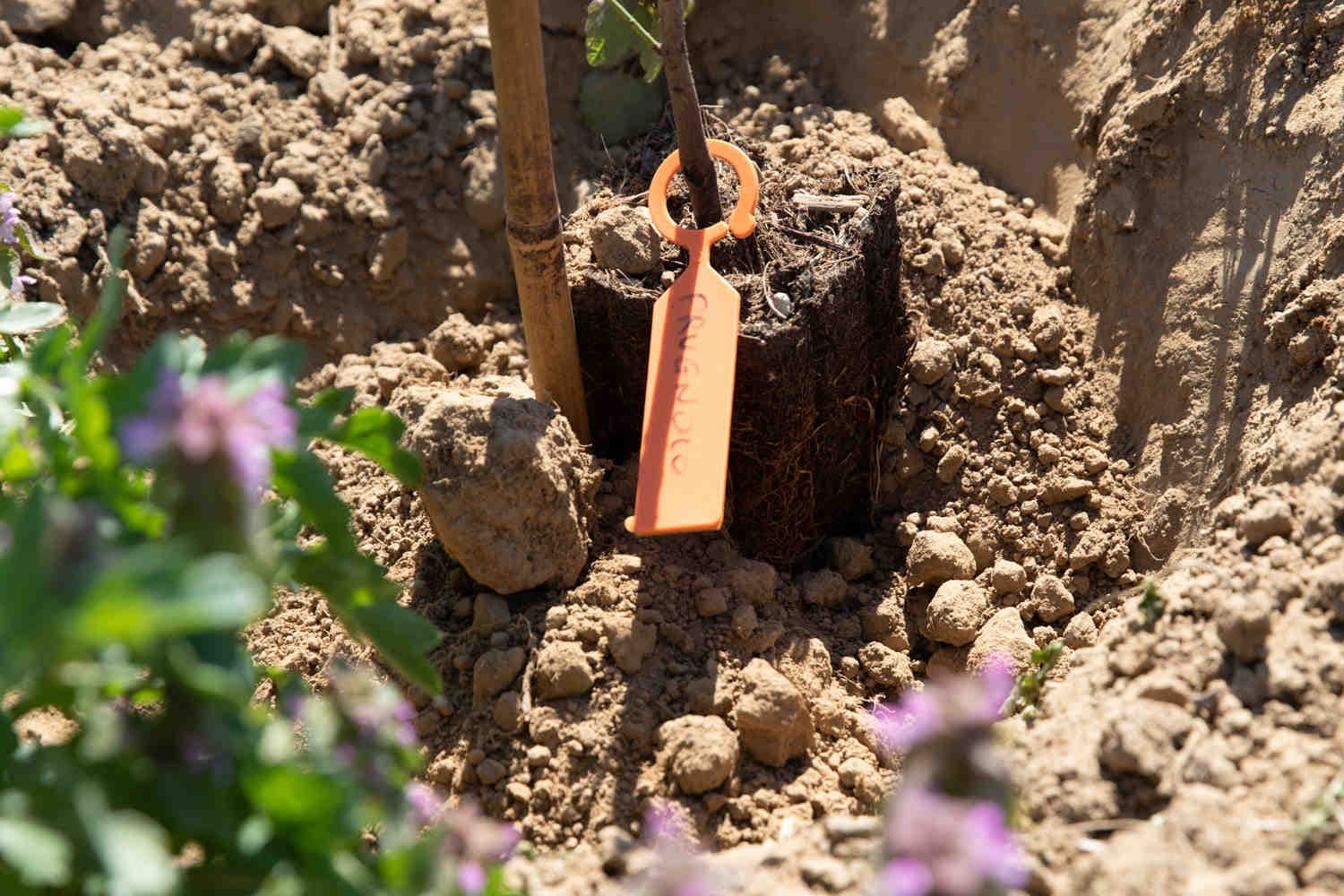
    piantumazione 3Bee
    27/10/2023Of 3Bee, Elena Fraccaro
    1299 Views
    Newsletter
    newsletter
    Subscribe to the Blog about bees and biodiversity

    Frequently Asked Questions

    Do you have any doubts or other curiosities about this article? Here you will find some insights